



![31st Jan: Snake Eyes (1998), 1hr 38m [R] (6.05/10)](https://occ-0-4024-92.1.nflxso.net/dnm/api/v6/Qs00mKCpRvrkl3HZAN5KwEL1kpE/AAAABXKoYVKLc65pvsiYgDOUIhnTymgElq423v33nMw7ieE2z_FYDpN0Y1clHbpwZ5TfhlyszmuY6T17C9HT0n93S2w6qneu1_sXb16ipoLXdNfmfWIvXhJczDWez-HxWm__MXkOhz2W4apWTrl9Kxm07F9M2X1q1OV1zuCHQImjFwQZkA.jpg?r=0a2 "31st Jan: Snake Eyes (1998), 1hr 38m [R] (6.05/10)")



![31st Jan: The Good Detective (2022), 2 Seasons [TV-MA] – Streaming Again (6.8/10)](https://occ-0-1381-999.1.nflxso.net/dnm/api/v6/Qs00mKCpRvrkl3HZAN5KwEL1kpE/AAAABfSb2GoDcmvBfQxDcYps7xENHSift_Auq4eg-Nu_sS2Yuqa7NhgXuAWlI8FT5gsF4nNpWQDhcEvBfVzOEQpOv1MRVrfut42N9vV5.jpg?r=079 "31st Jan: The Good Detective (2022), 2 Seasons [TV-MA] – Streaming Again (6.8/10)")



Peter Jackson’s Lord of the Rings movies set off an era of epic-fantasy oversaturation in movies and on television. The worldwide success of HBO’s Game of Thrones adaptation kept that ball rolling, while also giving the genre a strong push toward “grim and gritty” fantasy, like The Witcher and Shadow and Bone. Many of these shows feature high stakes elevated by terrible tragedy and explosive battles, with occasional shots of a penis or breasts to remind everybody, This is adult fantasy. This is officially serious stuff.
But a few creatives weren’t afraid to take the sentiment of “once more with feeling” seriously. Fresh off the success of their 2010 animated film Tangled, screenwriter Dan Fogelman, legendary Disney composer Alan Menken (The Little Mermaid, Beauty and the Beast, Aladdin), and lyricist Glenn Slater pitched and produced their own fantasy show — something with a little more cheer than a dark fantasy. Enter ABC’s 2015-2016 comedy-musical series Galavant. The show’s final episode aired 10 years ago. on Jan. 31, 2016.
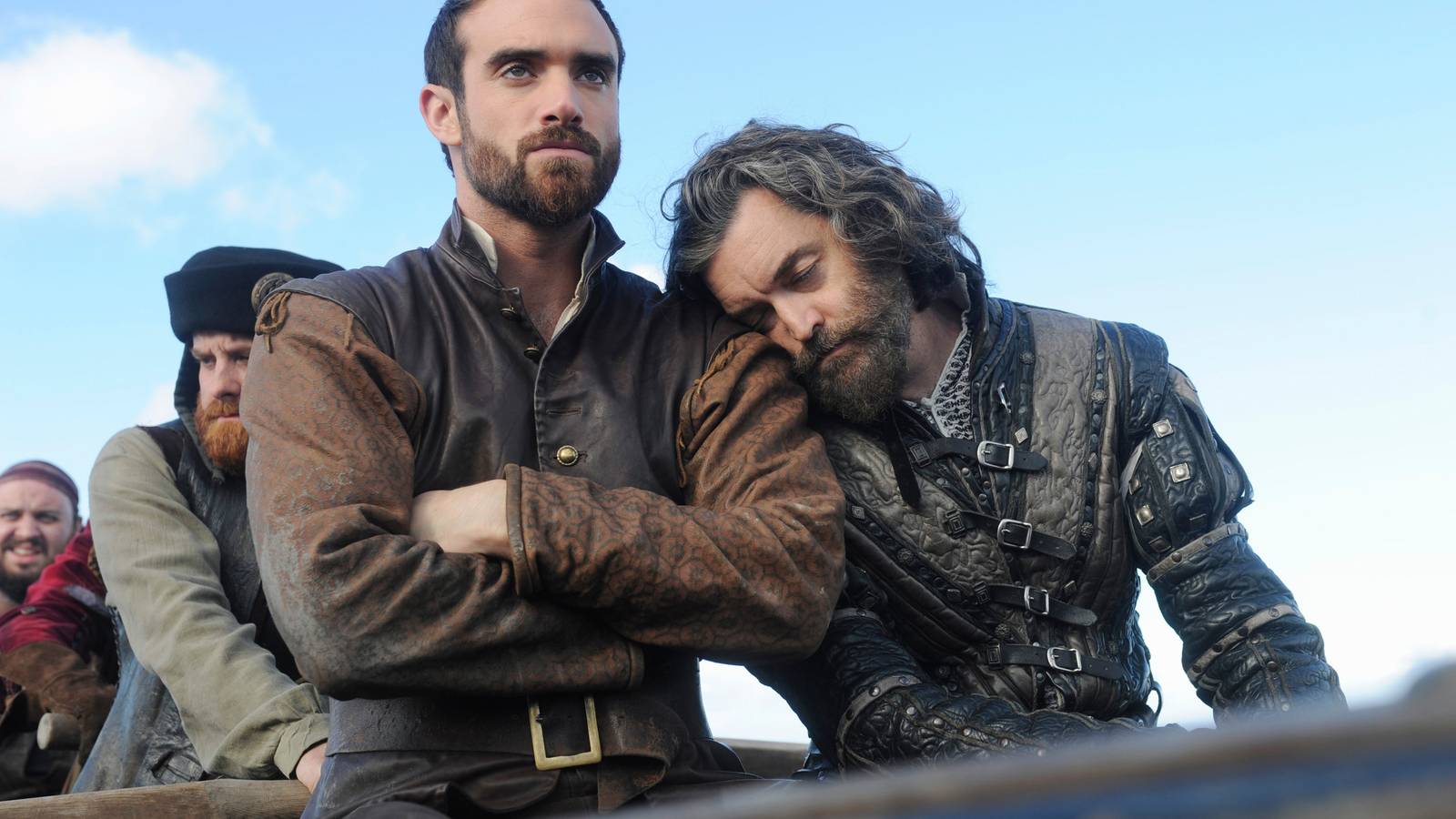
Galavant follows its titular hero (Joshua Sasse) a year after the tyrannical King Richard (Timothy Omundson) and his evil henchman Gareth (Vinnie Jones) kidnapped Galavant’s girlfriend, Madalena (Mallory Jansen). Galavant, described in the show’s opening number as “a fairy-tale cliché” of a hero, rides to Madalena’s rescue, only to find that she’s married the king, because she’s realized she’d rather spend the rest of her life in a castle than live in Galavant’s stinky old peasant hut. Galavant has a breakdown, and becomes a physical and emotional wreck.
Then he’s forced back into a world of adventure by the arrival of Princess Isabella (Karen David), who demands Galavant and his plucky squire Sid (Luke Youngblood) depose the evil King Richard, who has taken over Isabella’s home, the fictional kingdom of Valencia. And all this happens while our heroes and villains — including British legends Hugh Bonneville (Downton Abbey), Anthony Head (Buffy the Vampire Slayer), and comedian Ricky Gervais — belt out songs.
Regardless of its star-studded cast, Galavant’s story is one we’ve all heard before — an evil king kidnaps fair maidens, slaughters the peasantry, and generally acts despotically; and the hero has to swoop in and save the day. Game of Thrones spat in the eye of those fantasy tropes by leaning one way, conveying that there really is no such thing as “heroes,” just “victors.” Galavant, on the other hand, is a wry comedy that pushes so hard in the opposite direction that it feels a lot like a fever dream. Jansen once described the series as “the bastard baby of Monty Python and The Princess Bride.”
That explanation might not convince people to accept the privilege of watching Galavant for the first time. But the video of Kylie Minogue as a fantasy-gay-bar manager who threatens to feed Galavant to “the Bear” (which is exactly what you think it is) might work instead.
Expectations are naturally high for any project involving the creators of one of Disney Animation Studios’ all-time biggest hits. Galavant delivers, bringing songs that feel reminiscent of Disney musical numbers in style, if not in tone. The opening number, “Galavant,” introduces Galavant as a legendary hero of the realm, much like Tangled’s similarly wry “When Will My Life Begin?” introduces us to Rapunzel and her tower. Throughout the season, Galavant continues to parallel some of Tangled’s narrative and musical beats, with songs like “She’ll Be Mine” and “Hero’s Journey” to establish character motivations in song, much like how Tangled’s “I’ve Got A Dream” both reflects Rapunzel’s sincere wish to travel and explore the world, and packs the lyrics and the action with gags.
However, what makes Galavant so deliciously different — the anti-Disney, if you will — is its creators’ willingness to examine and satirize those Disney musical tropes. While there’s plenty of romance in films like Tangled and Beauty and the Beast, Belle and Rapunzel aren’t singing about how gorgeous their love interest is, or about how fantastic the sex is. Galavant isn’t raunchy, but it’s cheeky and bold about aiming at a more knowing adult audience than Disney’s fairy-tale classics.
The creators were working on a limited budget and were hyper-aware that they were making a cult classic, not an expensive fantasy heavyweight like Lord of the Rings or Wheel of Time. They took every opportunity to gleefully make fun of their own show, particularly in the musical numbers. (Season 1’s finale song cheekily raises questions about whether the singing is hurting the show’s ratings, and whether the cast members could be counted on to return for another season.) The fractured-fairy-tale plot twists every expectation of die-hard fantasy fans, while luring them in with catchy lyrics and a cast of campy characters whose predictable adherence to archetypes was delightful.
The biggest example of the show usurping expectations doesn’t come from its hero character, surprisingly. While Galavant’s journey is back-to-front — he starts as a legendary hero, then is brought low by the quest that should have brought him a happy ending — bumbling King Richard, scheming Madalena, and macho Gareth steal the show. Richard’s villainy is comical and exaggerated, but it stems from wanting to please others, from his wife, Madalena, to his best friend-slash-henchman, Gareth. Madalena, on the other hand, presents herself as a typical innocent damsel in distress, and definitively proves she’s something else entirely. Yet even Richard and Madalena pale in comparison to Gareth: Jones gives a fantastic performance, channeling a charming sweetness into his role as a mercenary thug.
Even though Galavant’s creators weren’t shy about making fun of fables and fantasy media as a whole, they were never antagonistic to the genre. Galavant straddles the line between open mockery and loving send-up with relative ease, bringing an epicness to the low-stakes storyline and its phenomenal musical numbers.
While Fogelman and company were keen to pull their culty audience into a world of make-believe that was safe but still adventurous, Galavant’s songs dragged viewers by the scruff of their necks into a fantasy setting that smashed through fourth walls and traditional Disney propriety with the force of a wrecking ball. From joking about how the show’s many cameos cost ABC a fortune to spoiling the entire plot of season 2 in its opening song, “A New Season,” Galavant’s creators were out to make a show with a strong, distinctive voice. They were the underdogs of other fantasy shows at the time, but they were willing to sing about it. As the cast sums up: “You’ll know hell’s freezing if we get decent ratings.”
Galavant is available to purchase on YouTube, Prime Video, and Apple TV.


