




![19th Dec: Scotty James: Pipe Dream (2025), 1hr 33m [TV-MA] (6/10)](https://occ-0-8151-1007.1.nflxso.net/dnm/api/v6/Qs00mKCpRvrkl3HZAN5KwEL1kpE/AAAABR5srGBMSPPAOjCl7JNBuhJ1QW8If7VFcaXZ3As5hKORw946vlC7SXykT1HyBCjZuQZnNb0ecvu7N3yQIcCi8pqohAttSGWL7Lwzk9fZXa6_L4CuWg895BKw97o0PN5hiLeUEiiG2Rinexzd36_ObuZpGG0hojA-Qd8bFDR6g0QsjQ.jpg?r=817 "19th Dec: Scotty James: Pipe Dream (2025), 1hr 33m [TV-MA] (6/10)")






In the summer of 2025, Marvel Studios president Kevin Feige summoned a group of journalists to his office for an uncharacteristically unvarnished interview. One week before the release of The Fantastic Four: First Steps, he admitted to the press that the sprawling Marvel Cinematic Universe had started to feel like homework. “It is a no-homework-required movie,” he said of Fantastic Four. “It literally is not connected to anything we’ve made before.” In the same breath, he conceded that the MCU had taken a wrong turn in the post-Avengers: Endgame era: “For the first time ever, quantity trumped quality.”
2025 was supposed to be a year of course correction, where Marvel scaled back production (slightly) and focused on great storytelling. Feige was finally going to shake off the dust that had settled in the wake of Thanos’ snap, and retake control of the greatest cinematic franchise in Hollywood history. At least, that was the idea.
The reality was… different. While 2025 marked a slight but noticeable upswing in the quality of Marvel’s cinematic storytelling, this failed to translate into success at the box office, at least at the level the MCU was once known for. The studio’s three major releases this year — Fantastic Four, Thunderbolts*, and Captain America: Brave New World — all struggled to recapture the momentum of Marvel Studios in its prime. All combined, they suggest that even, when putting its best foot forward, this once-unstoppable superhero franchise keeps releasing one embarrassing pratfall after another.
Feige and company kicked off the year with Captain America: Brave New World, a movie that was stuck in production hell for years due to rewrites, reshoots, and major Hollywood strikes. While the final result had some charm as a conspiracy thriller in the vein of Captain America: The Winter Soldier, it was weighed down by the twin pressures of resolving long-forgotten plotlines from 2008’s The Incredible Hulk while setting up the MCU’s next big crossover.
While Brave New World was a creative lowpoint for the MCU in 2025, it was arguably a financial high-water mark. The movie made $415.1 million on an $180 million budget — not bad for your average action flick, but still a big step down from the days when Marvel movies regularly cracked $1 billion in ticket sales. The Captain America brand’s failure to attract audiences also seemed like a flashing warning sign that replacing the core Avengers with new characters wasn’t going to fly with fans, which may explain why Chris Evans is reportedly set to return in next year’s Avengers: Doomsday.
Next up was Thunderbolts*. Here, Marvel promised a focus on characters and narrative, and mostly delivered. Director Jake Schreier took a handful of B-tier Marvel characters (plus Bucky Barnes) and made a genuinely fun superhero movie. But audiences weren’t interested in that either, even after the titular asterisk was quickly revealed to be a placeholder for “The New Avengers.” Thunderbolts* limped to a $382 million take on a budget of $180 million. (Side note: If you’re wondering why both these MCU films had such similar budgets, it might have to do with Marvel’s abysmal 2023, but more on that later.)


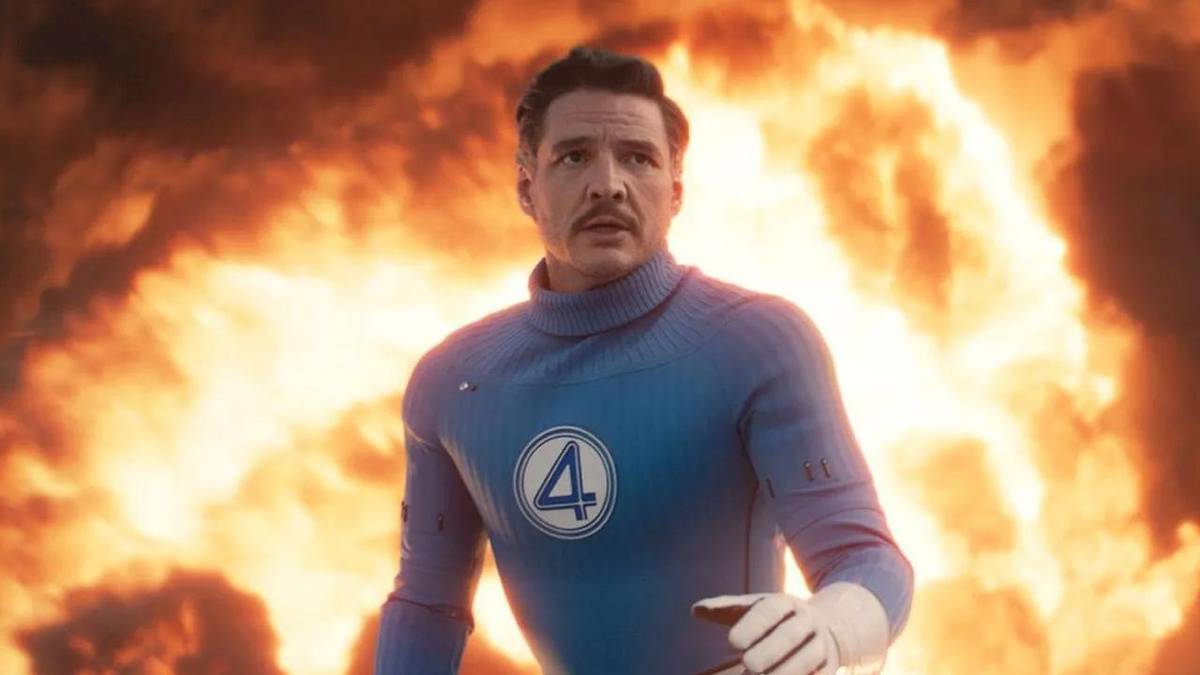
Finally, there was The Fantastic Four: First Steps, with a slightly beefier $230 million budget and promises that it could be enjoyed with zero MCU homework. Technically, Feige wasn’t lying. Fantastic Four is a standalone story set in an entirely different universe from the main MCU. Director Matt Shakman borrowed visually from genre classics like Interstellar and The Incredibles (itself a riff on Marvel’s first family) to create arguably Marvel’s most stunning entry in years. The story was fine, too.
Despite all this, Fantastic Four still struggled at the box office, making just $522 million. Perhaps audiences were wary of yet another movie about a superhero team that 20th Century Fox had already mercilessly butchered several times over. Or perhaps the promise of a no-homework story backfired, and fans really did want a movie demonstrably linked to the characters and settings they’d already invested in. Either way, even Marvel’s most ambitious attempt in 2025 failed to make more money than Thor 2.
That’s perhaps an unfair comparison. Sure, Thor: The Dark World is one of Marvel’s least-loved movies, but 2013 was a different time, both for the Marvel Cinematic Universe and for the box office in general. It came one year after 2012’s The Avengers, when fans were ravenous for more Marvel movies, and our collective theatergoing habits had yet to be chipped away by Fortnite, Netflix, inflation, and a global pandemic.


To pull out another year at random, let’s compare Marvel’s 2025 to its 2015. That year saw the release of Avengers: Age of Ultron, which easily cleared a billion dollars in theaters (a feat that seems slightly less attainable for Avengers: Doomsday); and Ant-Man, which raked in $520 million. That’s right, a superhero comedy about a character most casual fans had never heard of made just $2 million less than the extremely hyped MCU debut of the Fantastic Four, one of Marvel’s most recognizable superhero teams. I’m frankly not sure how the studio recovers from that.
We should probably also address 2023, aka, Marvel’s worst year ever. Not only did Feige embarrassingly overextend the Ant-Man brand with Ant-Man and the Wasp: Quantumania, but the studio actually lost money on The Marvels ($206.1 million at the box office, on a budget of $374 million). That year still had a bright spot, however, in Guardians of the Galaxy Vol. 3, which cracked $800 million, proving the MCU could still score a hit at the time. (Guardians director James Gunn has since abandoned ship for DC, where his 2025 debut, Superman, soared past Marvel to take home $617 million.) So while 2023 was a major blow for Marvel Studios, it showed there was still hope the good old days could return. By 2025, that hope has all but vanished.


Where does this leave the MCU as we head into 2026? The studio is betting everything on Avengers: Doomsday, a film that already seems more like a montage of Marvel’s greatest hits (Robert Downey Jr., the Russo brothers directing, the Fox-era X-Men cast) than a high-quality story like the ones promised in 2025. But maybe that’s what the studio needs. And maybe, if Doomsday can coast to $1 billion on pure Hey, I remember that inertia, it will be enough to reinvigorate the entire franchise. If not, I have a feeling we’ll look back at 2025 as the moment that the bottom finally fell out of the Marvel Cinematic Universe.


![19th Dec: Premante: Thrillu Prapthirasthu (2025), 2hr 16m [TV-14] (6/10)](https://occ-0-1381-999.1.nflxso.net/dnm/api/v6/Qs00mKCpRvrkl3HZAN5KwEL1kpE/AAAABcx4Va6OVQJF5NynaEG53l0XyFdhe79-zl9lGZtQ3wD616VCJNeq0ZpoLTpgdQIHEyeBClm2PqmuVUV6Vzj3ifYbk7s79xjOvSek9DJ5Hh0o0_pF19hP3AP3mcGsPfKsVArdhYKZz3meb_SmchkLDzeeY21sf_BhNZdrk65i9EyVJQ.jpg?r=b60 "19th Dec: Premante: Thrillu Prapthirasthu (2025), 2hr 16m [TV-14] (6/10)")