











Imagine having breakfast in a German forest, lunch in an Austrian valley, and dinner at an Italian mountainside rifugio, all without ever getting into a car.
If you don’t mind maxxing your step tracker along the way, this can all be made possible with the new Wolf Trail, which spans a stonking 3,494km, splitting into seven continuous stages that cross six European countries.
Horizontal distance isn’t the only hurdle. The trail also boasts more than 78,400 metres of elevation gain, which is the equivalent to summiting Mount Everest roughly nine times over.
If you take on the full four to six month trek, you’ll want to lace up between April and September to avoid early Alpine blizzards. Hikers rely on downloadable GPX files mapped onto tech apps to plan daily town resupplies and to find legal campsites.
Where does the Wolf Trail take you?
The adventure kicks off with a 428km beach cruise along Poland’s flat Baltic coast from Hel to Świnoujście. From there, the trail turns inland for a massive 1,930km slog across Germany, starting with historic medieval cities like Rostock and then moving through the rugged paths leading up to the Austrian border.
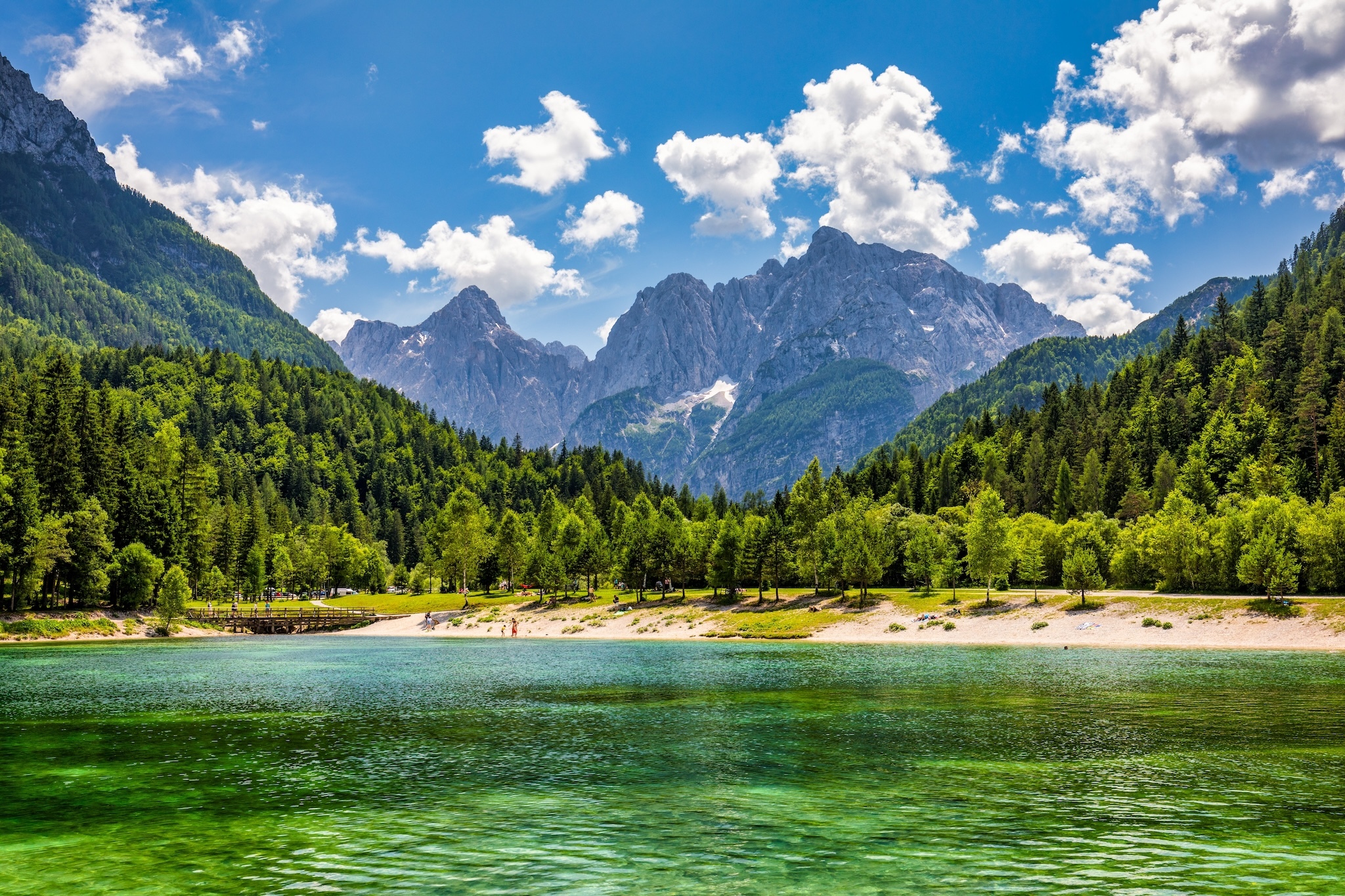
Next up is a 392km alpine stretch into the Allgäu Alps, routing you directly through Innsbruck for a well-earned rest day to explore Ambras Castle and the historic Olympic ski jump. The final segment is the real jaw-dropper. It follows the Via Alpina straight through the jagged Dolomites and Slovenia’s Triglav National Park, before finally dropping you onto Italy’s Trieste waterfront for a victory drink by the Adriatic Sea.
If you’re wondering whether it’s actually safe to wander off into a six-country wilderness, don’t panic. The trail has already been vetted by Canadian long-distance backpacking pro Lauren Roerick. In April 2026, she spent months checking out the trail’s safety, infrastructure and inevitable logistical hiccups, smoothing out the route’s rough edges so that you won’t end up hopelessly lost in the Alps.
Why walk the Wolf Trail?
So, why trade your usual holiday for weeks of possible blister care? It turns out outdoor gear giant Jack Wolfskin has been masterminding the Wolf Trail to convert Europeans to the cult of ‘thru-hiking’. For those who are out of the lingo loop, thru-hiking means walking a continuous, epic route with your world on your back, picking up fresh resources in each town you come to.
It’s a logistical triumph too, given Europe’s notoriously strict camping laws. ‘While hiking is part of the German roots, our paths and loop trails don’t support backpacking and wild camping, as you can’t just put up a tent anywhere,’ local photographer and content creator Anna Heupel told AFAR magazine. And she’s not exaggerating, as pitching a rogue tent in a German forest is a quick way to land a hefty fine.
To pull this off legally, the brand stitched together 3,500 kilometres of existing historic pathways. By routing the entire journey directly through pre-approved trekking camps, mountain huts and local villages, you get the wild thrill of a rugged continental thru-hike, but with a fully legal safety net and a hot shower waiting for you at the end of each section.
🏞️ While you’re here, check out our ranking of the world’s most beautiful hiking trails.
Plus: These are officially the world’s busiest airports for 2026.
Stay in the loop: sign up to our free Travel newsletter for all the latest travel news and best stuff happening across the world.


