![30th Aug: The Breakfast Club (1985), 1hr 37m [R] – Streaming Again (6.9/10)](https://occ-0-953-1001.1.nflxso.net/dnm/api/v6/0Qzqdxw-HG1AiOKLWWPsFOUDA2E/AAAABV-fhbCiX__V7Dfbw72DEC5YA8rB9SgUYlbRKkpwtYq07kGB0-ClqJp9BNHfHnHM4zc-BkIC12r110Te2lyxwJxv0y3i61UCIddb.jpg?r=831 "30th Aug: The Breakfast Club (1985), 1hr 37m [R] – Streaming Again (6.9/10)")





Spider-Man: Brand New Day has finally swung its way into theaters, inviting fans to see Marvel’s final superhero adventure before the arrival of Avengers: Doomsday later this year. Destin Daniel Cretton’s new Spidey adventure drops the wall-crawler into one of his most grounded stories yet, introducing a whole new threat whose abilities make every interaction feel like a deadly gamble.
Light spoilers follow for Spider-Man: Brand New Day.
Without diving too deeply into spoiler territory, the film’s most unsettling element involves a character jumping between minds and messing with Spider-Man (and Peter Parker) in deeply horrifying ways.
Mind control and psychic intrusion are exciting mechanics in a superhero blockbuster, but they also tap into a primal, age-old dread: What if the person standing across from you suddenly wasn’t themselves anymore? We’ve seen this loss of autonomy weaponized in films like Jordan Peele’s Get Out and Curry Barker’s Obsession, but there’s a late-’90s neo-noir thriller that explored it with a level of paranoia few movies have matched since. And if you walked out of Brand New Day intrigued by the mechanics of all the body-hopping, then this thriller is a must-watch.
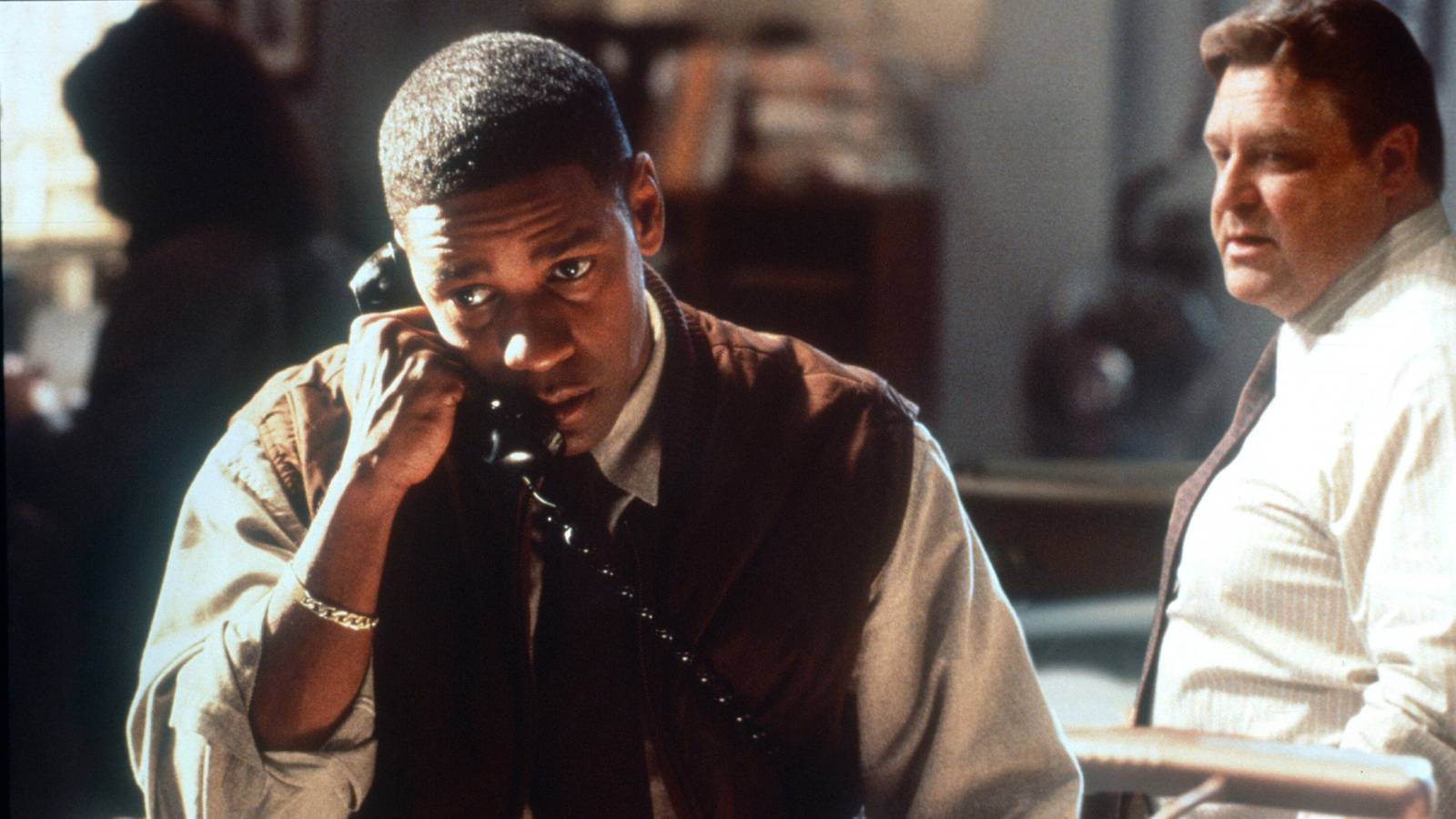
Released in 1998, Gregory Hoblit’s Fallen follows Philadelphia homicide detective John Hobbes (Denzel Washington) in the wake of apprehending Edgar Reese (Elias Koteas), a notorious serial killer responsible for a string of brutal murders. The film opens as Reese nears his execution. On the way to the execution chamber, he taunts Hobbes by speaking in unfamiliar languages and casts an unsettling smile that suggests he knows a secret no one else can fully grasp — a smile that persists throughout the film. Yet, for all his swagger, even as he sings “Time Is on My Side” by the Rolling Stones with demonic nonchalance, Reese’s body slumps in the gas chamber chair, and Hobbes breathes a much-needed sigh of relief.
It doesn’t take long for the murders to begin again, convincing Hobbes that someone has picked up where Reese left off. As he follows the trail, witnesses offer contradictory accounts of suspects who seem to vanish into thin air, complete strangers recognize him as if they’ve met before, and cryptic messages begin appearing wherever the investigation leads. What starts as the search for a copycat killer gradually spirals into something far more unsettling, forcing Hobbes to accept he’s hunting an ancient evil that exists beyond the limits of law enforcement and, perhaps even beyond the realm of logic.
It’s one of Denzel Washington’s most underrated performances, largely because it sits in the shadow of flashier movies like Training Day, Man on Fire, Déjà Vu, The Bone Collector, and Pelican Brief. Despite featuring Washington in one of his most compelling detective roles, Fallen rarely gets the same attention. Hobbes is sharp, empathetic, and endlessly curious, qualities that make him a terrific investigator until he’s confronted by an enemy that breaks every rule he’s spent his career relying on. Watching him obsess over discovering the truth throughout the film is truly harrowing to watch.
Director Gregory Hoblit aptly folds the supernatural into the mechanics of a detective story rather than using it as an excuse for elaborate spectacle or shock horror. Nicholas Kazan imbued the same kind of cynical worldview and doomed investigator archetype found in classic film noir like Double Indemnity (1944), The Big Sleep (1946), and Out of the Past (1947). In that way, Fallen plays out like a classic police procedural, slowly introducing clues that refuse to add up before pulling the rug out from under both Hobbes and the audience. By the time the film fully embraces its supernatural premise, you’re already in too deep — since Fallen has earned your investment as a mystery.


The true terror of Fallen lies in its body-hopping transitions. The real villain here is terrifying for the exact same reason the new threat in Brand New Day works so well: the can control anyone. A passerby on the street. A stranger sitting beside you on a train. A key witness. A close friend. Even your precious cat. Every crowded sidewalk becomes a suffocating source of tension because ordinary people are instantly transformed into vessels of malice. There’s a quiet paranoia running through every frame that leans closer to existential dread than conventional horror, which is exactly why the film has aged so gracefully.
That creeping dread makes Fallen feel spiritually adjacent to the wave of Japanese horror that emerged around the same time. While it doesn’t share the same imagery or folklore of those types of films, Fallen similarly embraces horror as something invisible that spreads through contact rather than confrontation. The fear doesn’t stem from fighting a tangible monster; it comes from the chilling realization you aren’t even playing by the same rules. Much like Kiyoshi Kurosawa’s Cure — and later, Pulse — Fallen finds its nightmare in an unseen force that quietly infiltrates the everyday.

Critics weren’t especially kind to the film upon release, and its 43% score on Rotten Tomatoes still reflects that initial reception. Audiences, meanwhile, have been considerably warmer over the years, and it’s easy to see why. Fallen doesn’t feel like a relic of late-’90s supernatural cinema so much as a movie that arrived a little too early, blending noir, horror, and biblical mythology that didn’t neatly fit the mold critics expected at the time.
Spider-Man: Brand New Day uses mind-hopping to test the limits of its web-slinging hero, but Fallen proves just how devastating that concept is when stripped of such spectacle. In Hoblit’s hands, psychic intrusion isn’t a superpower — it’s an existential violation. It forces you to look at a crowded room and wonder if the person standing next to you is actually the one looking back.
Decades after its release, Washington’s hidden gem remains far more than just a great detective story. It is a masterclass in paranoia, proving that the most terrifying villains in cinema don’t just take your life, but can also steal your entire being.
Fallen is currently streaming on Netflix