






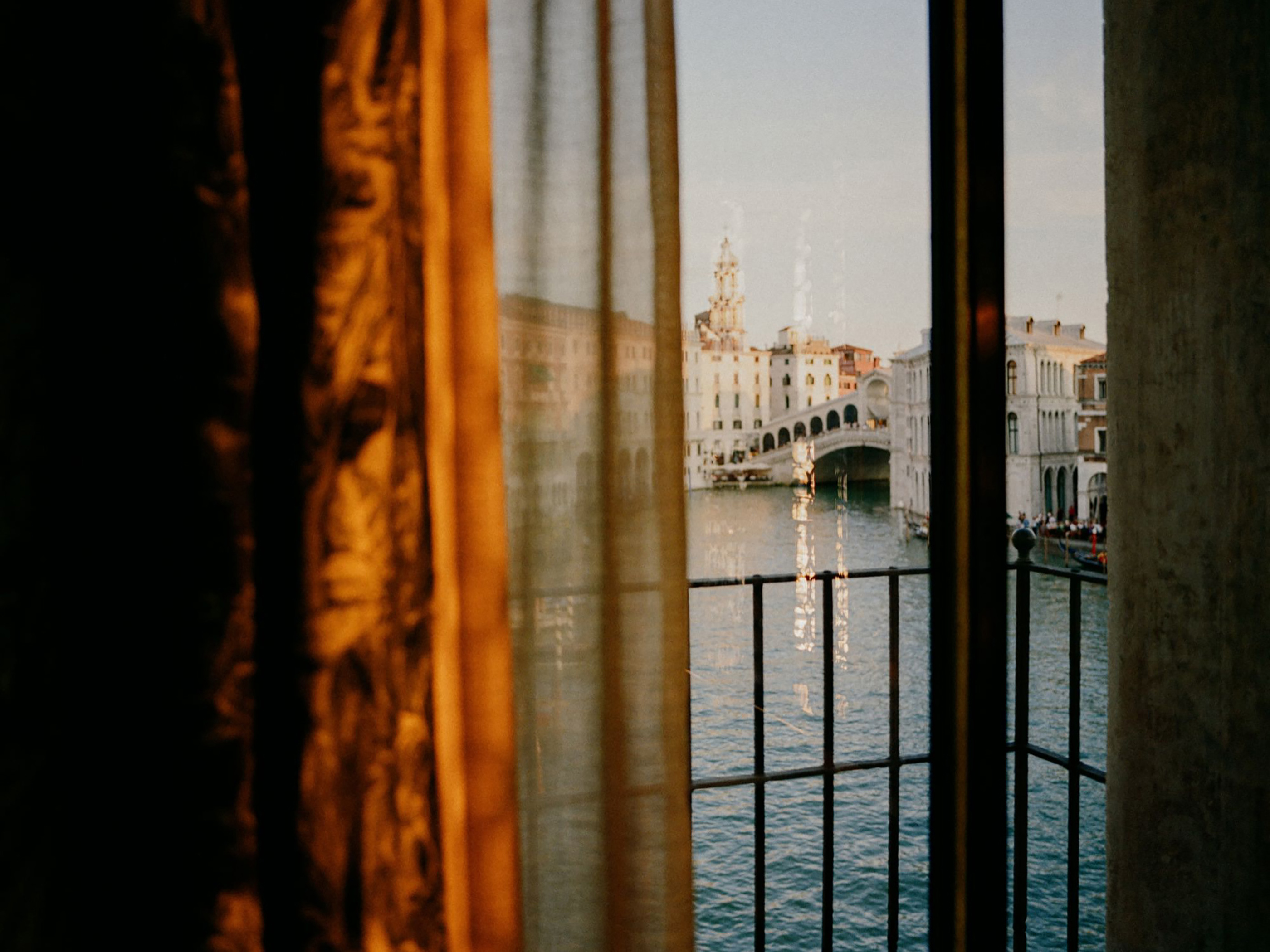
No amount of familiarity with the city prepares you for the real thing.
I know, I know. You’ve read all about the place, seen it in films and on television, in photographs and in paintings. And maybe, like me, you devoted time in a long-ago history class to contemplate the confounding implausibility of its continued existence. But no amount of theoretical familiarity will adequately prepare you for that first glimpse of Venice.
And judging from the tears welling in her eyes as she took in the view alongside, my wife, Lisa, was in the same boat.
Well, of course, she was. Because after exiting, via escalator, the usual arrivals level of Aeroporto di Venezia Marco Polo, we had bypassed all signs for conventional transport (Uber, cabs, buses) and headed for the docks and onto a spiffy leather and veneer-lined water taxi.
Three days was not going to be enough.
It was after nightfall, in early December, and there was a damp and penetrating chill in the air. Nonetheless, we opted to travel top down. And so, under a full moon, we sped across the lagoon towards the city lights and, after the waterway narrowed, passed through sundry canals, under ancient bridges, then entered a broad waterway flanked by buildings of such mesmerizing beauty that we knew instinctively that we had arrived at the Grand Canal.
There, just short of the Rialto Bridge, we pulled up at our hotel — The Venice Venice — docking alongside its patio, where two guests wrapped in blankets were enjoying cocktails at the water’s edge.

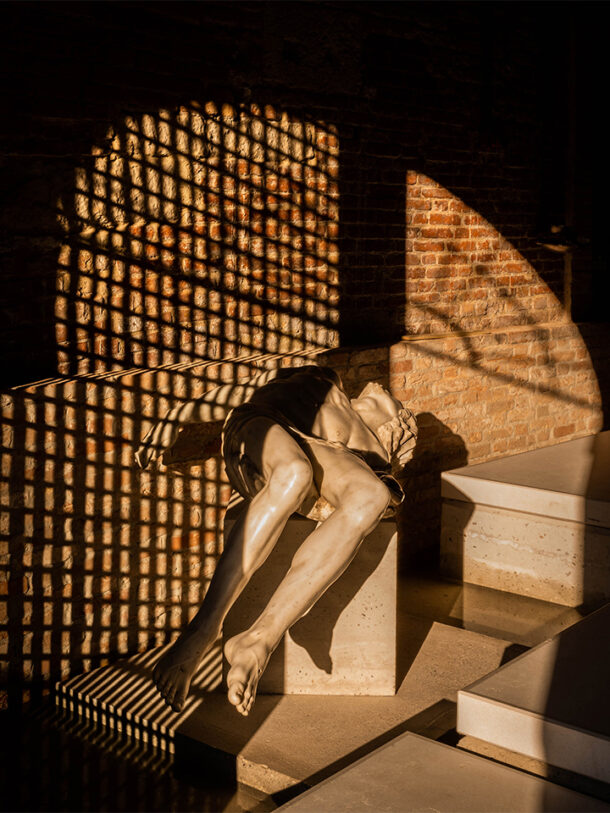
1/2

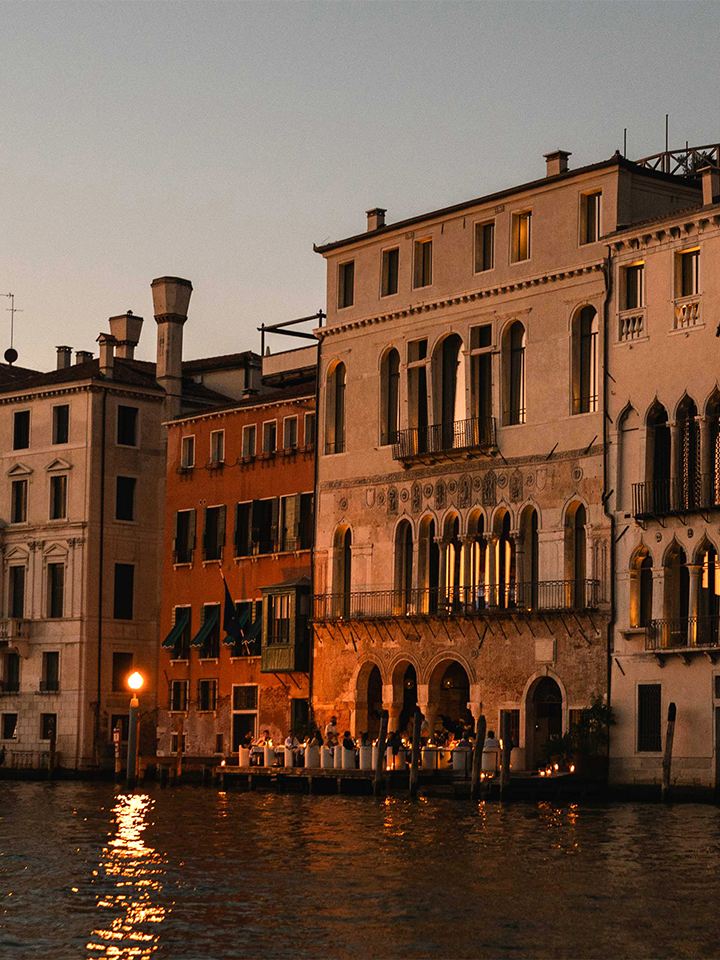
The Venice Venice facade.
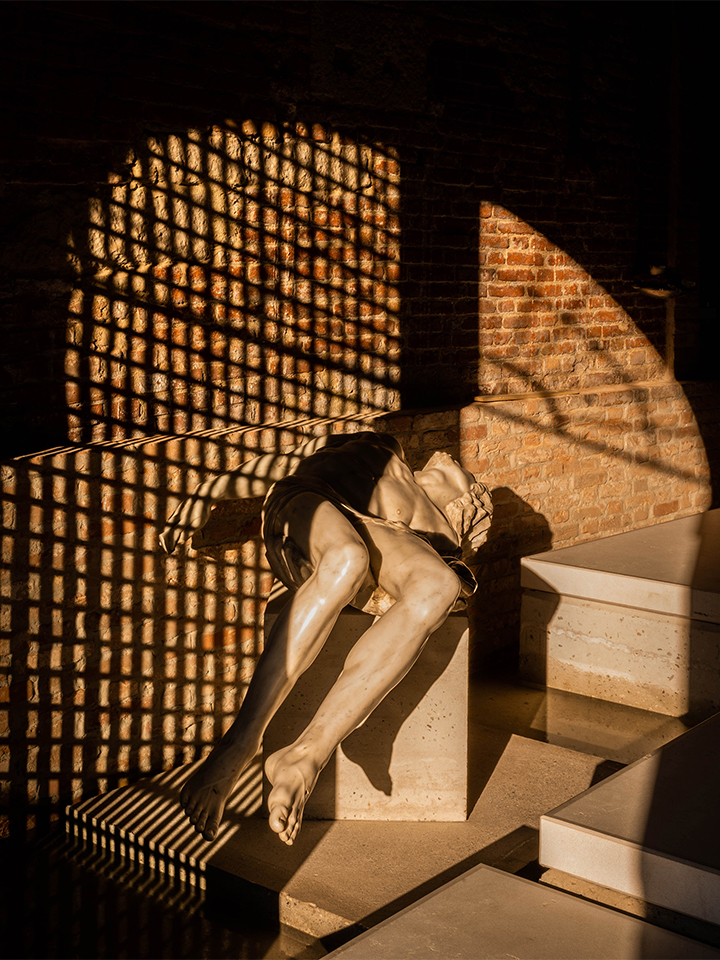
Entranceway at Venice Venice
Much as that seemed like the place to be, we proceeded to check-in and headed up the arched, brick-walled, candlelit stairwell to our room — sprawling, by local standards. A four-panel work by Emilio Isgrò — the Sicilian writer and artist featured at the Biennale on four separate occasions — spanned the wall above the television and bar cart. The bathroom was lit by Murano glass pendant lights, and all of its fixtures were sculptures. But if the abundance of artistic and aesthetic flourishes was delightful, none of it competed with our second-floor view of the Grand Canal.

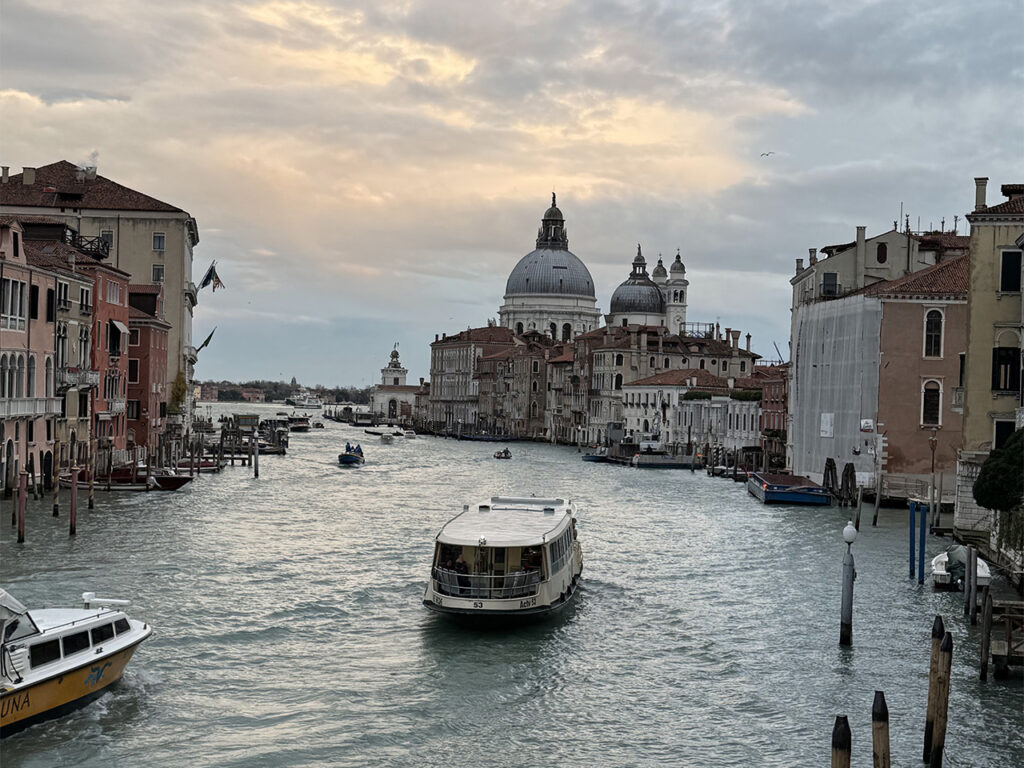
So, we poured drinks, pushed open the glass doors, and stepped out onto our balcony to take in the scene. Private boats, taxis and vaporettos (waterbuses) motored past, while across, the Rialto Market’s piazza sat dark and empty. We had exploring to do and a reservation waiting at Da Ivo, so we drank up and set off.
How exactly freshly arrived tourists ever successfully negotiated these dark, narrow, winding and discreetly identified streets and bridges before Google Maps came along, I will happily never know. Ten minutes, four bridges and a few dead-end mishaps later, we arrived at the dimly lit Venetian dining institution. The walls were crammed with paintings, its tables draped with red and white tablecloths, and the ambience spoke of inexhaustible charm. We ordered cocktails and settled in.
Many an experienced traveller recommends early December as the best time to visit Venice because the crowds thin and the seasonal local holidays have yet to begin. But the time of year has its risks.
To say that we awoke the next morning to find that it was raining out doesn’t really cover it. Essentially, we were at sea, in a storm. We had a lunch booking on the neighbouring island of Burano, but learning the ropes of public transit was going to have to wait. I rang the front desk and summoned another water taxi (€165, ahem).
We disembarked in the pelting rain, trudged over sodden grass, joined the footpath along a winding canal and soon noted a promising awning jutting out over the sidewalk ahead. Mounted on the bright blue stucco wall beneath was the sign we were looking for: Trattoria al Gatto Nero.
We were late, and in the entranceway, a cluster of customers were milling about, awaiting tables, while the owner — Massimiliano Bovo, or Max, as everyone called him — directed traffic, alternating between Italian, French, English and sometimes a combination of two or three of those. Amiably, he whisked us to the back room.
Above the stained wood wainscotting, white walls covered with framed photographs tell of the restaurant’s past. The handblown glass chandeliers were fitted with no-nonsense cold white LED bulbs. Drapery patterned with clams, fish and seabirds adorned each window. And along with the tourists, the place was bustling with locals — multi-generational families gathered noisily around tables for eight or even ten.
“I don’t want to change anything,” Max volunteered, as we shook off the rain and took the place in. “I want it to feel like home.”
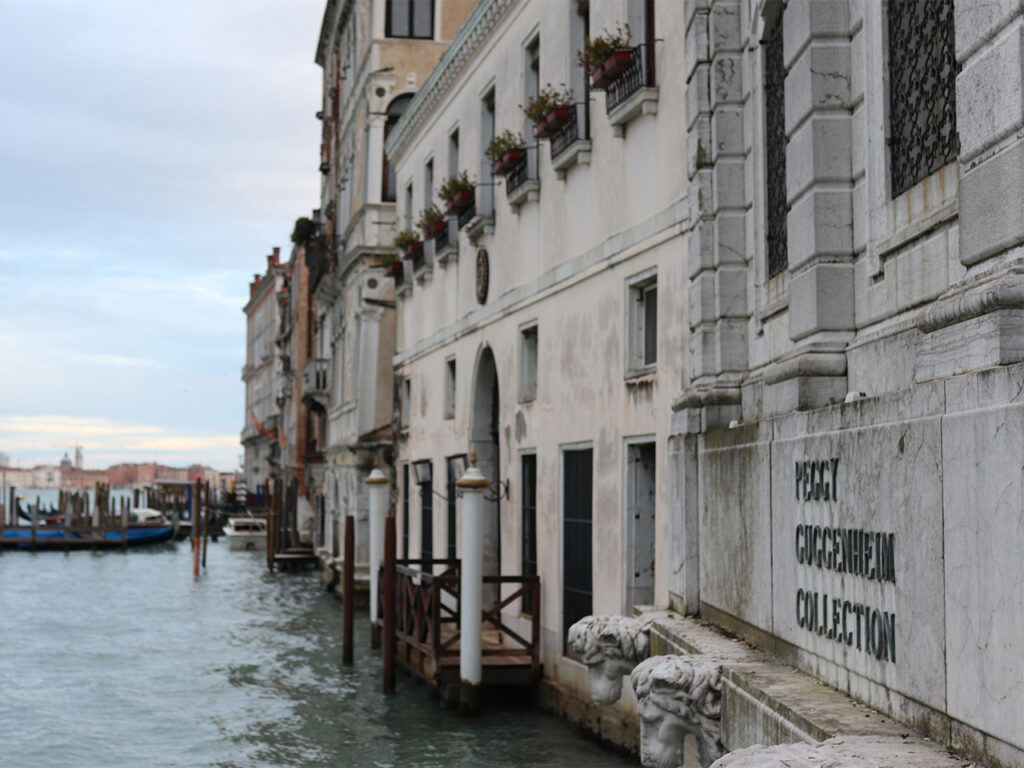
And it did. Or at least some excellent version of how you’d like your festive Italian home to be. We ordered wine and I pulled out my soggy notepad to map out a plan for our next few days — the Peggy Guggenheim Collection, Doge’s Palace, Galleria dell’Accademia di Firenze, Museo di San Marco. Buy some Murano glassware, eat cicchetti, visit all the best bars. Three days was not going to be enough.
↗ Where to Stay
The Venice Venice Hotel
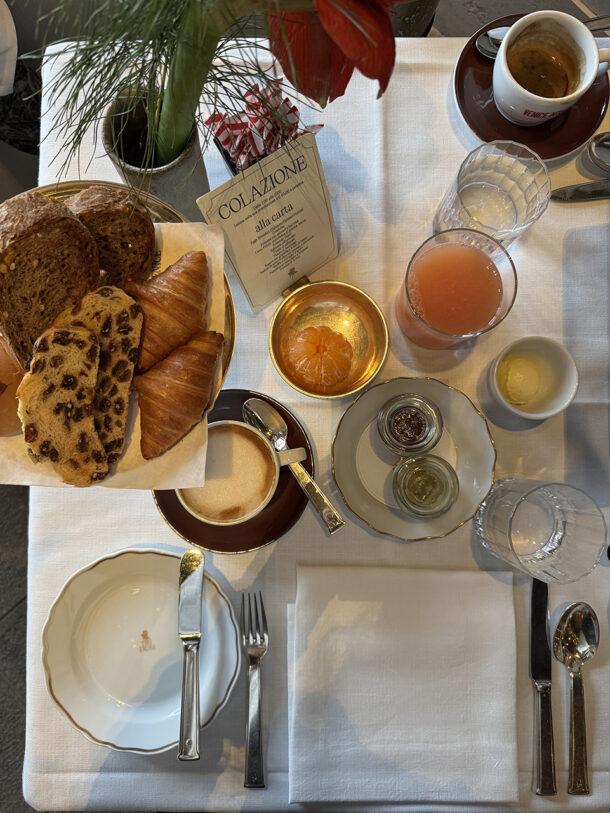
This relative newcomer, which opened in February 2022, occupies the 13th-century palace Ca’ da Mosto, the oldest stone building on the Grand Canal. Abandoned for 50 years, the original structure was purchased by art collectors Alessandro Gallo and Francesca Rinaldo, the couple behind Golden Goose sneakers. The restoration was almost unimaginably complex and what they’ve achieved is magnificent. Contemporary flourishes enhance the original design, art is everywhere, rooms are spacious, and its restaurant, Francy’s, was, from breakfast to dinner, easily among the best we sampled here. I will return for the tagliolini al tartufo. But more than that, I’ll visit again for the sheer joy of the water taxi ride to their front terrace.
↗ Where to Dine
1/3

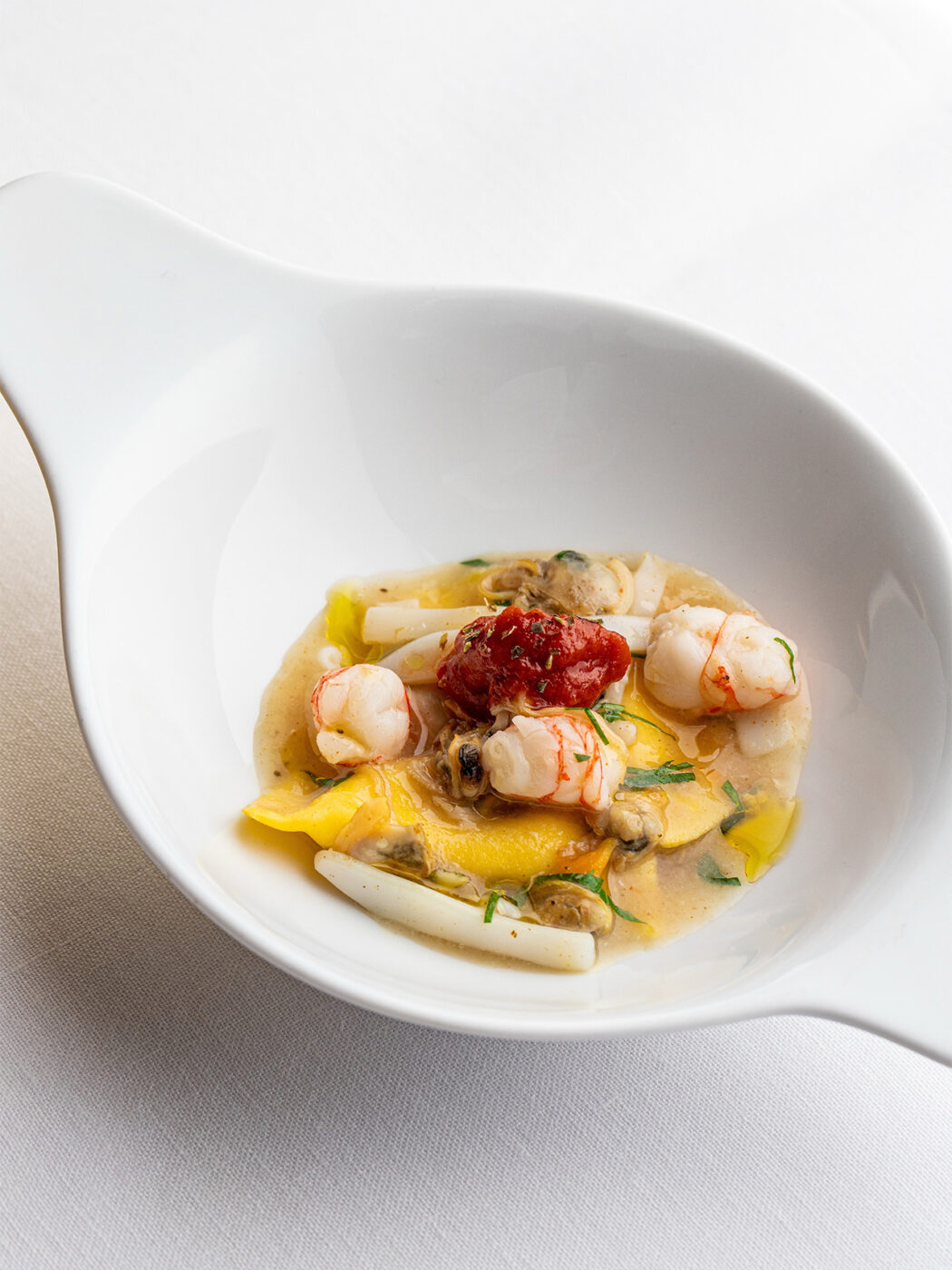
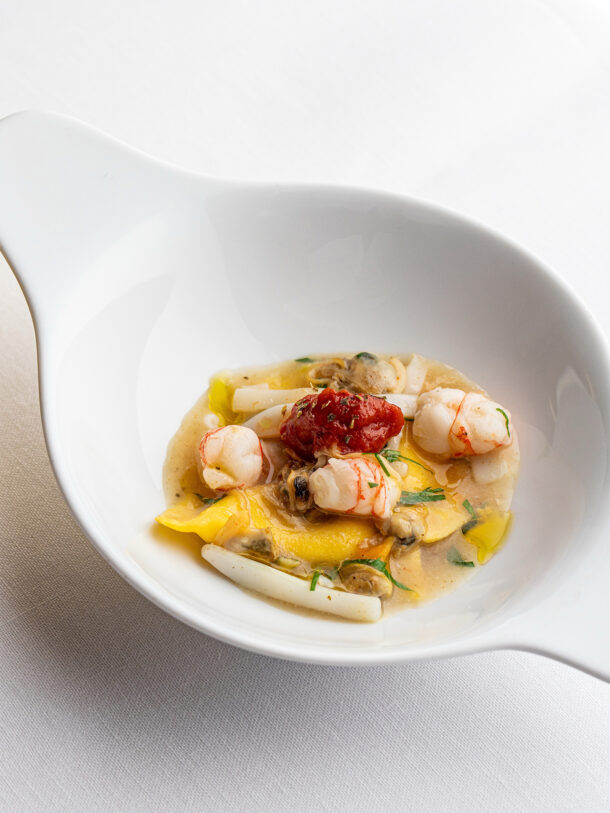
Burrata ravioli with seafood at Quadri

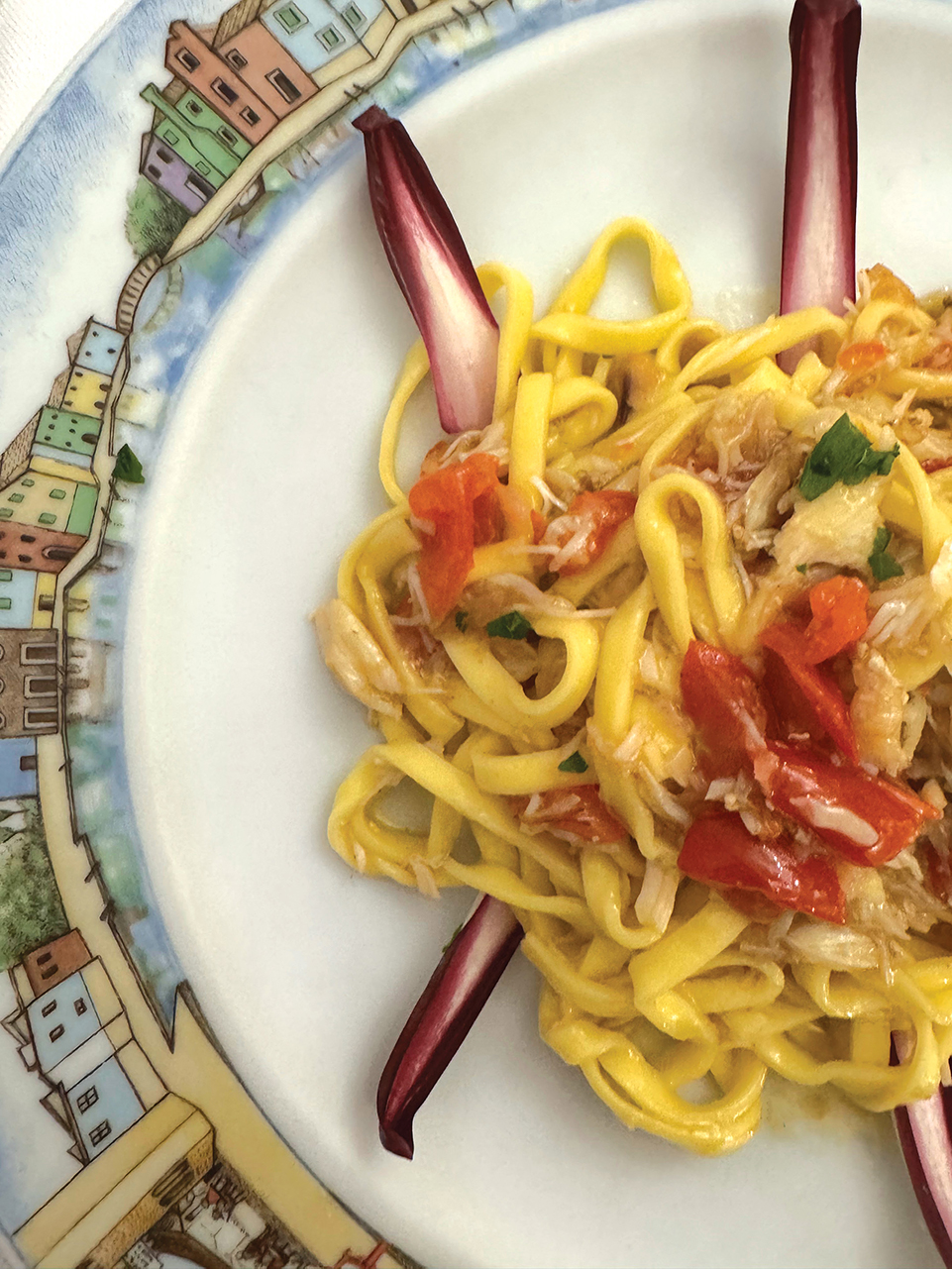
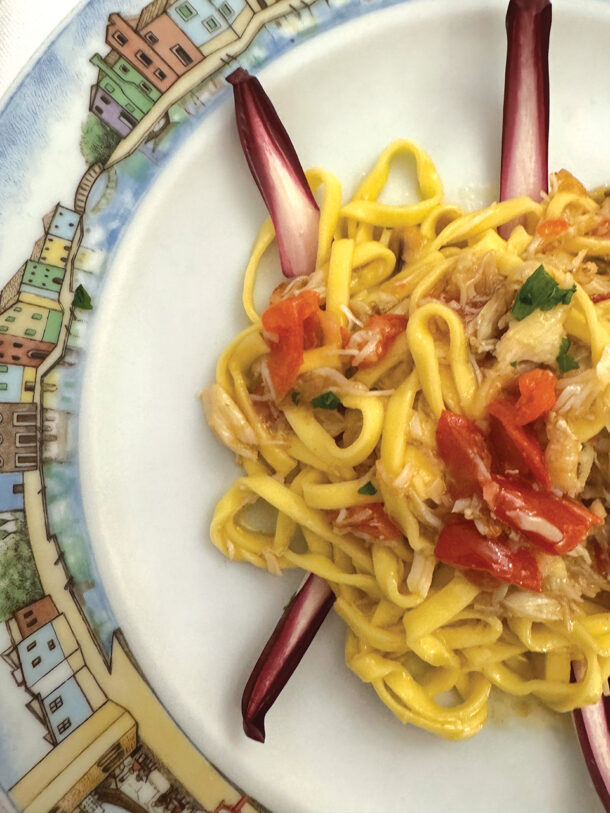
Tagliolini with spider crab at Trattoria Al Gatto Nero
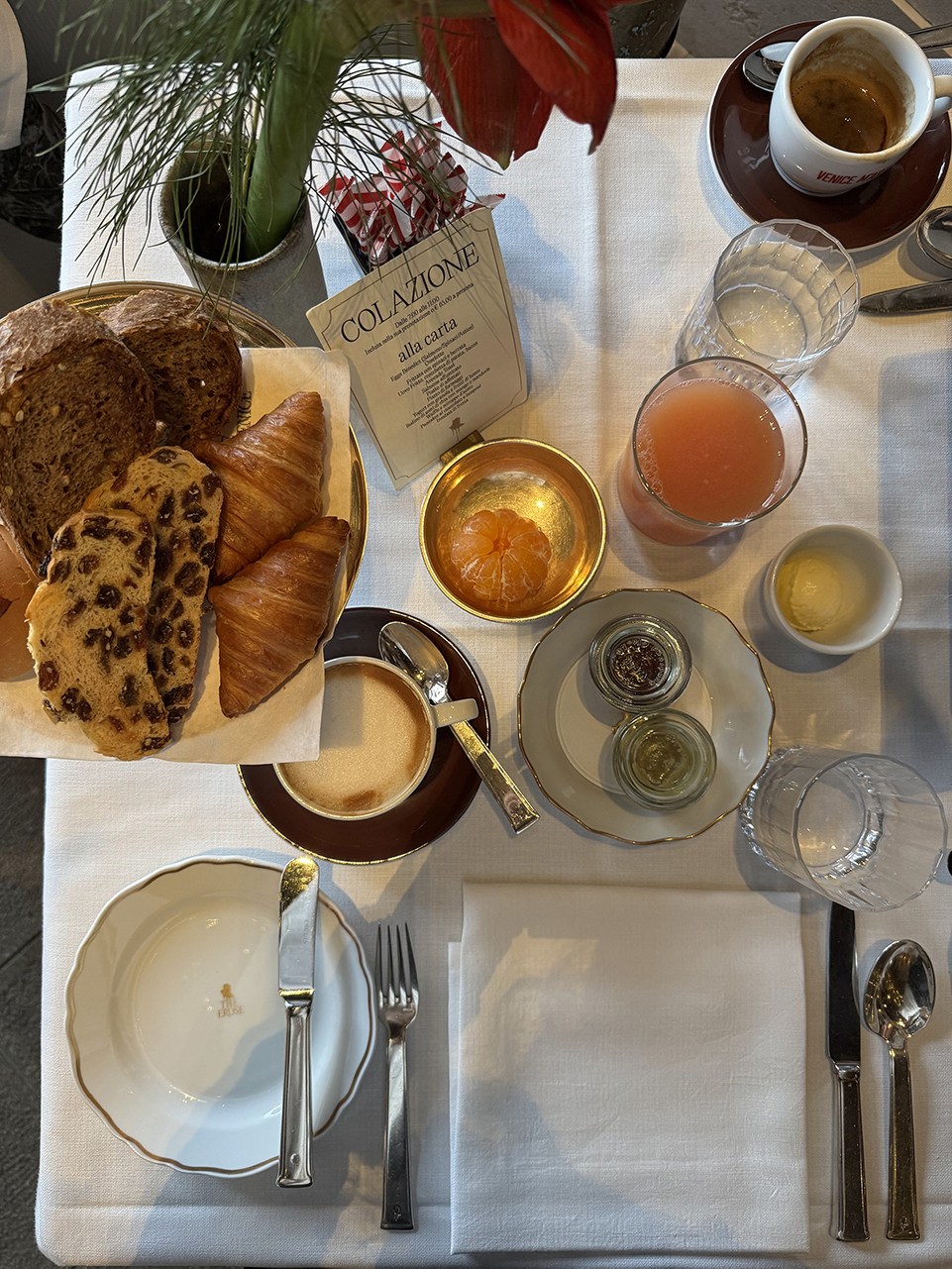
All set for breakfast at Francy’s
Trattoria al Gatto Nero
This charming restaurant has been run by the Bovo family since 1965. Expect the best local seafood prepared with unapologetic simplicity. If you fancy risotto, this is the place to enjoy that singular local specialty — risotto alla Buranella, made with the small local fish ghiozzi (goby). We started with lightly grilled razor clams and scallops on the half shell, each luscious and sweet, dressed with nothing more than olive oil, lemon, parsley and a cluster of saffron. Then, fresh eggy tagliolini tossed with spider crab and chopped tomato, the sauce built simply from white wine and olive oil, garnished with a few curly leaves of Treviso lettuce. For the pièce de résistance, daily fish in acqua pazza — in our case, turbot with tomato, olives, chopped zucchini and potato.
Harry’s Bar
Once Harry’s Bar was proclaimed a national landmark in 2001, it ceased being possible to change its décor or furnishings. But no matter. Because aside from the 1960s addition of its second-floor dining room, nothing changed here in its first 70 years, either. From naval motifs and the art deco aesthetic, the bar remains as it was conceived — elegant, spare, diminutive, surprisingly brightly lit. The food and drink have also not evolved much. An institution that invented both the Bellini and beef carpaccio apparently need not push the envelope any further. But despite all that and the elevated prices, you really must stop in at this cocktail museum if only once for a taste of history.

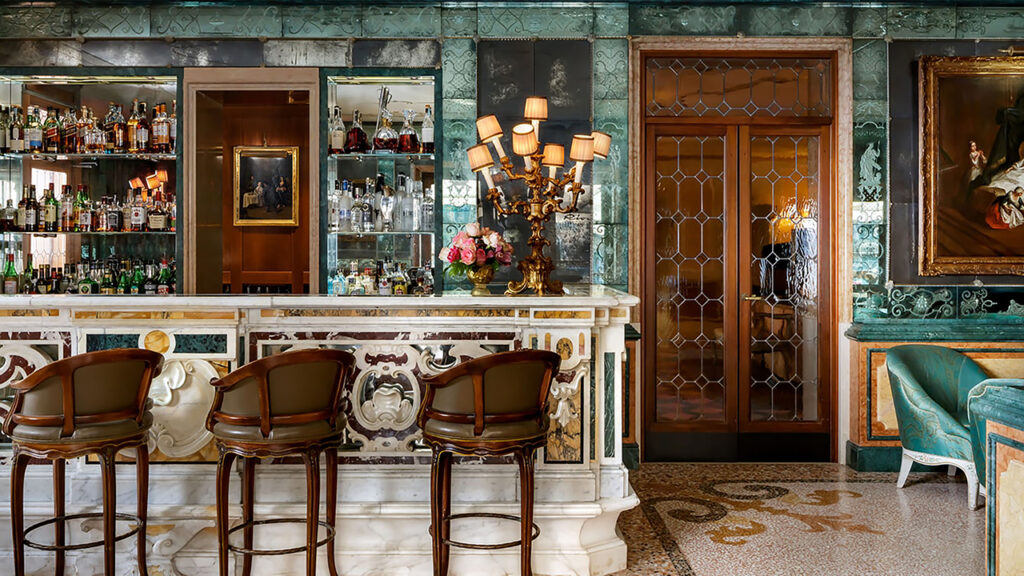
Bar Longhi at The Gritti Palace
Nothing compares to a great lobby bar in a grand old European hotel. And even in that elite company, this one is a cut above. It’s not about just the exquisite opulence of the room, from the Fortuny fabrics to the Murano glass chandeliers and the Pietro Longhi paintings. There is something magical in the air — history, and the ghosts of drinkers past. Because long before Bezos and Sánchez, and sundry Jenners and Kardashians saw fit to descend on this place, regulars had included Bogart and Bacall, Liz Taylor and Grace Kelly, Hemingway and Churchill. Stopping for a Martini here and giving some thought to the local past is essential.
Da Ivo
I don’t know what George Clooney’s go-to order is here, but Lisa and I got started sharing some poached razor clams with ginger and lemon. She followed with spaghetti with caparozzoli — the grooved carpet-shelled clam of the Venetian lagoon. I had black spaghetti with cuttlefish. Then we moved on to grilled prawns and — well, when in Venice — fegato alla veneziana. None of it was exceptional, but it was enjoyable.

Ristorante Quadri
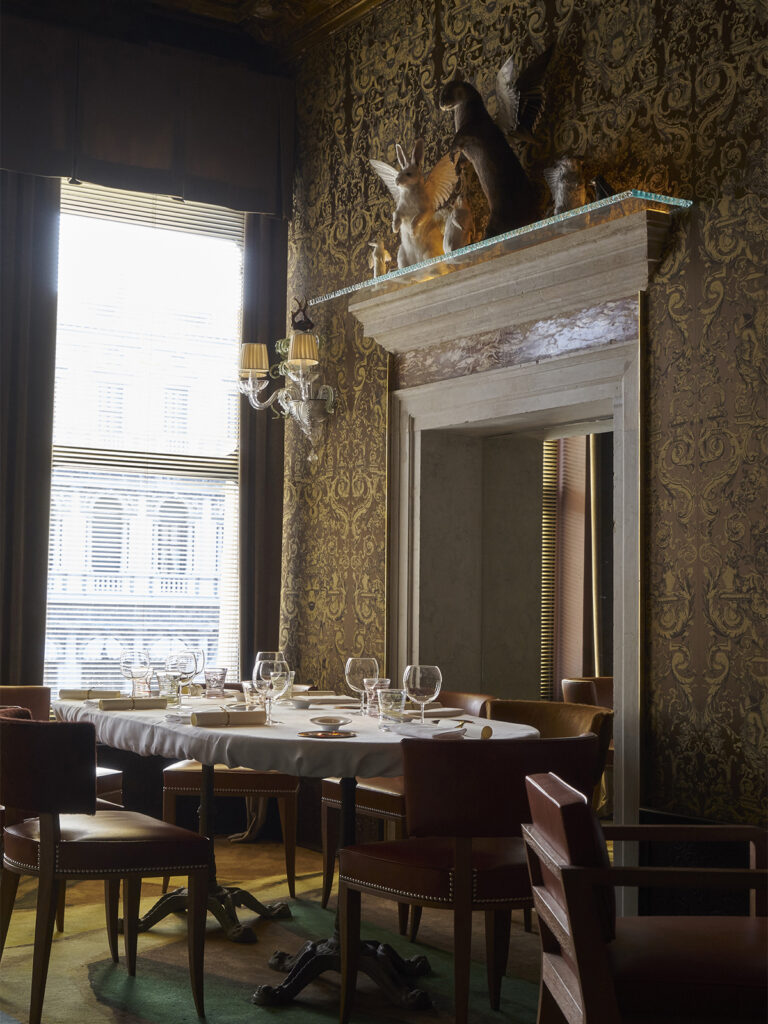
The venerable 18th-century Gran Caffè Quadri — a Lord Byron hangout — had fallen on tough times when, in 2011, it was purchased by Alajmo brothers Massimiliano and Rafaele, who also own three-Michelin-starred La Calandre, near Padova, just 38 kilometres west of Venice. Along with their culinary credentials, a vast budget and Philippe Starck, the Alajmos brought to the restoration project this new restaurant above the café. Its view over Plaza San Marco is so magnificent that window-side reservations incur a hefty surcharge (it’s worth it). Just as the sinister taxidermy here (winged rabbits, raccoons and foxes that leer at you from glass shelves over the door frames) is a nod to the Lion of St. Mark, protector of Venice, the food is mostly Venetian classics with a modern twist (say, cuttlefish risotto, with coconut curry and peach)
– Jacob Richler
Photography by
Julius Hirtzberger/The Venice Venice Hotel (view of Rialto bridge), Venice Venice Creative Team (The Venice Venice Hotel Facade), Fabio Viale (statue), Jacob Richler (Guggenheim), Nan Barlow (breakfast, pasta, Venice vista), Marco Peruzzo (ravioli), The Gritti Palace (Bar Longhi), Marie-Pierre Morel (Quadri interior)
Share: Facebook, X (Formerly Twitter)


