




![15th Mar: Kung Fu Panda 2 (2011), 1hr 30m [PG] – Streaming Again (6.65/10)](https://occ-0-1381-999.1.nflxso.net/dnm/api/v6/Qs00mKCpRvrkl3HZAN5KwEL1kpE/AAAABTrTBVkeMDYXr67C6AyxPsFRW5rAWRrlHPDfZFJ0xHwn3BO8MoU8hyAYwKE0318T3ES61zKu8PnyII8PnKt7tCEe5Vtjjzgsvuju.jpg?r=303 "15th Mar: Kung Fu Panda 2 (2011), 1hr 30m [PG] – Streaming Again (6.65/10)")



![15th Mar: Mob Psycho 100 (2022), 3 Seasons [TV-14] – Streaming Again (7.25/10)](https://occ-0-6231-92.1.nflxso.net/dnm/api/v6/Qs00mKCpRvrkl3HZAN5KwEL1kpE/AAAABSuGXeZ89EvCqU6IrTyf5WgOpPLZNdiEjNse23vlQMzilVLfUieriNW5FZdzp85KN2EFogYz3B94eklVqLlo3Av0TK7HncK3mfCX.jpg?r=c08 "15th Mar: Mob Psycho 100 (2022), 3 Seasons [TV-14] – Streaming Again (7.25/10)")


When Chris Perkins joins our video interview to talk about the 10th anniversary of Curse of Strahd on March 15, he’s holding a deliciously creepy Strahd doll. It takes me a few seconds to recognize it as the one that Holly Conrad made and used during Dice, Camera, Action, Dungeons & Dragons’ long-running actual play show that featured Perkins as Dungeon Master. That’s the show that rejuvenated my love for D&D after a long hiatus, and their season that focuses on Curse of Strahd remains their most popular among fans.
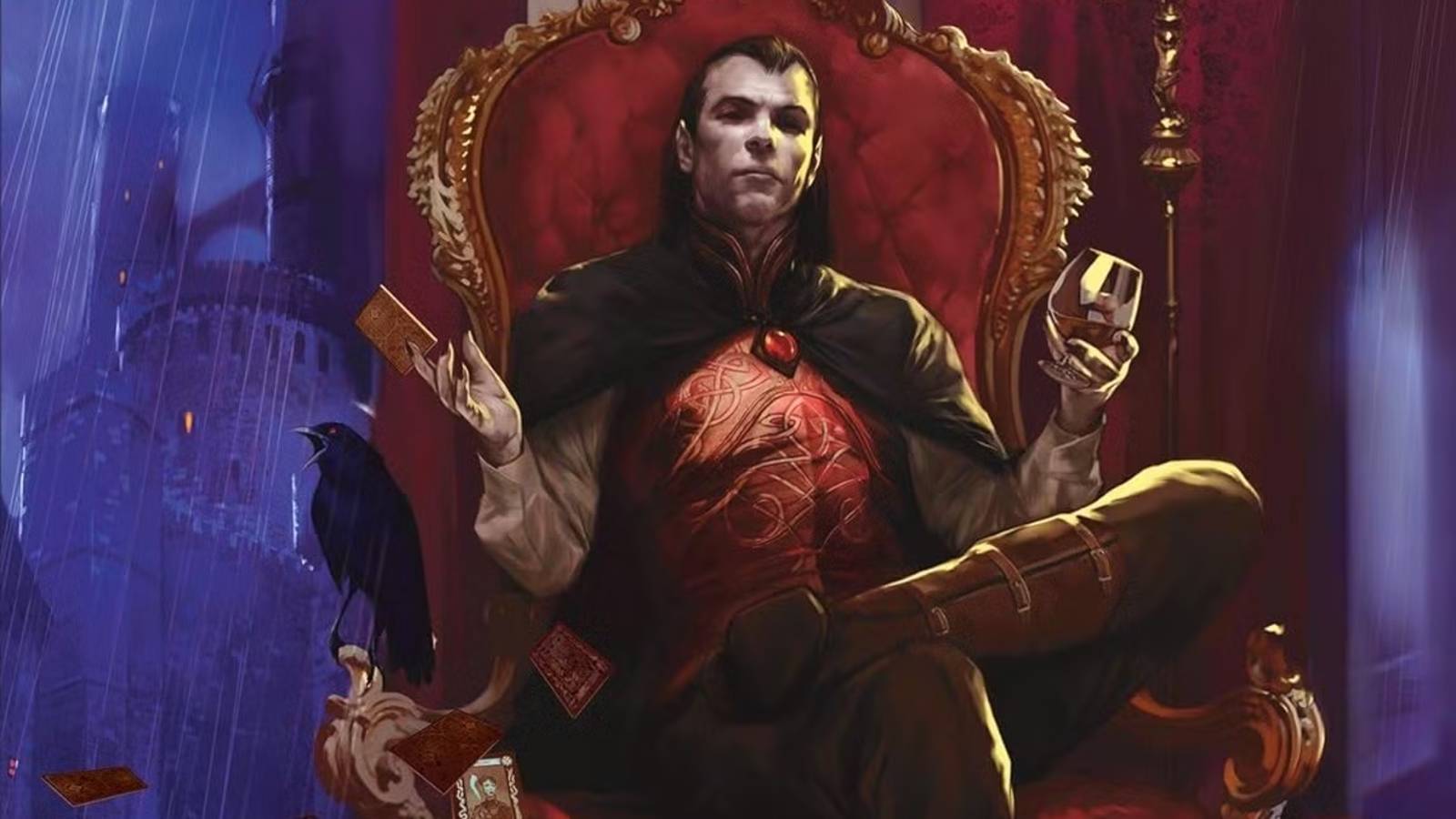
Ask any D&D fan who has played during the fifth edition era what the best adventure module is, and they’re likely to answer Curse of Strahd. Published in 2016 and designed by Chris Perkins, along with Richard Whithers, Adam Lee, and Jeremy Crawford, this adventure leads players into the misty valley of Barovia, a grim land ruled by its charismatic and ruthless lord, Strahd von Zarovich. Stranded there, the players have to find a way to defeat the powerful vampire while uncovering the secrets of this Gothic horror-inspired setting.
A decade after its release, it has become something rare in Dungeons & Dragons history: an adventure that players keep returning to long after finishing it once.
The adventure that changed D&D villains
If Curse of Strahd stands at the peak of D&D adventure design, it’s because it was built on very solid foundations. As Perkins says jokingly, “It’s a legacy built on the crypt of a much older adventure.” Module I6, Ravenloft, came out in 1983. Written by Tracy and Laura Hickman, that first module revolutionized the history of D&D. “There had never been a D&D adventure module up to that point that was villain-focused as opposed to location-focused,” Perkins says. “Everything centers around this character, rather than White Plume Mountain, or the Barrier Peaks, or the Tomb of Horrors, or any of these other locations that have become indelibly imprinted on D&D’s DNA.”
Tracy Hickman famously got the idea for this module after meeting a vampire in a dungeon room during a D&D game in 1978. “I remember thinking at the time: What are you doing here?” Hickman wrote in the introduction to Curse of Strahd. And so, Ravenloft is all about Strahd and his goals. It may not seem like much today, but in an era when D&D was all about dungeon-crawling, monster-slaying, and treasure-looting, it was a revolution.
“The other thing that amazed me about this adventure,” Perkins says, “which had never been done before, was its replayability and the randomization of certain plot elements.” In Ravenloft and in Curse of Strahd, the DM uses a deck of cards to determine where players can meet Strahd, what his goal is, and where the artifact is that they need to fight him. “After playing it a few times,” Perkins says, “I realized that this adventure never dies. I can keep playing it over and over again with different groups, and it’s never the same adventure twice. It’s a very controlled randomization. It’s not just like a free-form, do what you want. There’s a structure.”
In the early years of 5e, Perkins realized that the products were leaning heavily toward the Forgotten Realms setting, and Curse of Strahd felt like an opportunity to pursue a new direction. “I felt in my bones that pretty soon the fifth edition community is going to want something non-[Forgotten Realms], because D&D is bigger than that,” Perkins says. And the place he chose to expand 5e’s reach was Ravenloft. “The idea to do Ravenloft was purely out of love,” Perkins says. “I wanted to do something that I cared about. And I thought: I care about Strahd. I care about Ravenloft.” He immediately thought of getting Tracy Hickman involved. Bringing him in as a consultant helped convince the business side of the company that this could become a financially viable product. Little did they know it would go on to be one of the most commercially successful projects of the 5e era.


How Curse of Strahd became a runaway success
“I think Curse of Strahd is the best-selling D&D adventure of all time,” Perkins says. “It might, in terms of how often it’s been played, rival or surpass anything that came out in earlier editions, with the possible exception of Keep on the Borderlands or Lost Mines of Phandelver.” Both of these adventures, however, had the advantage of being included as part of D&D starter sets. Curse of Strahd is a standalone full-length adventure sourcebook sold at a retail price of $49.95. According to BookScan data from 2023, Curse of Strahd sold over 147,000 copies (not including direct sales, digital sales, gaming stores, and comic book stores). It’s the only adventure that made it into the top 15 of best-selling 5e products.
D&D adventures notoriously sell badly compared to rulebooks, so how do you explain this success? Perkins credits Curse of Strahd’s faithfulness to the original module as a reason for its success. “I feel pretty strongly that, if you’re going back and revisiting something, you have to be faithful to the original,” Perkins says. “Otherwise, create something new.” But the original Ravenloft is 32 pages long, while Curse of Strahd is 256 pages. Having played a long campaign in that setting, I could definitely see that Perkins and his team used the strongest elements — the villain, the location, and the structure of the adventure — that made Ravenloft so popular as a solid foundation and expanded them into something bigger and better.
Barovia’s secret depths


One of the best examples is the subplot about dream pastries. The first settlement that players visit is the village of Barovia, where they encounter a shady old lady selling pastries to the peasants that induce a drug-like stupor. The poor townsfolk use their own children as payment. But it turns out that a coven of hags is not only eating the children, but they’re grinding the bones of those children into a dust used to make those very pastries. According to Perkins, the idea of the hags tricking adults into eating their own children came from Tracy Hickman. But this is not just a chilling horror story. “There’s a lot of subtext built into Curse of Strahd, one of which is this need, not just for the characters to escape, but for everybody to escape,” Perkins says. “Strahd is trying to escape Barovia. The characters are trying to escape Barovia. And the people who are there are also looking for escape. But what is an escape for somebody who’s not a superhero or, you know, a vampire? Well, there’s addiction.”
The way that Curse of Strahd contextualizes the psyche of Barovia’s denizens makes this feel like a living place, despite the fact that it’s not that big to begin with. In terms of design, Curse of Strahd is a great lesson in the use of space. Despite its small map, Barovia feels remarkably deep — because nobody can leave, that also makes it feel very claustrophobic. Many DMs assume a campaign needs a huge, expansive world. Curse of Strahd proves this isn’t true. Perkins agrees that there’s great value in depth over breadth when it comes to adventure design.
“My preference for adventures is to treat it like a sandbox and just let people roam around in that space,” he says. “But if you make the sandbox too big, it starts to lose cohesion after a point. Fortunately, Barovia had pretty much been specced out in terms of its size, so I just took a version that felt right to me and then started to put more things in it. Maybe subconsciously I don’t want to spend a lot of time traveling, partly because a lot of GMs don’t really know how to deal with travel. But I’ve never heard anybody complain to me about Barovia being too small after playing the adventure.”
The adventure that refuses to die
Curse of Strahd ended up becoming the blueprint for this type of adventure that Perkins replicated successfully throughout the course of 5e. One of the key lessons he learned from Curse of Strahd was that it’s hard to beat a well-designed sandbox adventure: “If it’s done well, it’s so empowering,” Perkins says. “It lets the players explore the world without disrupting the adventure flow.” The trick is to just provide lures to places on a map and let the players go off in whatever directions and order they want. This approach truly reduces the dreaded feeling of “railroad,” that players can’t control where the story’s going.
“The other thing I learned is that no matter how hard you try to define the limits of what can be done in an adventure, every playgroup is going to find a way to do something completely unexpected,” Perkins says, “And I think that’s part of adventure design: you have to have an adventure that allows for it to be broken. And how do you build an adventure that can be broken and still have people happy about it?”
Perkins and his team managed to find a way to do that during 5e. The sandbox approach (and, in the case of Curse of Strahd, the randomization element) truly increased their perceived value to the consumer. The adventures don’t tell you exactly how to handle every specific situation, but Perkins believes there’s value in that. In fact, this reminds me a lot of old-school D&D adventures, where the page constraints meant that the DM had a lot to flesh out and expand. “As adventure design evolves adventure styles fall out of fashion,” Perkins says, “The lean and mean 32-page adventure modules of first edition were pretty scant by today’s standards, but I go back and look at them more often than not with fondness and say, ‘Actually, there’s something to this design.’”


The ability to find that “something” in Ravenloft and to expand and adapt it to modern times is the secret behind Curse of Strahd’s enduring legacy. “For every tale I hear of a party going through any other adventure I’ve ever worked on, in any edition, I hear 20 stories about Curse of Strahd,” Perkins says. “I think that is its legacy. It succeeded in being easy and replayable enough that GMs and players wanted to run it over and over again. It had a villain that you could just hate and feel good about driving a stake through the heart of, and it taps into primal, easily relatable human themes of power and greed and love and death, and ties it all together in a story that people feel like they can make their own.”
Ten years later, Curse of Strahd still stands as a testament to good adventure design, just like Ravenloft did for 30 years before. “Ravenloft can’t die even if you drive a stake in it,” Perkins says. “It’ll keep coming back.” With the recent announcement of D&D 5.5 returning to Ravenloft in the upcoming Season of Horrors, I wonder how the new creative team (Perkins left Wizards for Darrington Press in 2025) will handle such a powerful legacy.

