









“Thank you for calling GameStop. This is Chris speaking. How can I help you?”
That was the first thing Christopher Sabat, the singular anime voice actor, said when he picked up the phone for our interview.
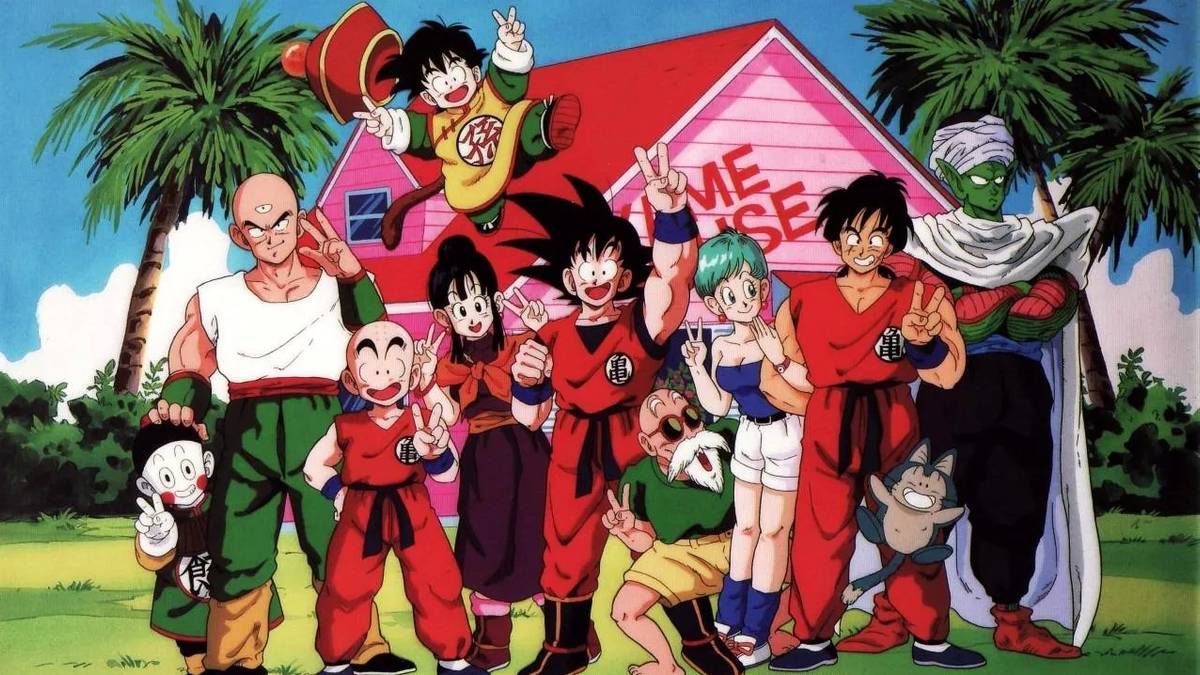
With over a dozen roles across Dragon Ball and its sequel series Dragon Ball Z alone, Sabat has brought characters like Piccolo, Vegito, Shenron, Mr. Popo, Nappa, Korin, and many others to life. But he’s most closely identified with the proud Saiyan prince, Vegeta.
Beyond voicing multiple characters in the North American English dub, Sabat also served as a voice director, helping shape the adaptation of creator Akira Toriyama’s seminal work for Western audiences in 1999. That work would become part of the cultural wave that made Dragon Ball a $10.7 billion franchise, one that ignited the anime boom in the United States and eventually propelled anime films to box-office heights once reserved for icons like Superman.
Yet despite being central to a pop culture juggernaut, Sabat wasn’t even a fan when he first got involved, and he certainly didn’t start working on the show by watching or reading Dragon Ball. In fact, at the time, he wasn’t even watching television. For the 40th anniversary of the Dragon Ball anime, Polygon got a chance to chat with Sabat about how he got involved with the franchise and how he eventually became a fan of the original series.
How Sabat first got involved with Dragon Ball Z
“I was just hired based on an audition I had done at a bank building in Fort Worth,” Sabat said. “Carly Hunter, who worked at Funimation back in those days as a rotoscoper and an artist, she’s like, “Hey, you do funny voices, right? Why don’t you come up and audition for this thing?”
Around this time in his life, Sabat was in college and playing in bands. And before he was cast as Vegeta or Piccolo, he was cast as Yamcha in a direct-to-VHS Dragon Ball movie called Sleeping Princess in Devil’s Castle.
“I found out later that sort of test to see if they could dub stuff here in America rather than doing it in Canada.”
Canada’s The Ocean Group created an early English dub of Dragon Ball, produced by BLT Productions and Funimation for syndication. The companies later dubbed Dragon Ball Z, with that version distributed by Saban Entertainment and airing in syndication and on Cartoon Network. Saban heavily edited the run, condensing the first 67 uncut episodes into 53. It was the first dub American fans were introduced to and initially featured voice actor Brian Drummond as Vegeta. It’s also the dub where the legendary “it’s over 9000” meme comes from.
“A month later, they asked if I was interested in coming on board as a full-time employee to help cast and direct the series,” Sabat said. “My very first job when I was training was literally just to press play and record on a mixer to record backups, and I was falling asleep every day. But my main job was to help try to find voice matches for the Canadian cast.”
What makes the original Dragon Ball Z dub unique


Although Dragon Ball had a dub in 1995, networks canceled it due to low viewership, and Funimation moved on to the more action-oriented Dragon Ball Z, hoping it would connect better with audiences. This is why most people initially got into the franchise by watching the sequel series first. But it was very much the same for Sabat. “In the order I worked on them, it was Dragon Ball Z first, then some of the movies, maybe even a game or two, and then Dragon Ball,” Sabat says.
Because, at the time, anime was trying to connect with a modern audience, dubs across regions varied greatly from the original dialogue, including the English dub. “When we first worked on Dragon Ball Z, the directive wasn’t to keep it as close to the Japanese as possible. In fact, the directive to us was, “Hey, just make a good show,” Sabat says.
Even the music diverged from the original score, replaced by a soundtrack by composer Bruce Faulconer. His work remains a major reason fans champion the original Funimation dub, though regional edits and score changes significantly reshaped the series’ tone.
“We would add things whenever I felt like the timing, the pacing was weird, and it was even scripted to be kind of wall-to-wall dialogue sometimes,” Sabat says. “When you watch the English version back from those days, and you compare it to the Japanese version, the English version is missing some of the silence that the Japanese version had, which in some ways was really refreshing when we got to do a newer version of it, Dragon Ball Z Kai.”
But for the first few years, dubbing Dragon Ball Z was very much A Job for Sabat. It was an especially difficult task in 1999, with little to go on. “We didn’t have a lot of resources, we didn’t have a ton of material,” Sabat says. “You couldn’t go on Wikipedia and find out any bit of information you wanted to about any episode if you forgot. The internet was hardly in its place.” It’s because of this that some of the series most iconic lines don’t stand out for Sabat.
“I wasn’t sitting there going like, ‘I should remember all these things because later when I talk about it on an interview with Polygon, I’m going to need to remember some of this stuff,’ Sabat says.
Sabat got into Dragon Ball Z first, and Dragon Ball second

Despite anime being around for 40 years, many anime fans are returning to watch the original series for the first time. Most are put off by its dated look since it was animated in 1986. Still, the debate about Dragon Ball fans never coming around to watch or read the original series has pushed folks to watch and discover how adventurous and comedic it is, an experience Sabat shared upon his first viewing.
“Watching it was a shock to me. I had no idea that Dragon Ball was like that,” Sabat says.
For Dragon Ball, Sabat was strictly a voice actor. “Mike McFarland directed Dragon Ball, and he was amazing at it. I loved the way Dragon Ball turned out, but I was definitely shocked as to the stark difference between Dragon Ball and Dragon Ball Z.”
Although Dragon Ball Z includes plenty of comedy, its heavy focus on action makes the tonal shift striking for newcomers. The transition toward a battle shonen style began with the tournament arc, the “22nd Tenka-Ichi Budoukai Saga”, moving Dragon Ball from adventurous storytelling toward the high-stakes battles of its sequel.
“After working on Dragon Ball Z, Dragon Ball made sense. Actually, some things in Dragon Ball Z made more sense,” Sabat says. “There’s a sense of humor. There’s a lightheartedness that Akira Toriyama’s work always had. And I always felt his work shone best in those lighthearted moments and those funnier moments than even in the huge epic battles.”


Although its reputation precedes itself, with all the buff, screaming, multi-colored hair men punching each other in the face, it’s important to remember that Dragon Ball was born from a place of silliness. Last year’s Dragon Ball Daima, Akira Toriyama’s final work before his 2024 passing, drew criticism for shrinking its characters in a premise reminiscent of 1996’s Dragon Ball GT, a series initially considered non-canon until Toriyama presented his own version of Super Saiyan 4. Many fans had hoped for a more serious continuation of the saga, and those wishes came true during the Jan. 24 Dragon Ball Genkidamatsuri when Dragon Ball Super: The Galactic Patrol was announced.
Now that Dragon Ball Super is set to return and continue adapting the manga of Toriyama’s protégé, Toyotarou – Sabat reminds us that beneath the universe-shattering fights and power-ups, Dragon Ball is, at its heart, about fun, silliness, and the joy of simply watching heroes (and antiheroes) do outrageous things. Embracing that spirit is the key to keeping the legacy alive, even as the story marches on without Toriyama himself.
“And that’s all Dragon Ball was really. It was just a bunch of silly, fun, goofy moments with a little bit of fighting interspersed.”

