





![27th Dec: The Threesome (2025), 1hr 51m [R] (6.1/10)](https://occ-0-1081-999.1.nflxso.net/dnm/api/v6/Qs00mKCpRvrkl3HZAN5KwEL1kpE/AAAABQbOBG60n0Lti-GH6uHGsmTBrVuPPEqHg4bh_-J5JHXLCLtAEwCt3xT64YmuXRsJzr6yETByGK0kEUmbW0aPhSVXeYHqLIqVOvpXs_A7ARlRWOQsQQ3jXDSdFfI9Jhcn-7-AmasWeLDBWnLPWsZ1jdj2qoSVw2fmYkXrTgVBWNJ_jA.jpg?r=e52 "27th Dec: The Threesome (2025), 1hr 51m [R] (6.1/10)")






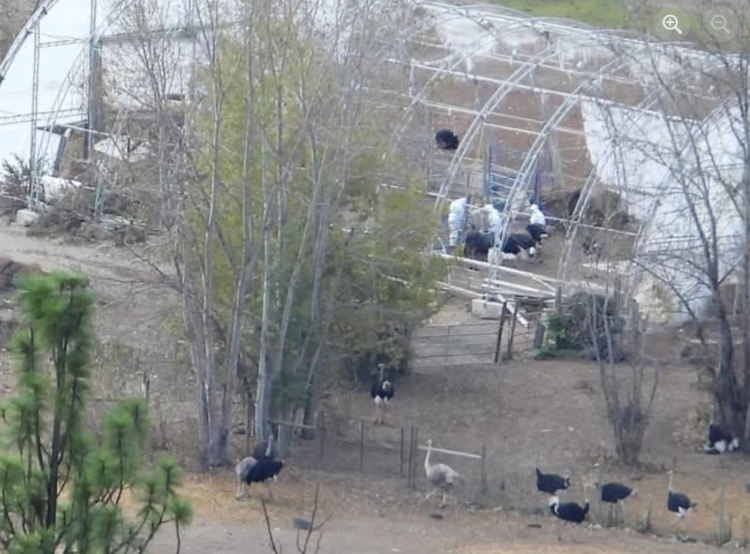
In a remote farm in the Canadian province of British Columbia, a flock of ostriches survived an H5N1 avian influenza outbreak, sparking a year-long battle over science, policy, and survival. An ordeal that featured widespread mistrust of public health authorities, economic trade pressures, and unexpected U.S. interventions, culminated in a controversial cull that divided a nation.
Universal Ostrich Farms (UOF), located in Edgewood, B.C., and operated by Karen Espersen and Dave Bilinski since the mid-1990s, underwent a significant evolution in its business model over three decades. Initially focused on meat production, eggs, oil, hides, and leather, the farm incorporated as Universal Ostrich Farms Inc. in 2001 and aimed for vertical integration with on-site meat processing. By the late 2010s, meat sales were a core revenue stream, but disruptions during the COVID-19 pandemic prompted a pivot, when post-2020, the farm shifted emphasis to breeding, antibody research, and supporting new farmers.
In May 2022, they launched Struthio Bioscience Inc. to collaborate on ostrich-derived IgY antibodies from egg yolks, partnering with Dr. Yasuhiro Tsukamoto of Kyoto Prefectural University for purification and therapeutic development. Tsukamoto’s research has focused on using antigen-exposed ostriches to produce IgY-antibody-enriched egg yolk, which has been shown to be highly effective in blocking numerous influenza viruses including SARS-CoV2 and H5N1.
According to UOF, herd health issues emerged in March 2020 with a confirmed pseudomonas bacterial outbreak affecting about 3% of birds (10 deaths), from which survivors developed immunity. No major incidents occurred until December 2024, when pneumonia-like symptoms reappeared. Over the next month, 69 out of 383 ostriches died, peaking at approximately 2 fatalities per day, with apparent full herd immunity reportedly achieved by January 14, 2025, as suggested by the absence of further illness or fatalities.
Based on experience gained in 2020, the farm initially attributed the outbreak to a recurrence of pseudomonas or similar bacterial causes, not initially suspecting avian influenza.
The conflict with the Canadian Food Inspection Agency (CFIA) began on December 28, 2024, after an anonymous tip prompted investigation. According to UOF, an initial consultation on the 28th by phone led to an agreement to provide the CFIA with two carcasses if and when the next fatalities occurred. Upon receipt and initial testing of samples on December 29, the CFIA issued a Notice to Dispose on December 31, 2024 (effective February 1, 2025), based on preliminary PCR test results, identifying a novel H5N1 (D1.3 genotype) outbreak.
The CFIA justified culling the entire flock, including survivors, under its “stamping out” policy for highly pathogenic avian influenza (HPAI), mandated by the Health of Animals Act and aligned with World Organisation for Animal Health (WOAH) guidelines. This policy requires depopulation of all exposed birds to protect public/animal health from zoonotic risks, and maintain trade access for Canada’s poultry industry.
According to the CFIA, Mexico, Japan, and Taiwan currently restrict the import of poultry products from the entire province of British Columbia due to the presence of HPAI. Trading partners including China and South Africa currently restrict import of poultry products from all of Canada for the same reason.
A human case of H5N1 in British Columbia earlier this year required critical care and an extended hospital stay for the patient. H5N1 is a newly emergent HPAI, which since the 1990s has been spreading through global wild bird populations.
Even after 11 months with no deaths at UOF since January 2025, the CFIA maintained that survivors could continue to harbour/shed virus asymptomatically, especially in open enclosures with wildlife exposure. For many Canadians who do not understand the nuances of viral immunology, this language is confusing and as the CFIA has no mandate to educate Canadians, apparent opaqueness gave rise to mistrust.
CFIA practice does not routinely provide or publish detailed pathology reports, PCR cycle thresholds, or raw data to owners or third parties for notifiable diseases such as HPAI.
Instead, the CFIA focuses on confirmatory summaries for control and trade purposes.
UOF claimed that they requested chain-of-custody and independent testing from the CFIA, and were denied, and that their quarantine order forbid them from treating or further testing the herd. This added to public distrust and fuelled protest.
However, this is a first-party claim that cannot be verified, as the full text or document of the quarantine order has not been released publicly. Furthermore, as the CFIA does not generally release details about the operations of individual farms to help protect the privacy of producers, it is impossible to verify UOF’s claims on forbidden testing or treatment. For many, without disclosed Ct values for the PCR tested conducted to verify the presence or levels of H5N1 particles or full necropsies, definitive causation remains contested.
The fact that the CFIA stated on May 23, 2025, that it would not be retesting UOF’s remaining herd, so it is not unthinkable that CFIA would have told UOF not to test.
The Supreme Court of Canada, in dismissing leave to appeal on November 6, 2025, upheld lower courts’ findings that CFIA’s process was reasonable and procedurally fair, without re-weighing evidence or looking into alternative causes, instead focusing on administrative deference rather than de novo truth-finding.
The cull of 314 birds proceeded in the evening on the same day of the Supreme Court decision.
In retrospect, the notoriety of the UOF protests reached a new level when Robert F. Kennedy Jr., Secretary of the U.S. Department of Health and Human Services, Dr. Jayanta Bhattacharya, director of the U.S. National Institutes of Health, and Martin Makary, head of the U.S. Food and Drug Administration, called up CFIA President Paul MacKinnon on May 22, 2025, to express their opposition to the cull on the basis of the supposed scientific value of the birds.
In a letter sent the next day, they argued that scientists could study both antibody levels and cellular immunity in surviving birds to inform vaccine studies and offered their full support and assistance for a long-term body of research.
Bhattacharya is also professor of health policy, emeritus, at Stanford University, specializing in health economics, public health policy, and the well‑being of vulnerable populations. According to his Google Scholar profile, he has received more than 9,500 citations in total. Between 2020 and 2022, Bhattacharya became one of the most prominent critics of COVID‑19 lockdowns. He is a co-author of the Great Barrington Declaration, which argued that lockdowns were a catastrophic public health mistake, advocated for shielding the vulnerable, while allowing the rest of the population to achieve herd immunity. He also maintained at early stages of the lockdowns that emerging epidemiological evidence suggested the infection fatality rate (IFR) of SARS‑CoV‑2 was closer to seasonal influenza than initially thought.
For many Canadians, this overture was seen as political interference akin to repeated comments by U.S. President Donald Trump in 2025 to make Canada a 51st state. Canadian mainstream media covered RFK Jr.’s intervention, with numerous outlets framing the ostrich farm protests as part of a far‑right crusade to undermine CFIA authority and to promote skepticism in mainstream science. A common theme emerged in left-leaning outlets, which actively linked far-right Freedom Convoy influencers, health nuts, antivaxxers, and Robert F. Kennedy Jr as allies of UOF in its case against the CFIA.
The CFIA justified culling the entire remaining ostrich flock at UOF based on the following cited concerns:
- Persistence of a potential virus source: Allowing any exposed domestic poultry flock to remain alive leaves a reservoir where the virus could persist, even in apparently healthy birds (which can still shed virus asymptomatically).
- Risk of reassortment or mutation: Survivors could facilitate viral evolution, especially in an open-pasture setting with ongoing wildlife exposure (e.g., wild birds), increasing risks to other poultry, animals, and potentially humans (as H5N1 is zoonotic or able to jump between species).
- Public and animal health protection: an HPAI virus poses spillover risks, potentially to mammals, including humans.
- Economic and trade impacts: The infected premises contributed to provincial/national export restrictions on poultry products; full depopulation is required to eradicate the outbreak, minimize industry losses (Canada’s $6.8-billion poultry sector), and restore trade access.
The CFIA emphasized that apparent recovery or antibodies do not eliminate transmission risk. Supporting these claims, the CFIA referenced a study that suggests that ostriches may function as an intermediary species for HPAI viruses. An intermediary species is known to function as an incubator, which over time can amplify mutation and act as a bridge for transmission to new host species. Specifically, the CFIA argues that ostriches may facilitate the necessary mutations that make it more transmissible to mammals.
Other known examples of intermediary species for HPAIs are as follows:
- Pigs for both H1N1 and H3N2
- Ducks for H5N1
- Camels for Middle East Respiratory Syndrome (MERS-CoV)
- Civets for Severe Acute Respiratory Syndrome (SARS-CoV-1)
One of the relevant points missing from the CFIA’s communications over 2025 on the UOF quarantine and its basis to order the culling of their herd, is the fact that it is common to find that juveniles of intermediary species often experience significantly higher interferon regulatory factors (IFR) than do adults. This is relevant, as UOF has expressly pointed out that many of the 69 ostriches that died in December 2024 and January 2025 were juveniles (<4 years of age).
There are differences between the relative strength of the innate versus adaptive immune systems between juveniles and healthy adults. When an animal is born, it has an overactive innate immunity and an adaptive immunity that is starting from scratch.
The latter gains increasing dominance with age.
The innate immune system is largely responsible for initiating an inflammatory response or cytokine storm following infection, so younger animals tend to show higher morbidities and mortalities to HPAI among intermediary species than do the older. The cytokine storm ultimately does the most damage following an aggressive respiratory viral infection.
This highlights another important point that the CFIA could have better communicated.
Intermediary species have developed the ability to suppress an innate immune response to certain zoonotic viral infections, and their adult adaptive immune systems are able to manage higher rates of viral replication and shedding without eliciting a strong inflammatory response. This evolutionary feature in intermediary hosts benefits the virus by giving it an environment to replicate and mutate over greater periods of time versus in other host species in which they elicit strong innate immune responses.
Asymptomatic viral shedding is analogous to the way people can be allergic to certain antigens in their diet without ever experiencing an inflammatory response – and thus be unaware of the allergy.
The Canadian government missed an opportunity in not partnering with the U.S. Department of Health and Human Services. H5N1 is spreading rapidly in a natural pandemic but has not been spreading from human to human. Therefore, the case to have studied the UOF herd after having achieved apparent herd immunity had merit.
This is especially true in view of Tsukamoto’s research using ostrich-derived IgY antibodies from egg yolks. Further, developing H5N1-specific antibody therapies could prove highly valuable, especially if and when H5N1 mutates to become readily transmissible to humans.
The lack of trust among throngs of UOF supporters toward the CFIA and federal government is noteworthy. There is a deep level of mistrust among many Canadians toward their public health institutions – and it has grown from 2020/21 COVID lockdowns and environment-related policies that often villainize ranching and animal husbandry. Meanwhile, H5N1 remains an emerging risk for the next pandemic. Improved education and communication from federal agencies would benefit everyone.
(Joseph Fournier, BIG Media Ltd., 2025)
