

![13th Jan: The Boyfriend (2026), 2 Seasons [TV-14] – New Episodes (6.9/10)](https://occ-0-953-999.1.nflxso.net/dnm/api/v6/Qs00mKCpRvrkl3HZAN5KwEL1kpE/AAAABRhhCmIuXZbEfVa-2q9kouj9krQwvhDVIn7vtb-bDL1ZZ90sJODiZnwZedxCCKWSj6RAwCtfJz19yxZizn208cIv927NIs9p5fo_RC-VLWUjNEOl4kHuqNr7ZRFpSh4VkdsTL3aQFzNnP8dD43cQEAfIONt5V1zIRKy_vtEh.jpg?r=8d6 "13th Jan: The Boyfriend (2026), 2 Seasons [TV-14] – New Episodes (6.9/10)")





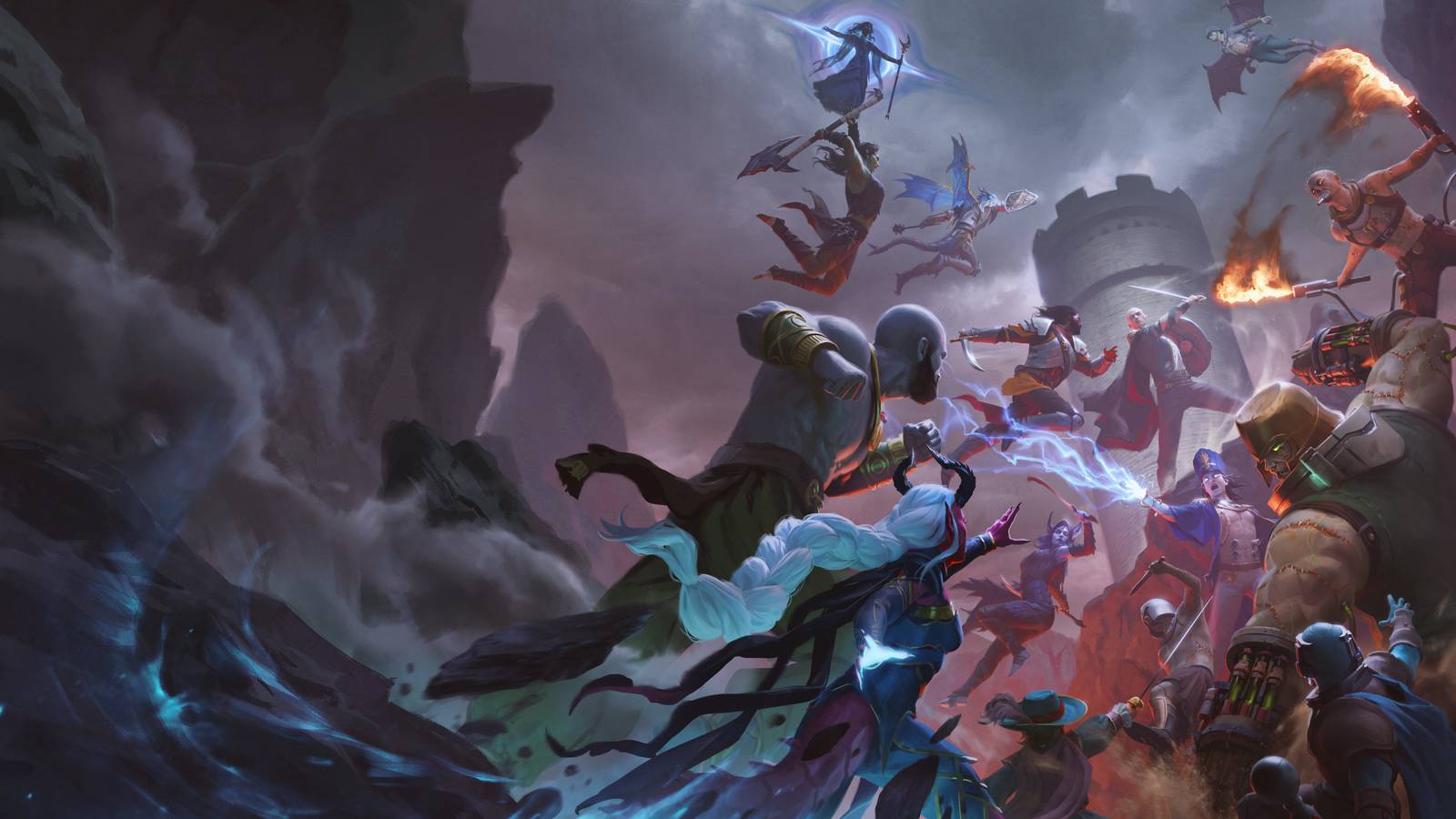
Less than five months after MCDM Productions launched its Dungeons & Dragons competitor Draw Steel, the publisher began a crowdfunding campaign with the express purpose of determining if the game had a future.
“There’s something about role-playing games where if you’re not actively supporting it, if you’re not really investing in your community and your own content, then people stop playing,” MCDM founder Matt Colville told Polygon in a video call. “They think of it as a dead game.”
The original BackerKit for what would become Draw Steel raised $4.6 million when it launched in 2024 with the explicit purpose of providing an alternative to D&D in the wake of the Open Gaming License fiasco. About a third of the people who participated in that effort came back for the Crack the Sun campaign that wrapped on Jan. 5, pledging $2.6 million towards a new book of encounters, an epic-length campaign, and additional character options, which will be delivered throughout 2026.
Colville is pointing to that success and the strong sales of the game’s introductory adventure The Delian Tomb as he reaches out to YouTubers and podcasters to try to expand his game’s reach.
“I personally think that the average Draw Steel player has yet to discover the game,” Colville said. “I think there’s a big audience for it outside the relatively small group of people we’re dealing with now.”
But MCDM is still focused on delivering what those core fans want. They presented their Patrons with nearly 20 adventure ideas to figure out what they were interested in. The top pick, Crack the Sun, is a five-act campaign that pits the players against both an army of hobgoblins and shadow elves who rule the realm of Equinox, a world Colville describes as a jungle version of D&D’s Dark Sun.
The campaign is being supported by the release of Between Sun & Shadow, a short book of ancestries common to Equinox and other locations players will visit, including the sun itself. These include shadow elves, goblins, ratfolk, faeries, and dragonfly folk.


“When you open up an RPG book, especially a fantasy role-playing game, it’s the developer’s job to put choices in front of you that feel new and exciting in addition to stuff that feels familiar,” Colville said.
One of the challenges the team faced was coming up with an identity for gnomes that would feel distinct from dwarves or halflings. Their art director originally had the idea of making the species ride squirrels and dress in classic red caps like David the Gnome, but the breakthrough came when the art team shared images of brightly colored fungus.
“They look like candies,” Colville said. “They almost look like sea creatures in tide pools. That started to get really exciting, the notion that [gnomes] live on the ground in Equinox, which is the most dangerous place to live on the planet, and they do it with really good camouflage by covering themselves in these fungal growths.”


The crowdfunding campaign will introduce a new class, Beast Heart, that lets players have an animal companion. Beyond the nine options in the Draw Steel Heroes corebook, MCDM has also released a Summoner class and the Patreon-exclusive mech-focused Operator, and it’s working on a warlock-like class called Acolyte.
Colville suspects they’ll eventually have enough new options for a second Heroes book. While MCDM has its own complex world called the Multiverse, the team is focusing more on adventures and character options than setting books.
“70% of our audience have their own worlds, and that sort of liberates us to do whatever we feel like doing with our world,” Colville said. “What they do is go ‘That’s a cool idea. That’s a cool character. That’s a cool organization. That’s a cool map. I’m just going to steal all this stuff.’ So I feel like it’s our job to make sure that the game rules are broadly applicable to a wide variety of players.”

Since the initial release, MCDM has been regularly sharing updated versions of its PDFs with rules changes and clarifications based on player feedback and pain points. That feedback is also shaping their approach to future books, like ensuring that Draw Steel’s downtime system is easier to integrate into homebrew campaigns.
“It’s our job to listen, but to be proactive in that listening and ask questions and follow up,” Colville said. “I think people are going to be really blown away when they see the extent to which we are interested in supporting this game.”

![13th Jan: Sheriff Labrador (2022), 11 Episodes [TV-Y7] (6/10)](https://occ-0-7328-999.1.nflxso.net/dnm/api/v6/Qs00mKCpRvrkl3HZAN5KwEL1kpE/AAAABWmxvXCfCLPRbNn7t2qGV4y2wItsfYrSZj6A2LvJ5VmZFJoypTjOoKL0fUz-M7Q2vgZX-39F70wSC1v6k1Xc-efmkPgzq0RT_bpMjKXdsjDRZDkhQb0EVF39y6S-4NwceKcalzoyFmmrZPM_Xq-vX3_57EAjxYPPymg1_tbbv5nXfA.jpg?r=d00 "13th Jan: Sheriff Labrador (2022), 11 Episodes [TV-Y7] (6/10)")