











Last year, Old Oak Games founder Emmet Byrne raised $200,000 on Kickstarter to produce Beyond the Woods, a setting for Dungeons & Dragons 5th edition that draws on the folklore of his native country, Ireland, and the fallen world of Elden Ring. The digital version of Beyond the Woods will be released next month, but Byrne has already begun crowdfunding for his next project: translating the setting to Sun of Oak’s narrative tabletop role-playing game Legend in the Mist.
“I’ve always been a big fan of Powered by the Apocalypse and Fate, and there’s a lot of the same kind of DNA in Legend in the Mist,” Byrne told Polygon during a video call. “It’s a very different way to play and a chance to bring Beyond the Woods to different players and also potentially get some of the 5e players to come over and try something new as well.”
That idea was always core to Legend in the Mist, which launched last year with a crossover tool to help 5e players convert their existing characters to the system, trading attack modifiers and hit points for short sentences or tags representing their character’s skills, values, and weaknesses. Byrne said he was inspired by Zamanora: Ballad of the Witch, a setting based on Balkan and Slavic folklore that launched with content for both D&D and Legend in the Mist last year.
“For a lot of people, D&D is the entry point, but people often start branching out,” Byrne said. “There’s a generation that got into RPGs through Critical Role, but then with the OGL debacle, Critical Role releasing Daggerheart, and MCDM, there’s a broader awareness that there’s more RPGs out there.”
Byrne designed Beyond the Woods to fill the gaps he saw in 5e. In addition to offering new subclasses, classes, and species, the book focuses on hex crawl exploration, with rules for hunting for food and finding camps. For Legend in the Mist, he focuses more on the narrative aspects of traveling through the wilderness, with vignettes for journeys and relaxing around the campfire with your party.
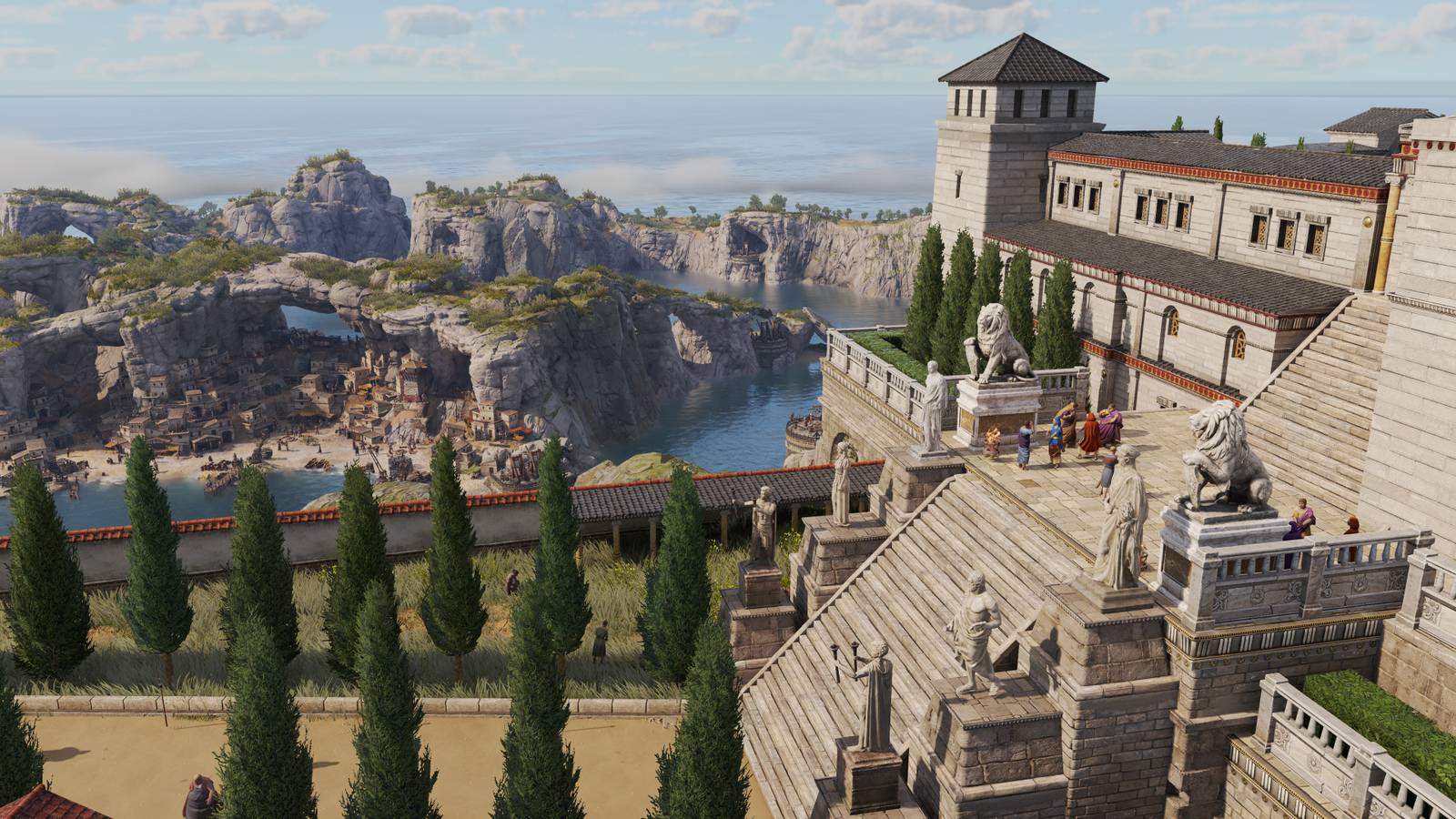
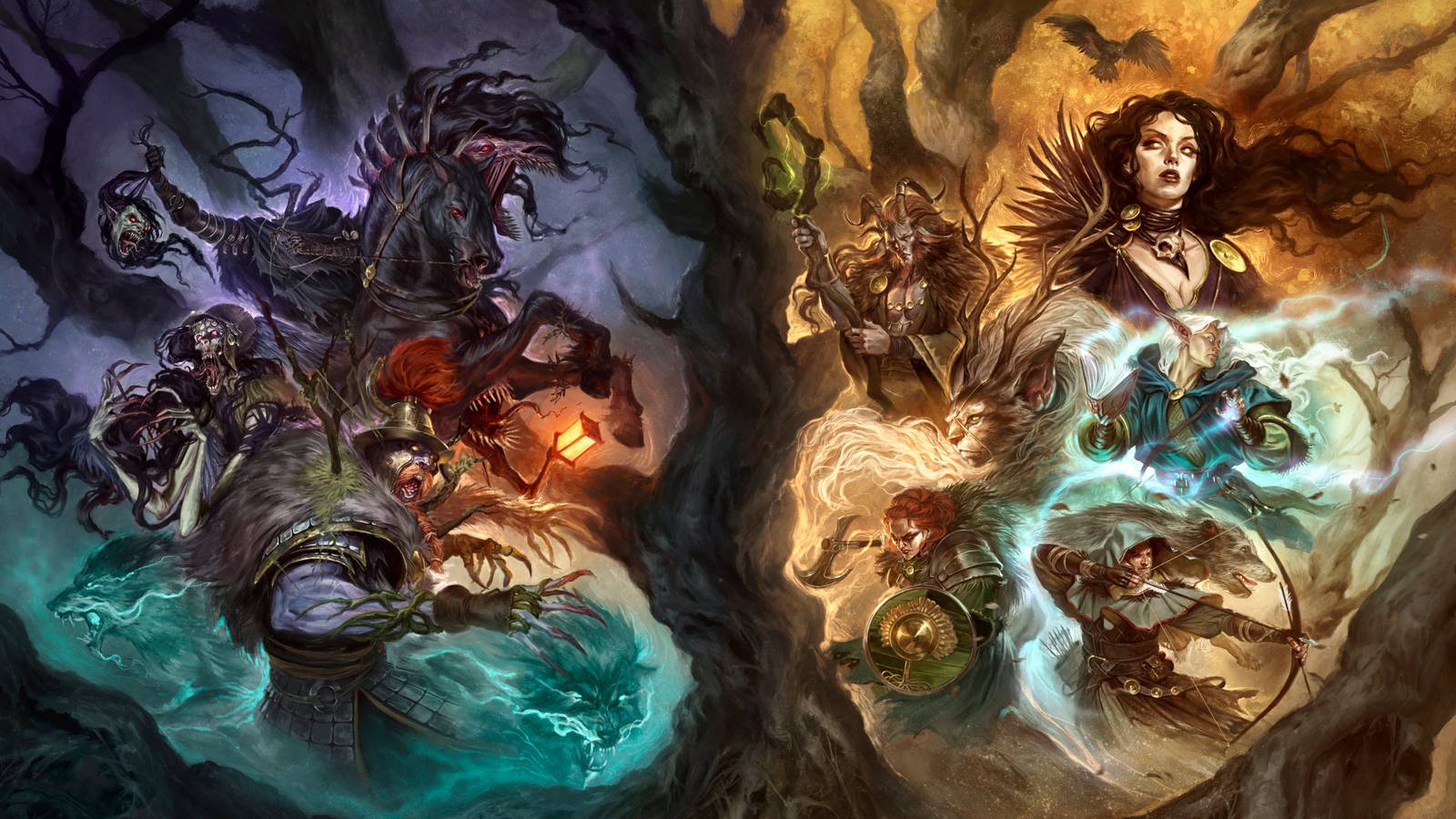
Beyond the Woods is set in a dark world ravaged by the spectral legions of the Sluagh. The golden oak that protects the city of Céad Darach is dying, and players take on the role of heroes who must venture into the wilderness to look for the lost magic that might save their people. It’s a darker, grittier setting than Ravensdale, the rustic fantasy world of Legend in the Mist, and encourages players to build more powerful characters. While Byrne said he enjoys the tension that horror creates, he also wants to write stories where the darkness can be overcome rather than embracing the grittier tone of Old School Renaissance games like Mörk Borg.


The wilderness may be unforgiving, but players can find and build bastions that can even provide a home for allies. Byrne was working on the 5e rules for bastions when he learned they would be included in the 2024 Dungeon Master’s Guide, but he didn’t find much overlap with Wizard of the Coast’s disappointingly thin base-building rules.
“In D&D, it’s very punishing to the point that it’s just not feasible,” Byrne said. “Let’s just fudge that a bit so the players can have something cool and not worry hugely about the power imbalance or whatever. As long as the players are having fun and telling the story they want, I think that’s the most important thing. And if they have a base, that’s something you can destroy later on. Suddenly they really want revenge on the big bad that destroyed their home.”
Byrne’s setting draws on Irish folklore from the Ulster Cycle, Mark Williams’ Ireland’s Immortals, and the works of Lady Augusta Gregory. Because Irish folklore was rooted in oral tradition, much of it has been lost over the years or blended with Scottish lore.

“It’s just people’s stories that their grandparents told them,” Byrne said. “I was obviously being as honest and true to the myths as possible, but using them as a jumping off point and bringing in the weirder side of folklore.”
Beyond the Woods shows the origins of monsters already common in popular culture like banshee or the Headless Horsemen, along with more obscure creatures like Irish versions of vampires and werewolves.
“There’s no reason that Irish folklore can’t support video games and TV shows like you get with Norse, Greek, and Roman [mythology],” Byrne said. “I think it’s a chance to bring that to the forefront. There’s a lot that’s been going on in the world for the last 10 years, so there’s a comfort in those sort of fireside tales, even in the simplicity of good versus evil. There’s a message in them that things will get better.”

