



![29th Sep: LEGO ONE PIECE (2026), 2 Episodes [TV-Y7] (6/10)](https://occ-0-1522-1001.1.nflxso.net/dnm/api/v6/0Qzqdxw-HG1AiOKLWWPsFOUDA2E/AAAABQwDv8VRfapPAnFitDAManKe0OAe0N3tU7fw14oP4OJK5d1o-bhO06z1YdYFxuHPsCnDW3WJyg7yyPVG89-sHDG04WMo7PwA5tGxuP0CYbJMY2II4TzExCE8N3IB5bSNY-gRzhcb8MRjRR_kE-uJBNicuOmO5ZXlFP_RagpSPW4iuQ.jpg?r=244 "29th Sep: LEGO ONE PIECE (2026), 2 Episodes [TV-Y7] (6/10)")



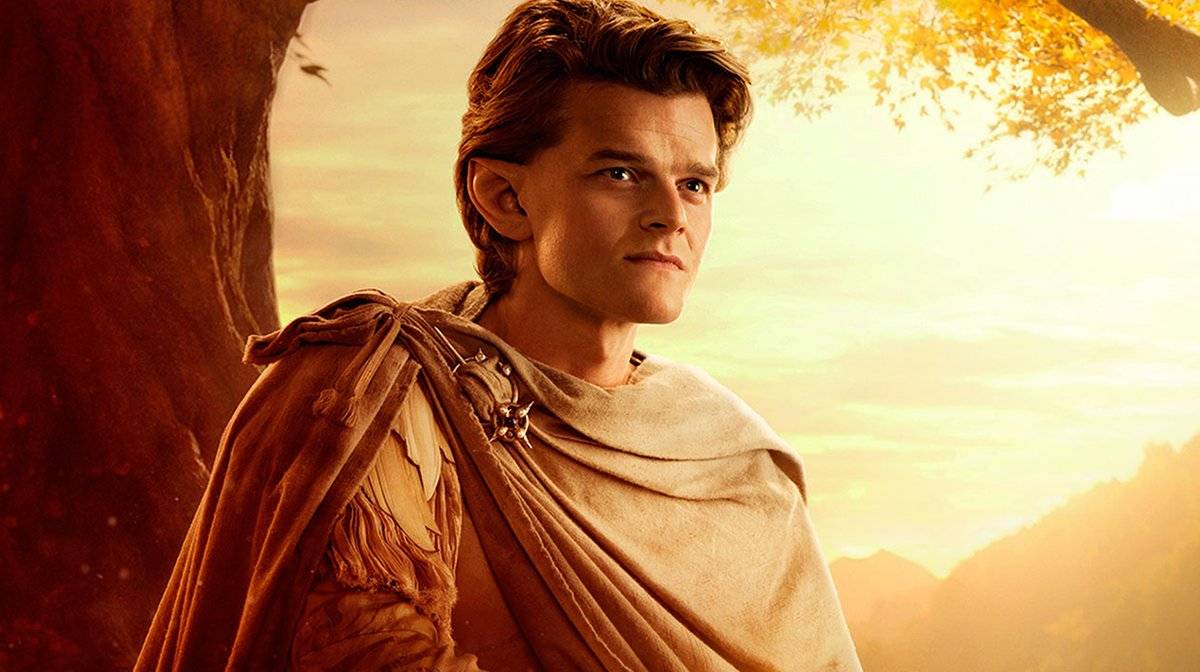
Elrond has one of the most remarkable family trees in all of J.R.R. Tolkien’s legendarium, even if The Lord of the Rings barely scratches the surface of that lore. Not only did his mother transform into a great white bird, but his twin brother Elros founded Númenor, beginning a royal bloodline of men that would endure for thousands of years, eventually producing Elendil, Isildur, and, ultimately, Aragorn. (Oh, and his father is the North Star.)
The Rings of Power has nodded toward this history before — Elros appeared alongside Elrond in a tapestry in Númenor back in season 1 — but the series largely left one of the most profound chapters of Elrond’s personal history literally in the background. Until now.
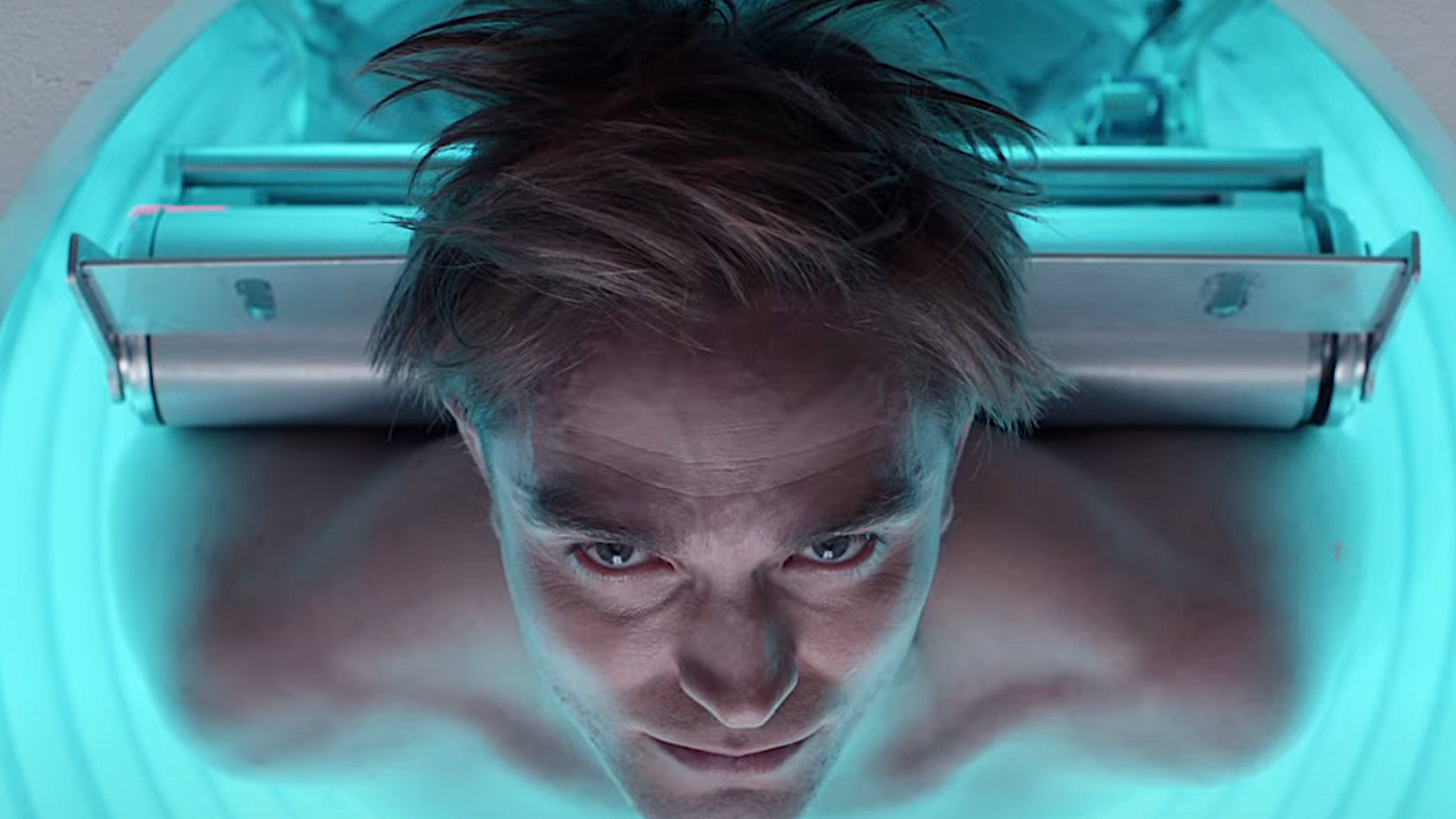
Polygon can exclusively reveal a first-look at how season 3 introduces Elros to the series. Robert Aramayo, who’s already appeared as Elrond in seasons 1 and 2, plays his human brother as well in a flashback to the moment Elros tells Elrond that he’s chosen mortality. The season 3 scene occurs before present-day Elrond travels to Númenor seeking help in the war against Sauron. Elros and Elrond were always explicitly twins in Tolkien’s canon, but Rings of Power notably establishes them as identical, despite the fact that one chose to be an elf, while the other opted for human (rounded ears and all).
The Rings of Power’s showrunner discusses the journey


“Elros makes this decision that’s so different from Elrond’s,” series co-showrunner J.D. Payne tells Polygon in a Zoom interview. “He chose to be an elf. He chose immortality, and his brother chose mortality — and chose Númenor.”
For showrunners Payne and Patrick McKay, finally introducing Elros became essential once they sent Elrond sailing to Númenor. At this point in the story, Sauron is already recruiting men to become Nazgûl but has yet to forge The One Ring. The flashback is presented as a memory Elrond dwells on as he contemplates his upcoming mission. How much of his brother might Elrond see there almost a thousand years after Elros’ death?
Payne says Elrond has always carried sadness over losing “the person who was closest to him of anyone.” Visiting Númenor allows Elrond to metaphorically “walk a mile in his brother’s shoes” and encounter the civilization that grew from what was once just a dream Elros spoke aloud to his brother on a quiet patch of grass in the woods.
Robert Aramayo had to figure out what made Elros human
Aramayo approached the brothers from opposite directions. To find Elros, he studied Númenor, its people, and Tolkien’s mortal heroes, trying to imagine the qualities of the man from whom that civilization might have originated. He describes his goal to Polygon as finding an “earth” and “humanness” in Elros.
Elrond, by contrast, has always evoked “wings and air” for Aramayo — imagery he connects to the character’s mother Elwing, an elf who sacrifices her life to protect a Silmaril and is transformed into a giant bird in the process. That difference is about more than making it easy for viewers to tell which Robert Aramayo they’re watching. It gets at the decision that ultimately separates the brothers.


“Elros was very close to the people that he led,” Aramayo says, referring to the mortal men who fought against the evil Morgoth and were rewarded with Númenor (the godlike Valar literally pulled it out of the sea). When the opportunity came to lead them to Númenor, Aramayo believes Elros simply thought “he’s the best person to do it.” So he chose to share their mortal fate.
For Elrond, that decision is considerably harder to process. The Elrond we see in the flashback is younger than we’ve ever seen him. His parents, Eärendil and Elwing, were already gone, essentially sacrificed to their higher purpose. Now, his twin brother is choosing a fate that guaranteed Elrond would eventually lose him, too.
“Loss is such a part of his journey,” Aramayo says. “Loss and Elrond, they just… seem to be a big part of what Tolkien wrote for him.”
And Elros’ decision echoes through the family thousands of years later. Elrond’s daughter Arwen ultimately faces her own choice between the fates of elves and men during The Lord of the Rings. Like her uncle, she chooses mortality to be with Aragorn, who is an extraordinarily distant cousin.


When I brought that parallel up with Payne and McKay, McKay was reluctant to speak for his actor. “I think you’d have to ask him,” McKay says. So I did.
Aramayo wasn’t convinced that Elros would necessarily be the first person on Elrond’s mind when Arwen makes her decision. Thousands of years separate those moments, he pointed out, and Elrond experiences an enormous amount of additional life and loss between them. But he also doesn’t think Elrond ever completely puts his brother’s decision behind him.
“It seems unresolved within him, that choice,” Aramayo says.
Númenor is Elros in the same way Rivendell is Elrond
There’s another wrinkle to Elros’ decision that makes it especially difficult for an immortal brother to comprehend. Tolkien famously describes death as the “Gift of Men,” but where men actually go after death is one of the great mysteries of his world. Elves remain bound to Arda, and those who die go to the Halls of Mandos. The ultimate fate of men lies beyond the world and is unknown even to the elves.
“You can take it further,” Aramayo says of the connection between Elros and Arwen. “There’s also a fear because we don’t know what happens to the Edain after death.” (Edain is the word the elves gave to men who inherited Númenor.)


That uncertainty, he says, can make mortality seem “weirdly exciting and a gift,” or it can make it terrifying. It’s a tension that will eventually consume the kingdom Elros founded. Númenor’s growing fear of death becomes one of the defining forces in its history, despite the fact that its first king willingly embraced mortality.
For Elrond, however, living so close to death may ultimately help shape the elf he becomes.
“I’ve thought a lot about that too, especially because of Elrond, because I feel like death is closer to him,” Aramayo says. “Loss is such a part of his life in one way or another through death.”
Elrond’s long life will be filled with more of it, but Aramayo doesn’t see that history of loss as simply a source of sadness. Instead, it helps explain one of Elrond’s defining characteristics.
“It’s weirdly his power,” he says. “He’s all about preservation and protection.”
Rivendell, which finally appears this season, is perhaps the ultimate expression of that instinct: a refuge Elrond creates and protects as the world around him changes. Aramayo also connects Elrond’s familiarity with human mortality to his unusual ability to understand other creatures who don’t share his immortality, including his friendship with the dwarf king Durin.
That history becomes impossible for Elrond to ignore once he arrives in Númenor. The kingdom is deeply divided, and hostility toward elves has only intensified. Yet Elrond is also confronted with statues, tapestries, and people who see in his face the image of their kingdom’s first king.

It’s a bizarre experience for an elf accustomed to standing beside legends like Galadriel and Gil-galad, rather than being treated as one himself.
“I’m not sure he’s expecting to walk in there and be so revered,” Aramayo says.
More troubling is what Númenor has forgotten. Aramayo says Elrond expected its people to retain a stronger connection to Elros and their shared history, only to discover a civilization increasingly disconnected from the ideals of its past. When he first arrives, he even encounters an image of Elros whose elven ears have been removed.
“He expected them to have more memories of his brother around,” Aramayo says. “He thought they’d be more connected to their past as a people.”
That makes the sorry state of Númenor more than just a geopolitical problem for Elrond. This isn’t merely a powerful kingdom whose support he needs against Sauron. It’s the thing his brother chose to spend his mortal life building.
“Númenor is his brother in the same way that Rivendell is Elrond,” Aramayo says. “To see where it is right now is very, very challenging for him.”


For all the differences between the twins, their connection to these places may be the clearest expression of their characters. Elros chose to become a man and built Númenor, a kingdom that flourished for many years before sinking back into the ocean. Elrond chose to remain an elf and founded Rivendell, a safe haven that thrived and, in a way, never died — even after the elves sailed west and left it abandoned, it was merely reclaimed by nature.
Elros chose mortality, but the kingdom he built was meant to outlive him. For Elrond, arriving in Númenor means discovering that even his brother’s legacy isn’t immortal.
