







![5th Apr: SPY x FAMILY (2025), 3 Seasons [TV-14] – New Episodes (7.1/10)](https://occ-0-82-999.1.nflxso.net/dnm/api/v6/0Qzqdxw-HG1AiOKLWWPsFOUDA2E/AAAABeCwzTCvDY0oTZL-tArtwbx92i8N72L8N_-oAtQ8pOK5XQyNFFJpJhTjdeWptMkAnrggcLxXL03VR9dY74__tL5doyF8EMGFa4JEf3DjCgRbrsZBLVuNNiRsM7c4HoAHIT1yG3mTXOcwQJEmybT6Mjc1KZ_e2gI56owyDPm-.jpg?r=577 "5th Apr: SPY x FAMILY (2025), 3 Seasons [TV-14] – New Episodes (7.1/10)")




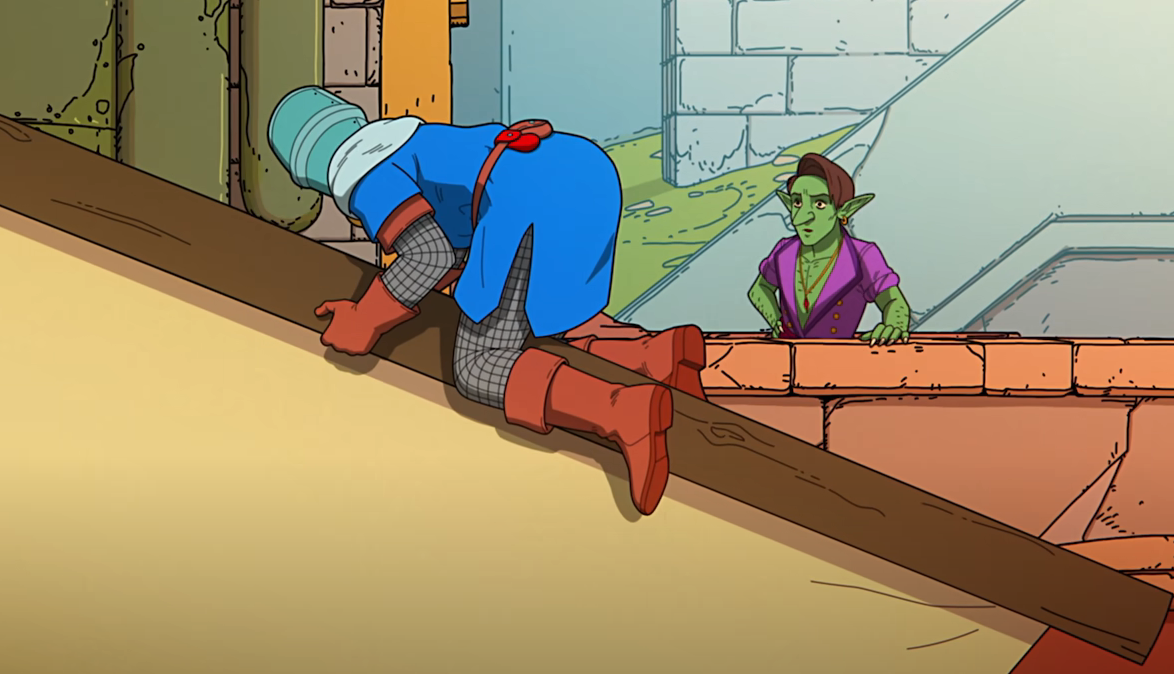
Since 1975, video games have been trying to replicate the experience of playing the world’s most famous tabletop role-playing game, Dungeons & Dragons. The actual pen-and-paper game hadn’t been out for more than one year when a student at the University of Illinois created The Dungeon on the PLATO IV system. Fifty years later, D&D-inspired games are winning awards and shaping the industry. Not all of them, however, can capture the experience of a tabletop D&D campaign. Or at least, no one did it as well as Esoteric Ebb has. This game is a homage to the history of CRPGs that is not saddled by nostalgia but looks boldly at the future of the genre.
Developed by Christoffer Bodegård and published by Raw Fury (of Blue Prince fame), Esoteric Ebb is a CRPG that wears its Disco Elysium inspiration on its sleeve. Just like ZA/UM’s breakout 2019 hit, Esoteric Ebb is all about dialogues and the choices you make. Eschewing a traditional combat system, both games instead rely on skill checks and discussion prompts to solve dangerous situations, like fights or traps. However, Esoteric Ebb features a turn-based, pseudo-combat system, where you can select actions through dialogue options or cast spells, while opponents will inflict damage on the protagonist, the Cleric, and his party.
Esoteric Ebb gives the Cleric (not to be confused with The Cleric, which you can become if you truly embrace your clericality by repeating to everyone that you are, indeed, The Cleric), the classic spread of D&D abilities: Strength, Dexterity, Constitution, Intelligence, Wisdom, and Charisma. The twist is that these stats, besides providing bonuses for skill checks, each represent a different political faction in the city of Norvik. By interacting with the world, and favoring one stat over the others, your political views also become more clearly aligned. You could feel the pull of Norvikan nationalism to stake the claim of your masculinity, or perhaps you believe the free trade capitalism of the Freestriders is the only path to a bright, abundant future. Charisma is the only unaligned stat, because it represents the “apolitical” view of an opportunist. After playing D&D for 20 years, I’ve come to see stats as nothing more than tools for specific builds, so it was truly refreshing to witness a new approach to one of the core aspects of the game.
Despite these clear mechanical differences, Esoteric Ebb feels like the closest D&D experience I’ve had in a video game, perhaps ever. One big reason is the deep, expansive lore created by Bodegård, which is based on his “homebrew” D&D campaign (meaning that the setting, story, and characters are original and not based on published products). The Esoteric Coast is one of the most fascinating fantasy settings I’ve had the pleasure of exploring. The premise is of brilliant simplicity: This was an empty world created by a mysterious being called JOR, which he then filled with creatures coming from a plethora of planes of existence.
“The pitch behind The Esoteric Coast as a setting is that it could contain anything the DM and the players prefer,” Bodegård wrote in his developer notes. “Look at it this way: if you make your own homebrew setting, and you put orcs in it, what kind of orc are you using? Tolkien? Warcraft? 40K? You’re always going to be inspired by something. You’re never going to be wholly original. When I made my homebrew — The Esoteric Coast — I simply wanted a reason why nothing was original, and find originality in that reason.” It’s very similar to another great D&D setting, Planescape, and Bodegård admits being also inspired by it.


D&D gave us the best RPG of all time, then abandoned its world
Despite Planescape: Torment’s critical acclaim, D&D games never came back to that setting
The game shows but a tiny fraction of that world, the city of Norvik, but that’s exactly what happens in most D&D campaigns. You’re never going to explore an entire world. But if you’re lucky to have a good Dungeon Master, you will feel echoes of that world wherever you are, be it a nameless village in the woods or the royal capital. Esoteric Ebb is great at this, even if the lore can sometimes get a bit too overwhelming. After all, this is a game with over one million words. It’s hard to keep track of everything while the Cleric is trying to solve the mystery of a tea shop that blew up five days before the first-ever democratic elections in Norvik. Coincidence? Oh, and you also begin the game waking up from death, in true Planescape: Torment fashion, and with amnesia.
I’m not saying that games like Baldur’s Gate don’t have a sweeping, fascinating setting, of course, but there’s an issue with that. Almost every official D&D game is set in the same area of the same world: the Sword Coast of the Forgotten Realms. I do love the Realms and the games that take place there, but it’s become a tad too familiar. The dream of every veteran DM is to craft their own world; after all, the Forgotten Realms were originally Ed Greenwood’s homebrew D&D setting. Gaming in a homebrew campaign is a unique experience for D&D players. You feel that the world is incomplete, but in a good way: Usually, there are a lot of grey areas waiting to be sketched out by your actions (unless your DM is a Tolkienesque detail fanatic with a lot of free time). The world of Esoteric Ebb has that feeling built into its core, due to the effect of the Esoteric Pockets, areas where magic distorts reality. As Bodegård described it: “It’s impossible to measure anything geographically even just a few dozen kilometers away from the Coastline, because everything keeps changing.”
That feeling of uncertainty is a big part of Esoteric Ebb’s gameplay, even in a relatively limited space like the areas of Norvik you get to explore. There’s no map in the traditional sense in Esoteric Ebb, except a rough drawing that the Cleric sketches as you walk through areas. If that’s helpful in Norvik, once below ground, in the dungeon-like tunnels, the Cleric basically gives up and it’s up to your memory as the player to find the way. I had to fight a feeling of frustration many times during my playthrough, to the point that, despite my good intentions, I had to check some online guides to proceed. That’s not necessarily a bad thing. Esoteric Ebb is designed to be anything but linear. You’re not supposed to get everything in one playthrough. There are so many secrets and twisting narrative choices that you are bound to get lost. But let me ask: What was the last time you got lost in a game? And, in true tabletop D&D fashion, you can “ruin the campaign” by acting dumb and making the worst choices, which, in Esoteric Ebb, will often lead to interesting and unexpected developments.


Esoteric Ebb reminds me of the Monkey Island series, or rather, what Monkey Island would be if it were developed today by an RPG and D&D fanatic (including the series’ trademark irony). The gameplay often feels like that of a point-and-click adventure, while the role-playing elements are baked into the game on a deeper level. You will still find familiar elements like spell slots and feats, but, just like with the six ability scores, Bodegård found a way to rejuvenate these RPG tropes by rethinking their functions. It’s never about how you can use them to hurt someone else, but how they can help you and what they say about your character. For example, Charm Person can be an incredibly useful spell, but what about its ethical implications? As a DM with 20 years of experience, I wish that all my players approached their characters the same way, and that the rules of D&D were skewed more towards self-development and discovery than making things blow up or hit them really hard with a stick.


![5th Apr: Striking Distance (1993), 1hr 41m [R] (5.95/10)](https://occ-0-1731-999.1.nflxso.net/dnm/api/v6/0Qzqdxw-HG1AiOKLWWPsFOUDA2E/AAAABVfWvLrzox7INlmlT3wZcdVvFrgI0qH49vKyrq63_KJ7Ig5MEbO3QE2f457ilvLZDTJ2ZvsSareEe5iOXTYx8tx6DAUlWu9FC0iw.jpg?r=919 "5th Apr: Striking Distance (1993), 1hr 41m [R] (5.95/10)")