![28th Sep: Last Trace with Kaelyn Moore (2026), 1 Episode [TV-14] (6/10)](https://occ-0-748-1001.1.nflxso.net/dnm/api/v6/0Qzqdxw-HG1AiOKLWWPsFOUDA2E/AAAABRgiBU3u-RO0IYB22mBLC13mui-x1MaNWSzO5-nhnojAPPXSM990zzQhwuHCuZF0GeSg2_G1o9St8zkTJtH551sS-LBQZ-U22AfeguU5ASfejiHnTbEMuYbP1n3OAl-c4GJirpxE1ksZvcywAXvmbNt0XvxDEJLxCJHAfelZ8nFJlRatB_D7mL-p7mWKKAYXGOiJXJ7RPX-P8-GhlBxm6bsjD61wcNH5IOlqpYXN9OLrusVNdobNwEz7Twb1ICjePY-croMZo1bfmzOs3I9lyESKqdx7gosuGJS3GSzS4iYz0rlivziilQ_ekBl-Kfssr-ej1R-0D-Dvir-6rsO-fsaGS7yjXhL4PIDsbD7t5mAnjWBAMyLTDl0cxmPB-c7XaSBCYKyy8GnEQsg_k9BkUxs5dPWCDFVPBnspru9GZvy8XYg--9MojRvG65G-4tZlZ4ouUd5BEdYxkkIldPJ9mj1bcLjuIpjiDcc0VrRS0q2pHsA8pgb8XJMr097Bez-XLdwr3ylfv9Nh9u2qEHM0_MTUdicV050JkrEJR6qLIcHtFhKAMeBplvyTDe05EK6B.jpg?r=97b "28th Sep: Last Trace with Kaelyn Moore (2026), 1 Episode [TV-14] (6/10)")



There’s something fundamentally sad about seeing a concert by a band that’s past their prime. Their new material either feels like an uninspired retread of their earlier work or is too far removed from what made them great in the first place. Yet if you stay to the end, they’ll play the hits you came for and transport you back to when you fell in love in the first place. Season 2 of Batman: Caped Crusader is exactly that kind of nostalgia act, with Bruce Timm striving to recapture the glory of Batman: The Animated Series but only occasionally succeeding.
Created by Timm and Eric Radomski, Batman: The Animated Series is one of the most influential animated shows of all time. It created entirely new DC characters like Harley Quinn and Renee Montoya, who would become part of Batman canon, and redefined the backstories of existing characters like Mr. Freeze to turn one-note villains into tragic figures. Caped Crusader, a spiritual sequel from Timm and James Tucker, takes a similar approach to The Animated Series, attempting to redefine those characters yet again, this time through the lens of 1940s film noir. Season 1 largely succeeded, especially in its depiction of Gotham’s deep corruption and its subtle reimagining of Harvey Dent/Two-Face. Caped Crusader season 2 attempts a similar trick and mostly falls flat. Ten new episodes focus on reinventing members of Batman’s rogues’ gallery while putting the spotlight on more minor characters, but few of them truly shine.
The weakest part of Caped Crusader season 2 is Eddie Nygma (Ronan Raftery), which is a problem since he gets more screen time than any other villain. Rather than portraying the brilliant trickster of the comics or even the Zodiac-style serial killer Matt Reeves made him in The Batman, Caped Crusader turns the Riddler into a brutal thug who gets his name not from a love of brainteasers but a propensity to use a Tommy gun to riddle people with holes. The character is unrecognizable aside from his green suit and hat.
In his own movie, Reeves, who is an executive producer on Caped Crusader, showed a talent for stripping away classic gimmicks from both Riddler and the Penguin and leaving behind a rich character with understandable motivations. But there’s nothing to this Riddler, who somehow manages to have a seemingly endless army of goons despite regularly throwing their lives away. The fact that it takes Batman so long to handle someone who is hardly a criminal mastermind is a discredit to the Dark Knight’s detective skills.
That’s a recurring problem with the season, where Batman is often more observer than hero. Sometimes that works to create a powerful sense of inevitability, like the standout episode “The Spectral Hand,” which pays off season 1’s plot focused on the corrupt cop Jim Corrigan (Roger Craig Smith) with a twisted ghost story. But a surprising number of episodes play out in ways where Batman’s actions barely matter; the villains mostly just kill each other, creating far too convenient endings instead of what could be thorny conclusions.
All the screentime the Riddler gets leaves other villains underutilized. Caped Crusader revives Freeze’s original name, Mr. Zero, and then makes him extremely unimpressive, as if the series was determined to undo Timm’s own work. Turning Hattie Tetch (Laraine Newman) into a talk show host is a clever twist on the Mad Hatter’s mind control powers reminiscent of Darkseid’s agent Glorious Godfrey, but the series never really focuses on her motivations or the impact of her broadcasts enough to make her feel really threatening. Scarecrow has a great new look inspired by a Black Plague mask, but he’s thinly sketched and his episode mostly focuses on the return of Harley Quinn (Jamie Chung).
Yet for all these failings, Caped Crusader has moments of absolute brilliance. No one can replace Kevin Conroy, but Hamish Linklater nails the transition between the grim, brooding Batman and the artificial, vapid charm of Bruce Wayne. Warner Bros. Animation delivers on both the subtle moments, like Bruce’s eyes narrowing as his persona shifts, and the tense battles where Batman has to use every trick to survive. The moody noir setting, evoking the same Dark Deco style as Batman: The Animated Series, is beautifully realized in the dramatic Gotham skyline and in small details like the ‘40s TV sets.
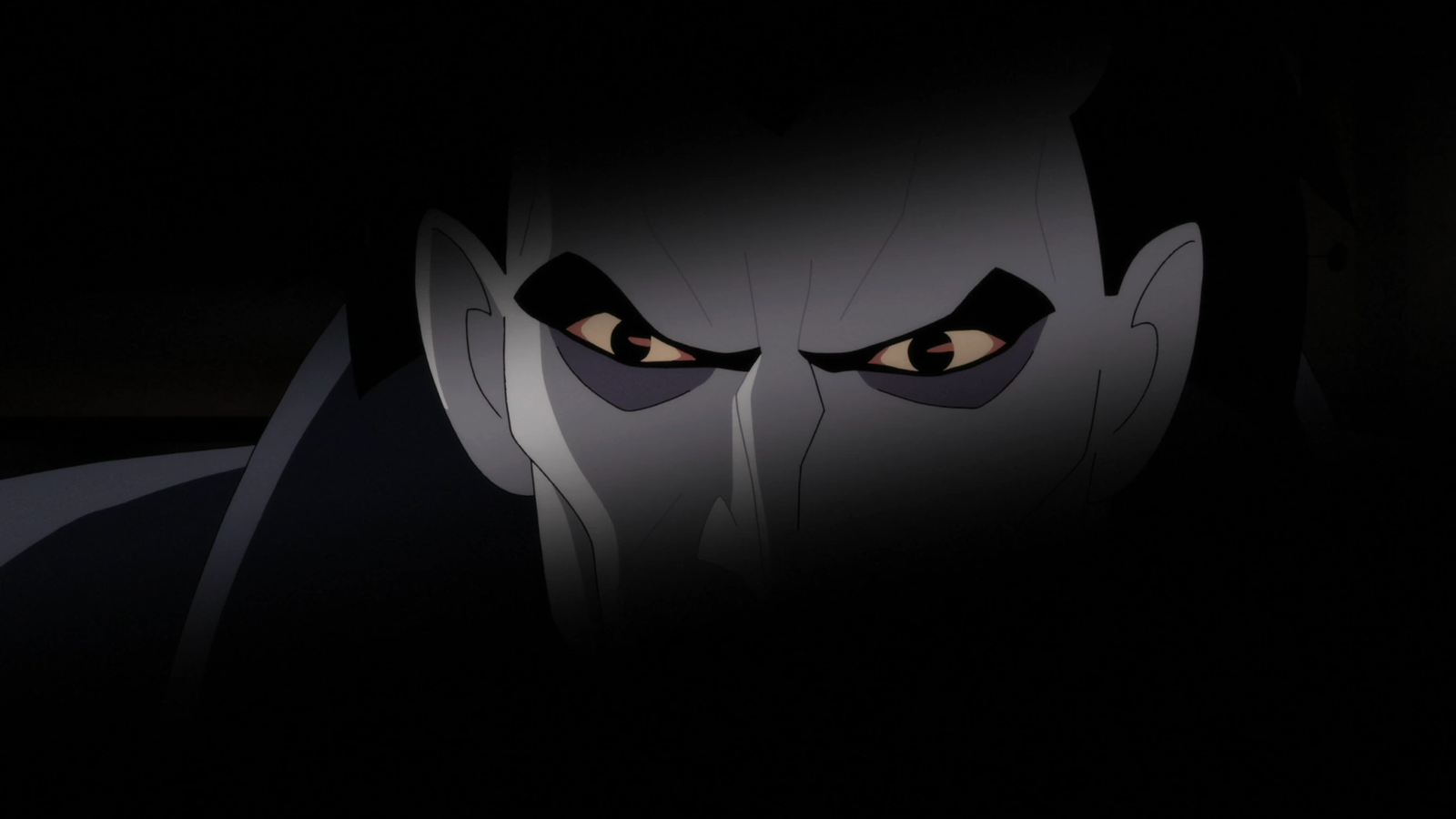
The true highlight of the season is its spin on Batman’s greatest foe. The Joker (Matthew Needham of House of the Dragon) lurks in the background, building up to something big through little stingers. When he’s fully unleashed in the final two episodes of the season, he’s absolutely terrifying, utterly in control as he executes a complex plan that brings Gotham and Batman himself to the brink of destruction.
Because it was a kid’s show, Batman: The Animated Series couldn’t kill anyone. Caped Crusader has no such restrictions. Oftentimes the series’ body count feels inflated for shock value, but every use of the Joker’s signature toxin is actually horrifying. This Joker borrows some of his love of spectacle from Mark Hamill’s spin on the character fused with the approach to Gotham’s underworld Heath Ledger’s Joker took in The Dark Knight. But Caped Crusader has created a novel spin of the character by zeroing in on his obsession with being Batman’s only true equal as he pushes the hero to his limits.


Those extraordinary episodes are why Caped Crusader deserves to keep going, even if season 2 has more misses than hits. There’s so much promise in the dynamics the show is building between Batman and his allies and enemies, and many villains the series hasn’t had the chance to play with yet. Caped Crusader is never going to be as good as Batman: The Animated Series, but Bruce Timm can sometimes still hit those high notes. When he does, it’s easy to forgive every sour note and just hope for an encore.
All 10 episodes of Batman: Caped Crusader will be released on Prime Video on July 31.