![28th Sep: Outside (2026), 8 Episodes [TV-MA] (6/10)](https://occ-0-75-1007.1.nflxso.net/dnm/api/v6/0Qzqdxw-HG1AiOKLWWPsFOUDA2E/AAAABavfs6zxDKUaAJb3JxLrb68g0kyDYbtvBExWsuovaeGqaOQQms4lvY0IzR6XdRFOi2eqVkSeY5iDHarUtfSl3pSHGhsTZ8ajZR8nGEtg7to8Q24TbSLgon491g3oMOLy959YObGNCNu0qeLFaU_Jazs0Ih_Z5vYj31c37uN_86EbCMukAxRzGvZ0IruwAfMgLrzsy2RNLEMIT7H7-A6TvOGkqfgXfaBNGqszijvUu3CmdcmCw9w2H8cFHVm7aTMZKcw5SwzPSNA6kgrA1exLdvb6-Waj53uJ_dMbV_Bz5rIv_K0pR3tW0e3up1wMRw.jpg?r=c77 "28th Sep: Outside (2026), 8 Episodes [TV-MA] (6/10)")






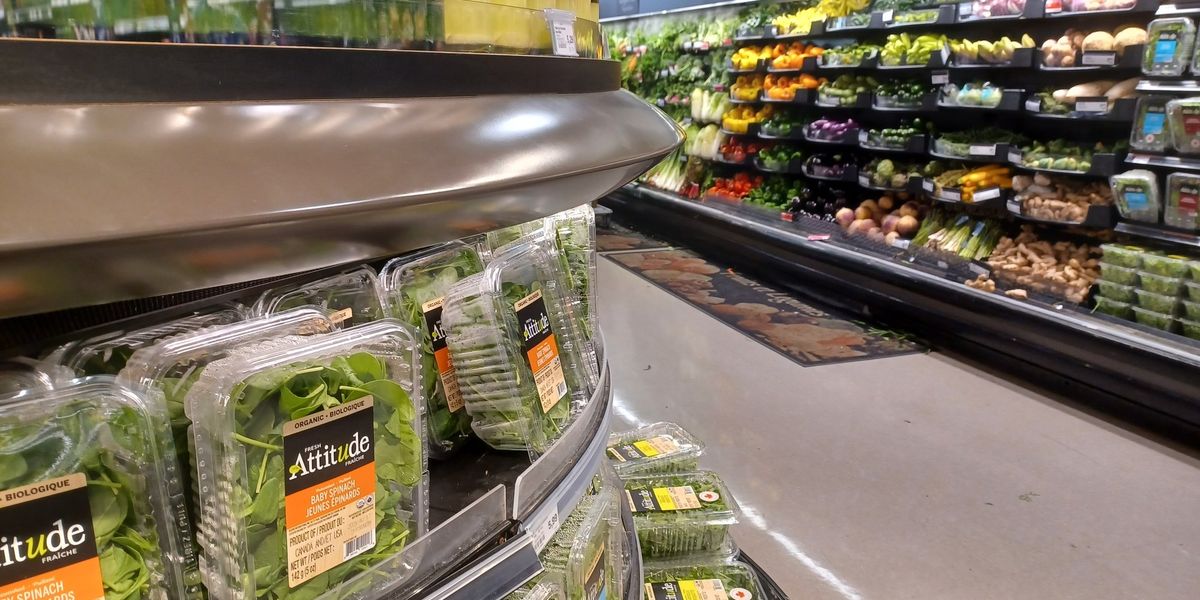
There’s a certain kind of dread that sets in watching your total climb at the self-checkout, while you wonder how a few bags of groceries somehow cost what a restaurant meal used to.
It’s not just in your head, either. Grocery prices in Canada have climbed roughly 27% over the past five years, well ahead of general inflation. And while hefty prices on everyday items don’t seem to be going away anytime soon, there’s a wider list of tax-free groceries in Quebec than most people realize, plus a federal benefit a lot of people don’t even know they’re getting.
None of it undoes what’s happened at the register over the past few years, but since every penny counts these days, here’s the full breakdown of what’s taxed, what isn’t, and what else might already be working in your favour.
What’s always been tax-free
Most basic groceries in Quebec are zero-rated, meaning neither GST nor QST gets applied. That includes:
- Meat (beef, poultry, pork, lamb, deli meats, sausages)
- Fish
- Eggs
- Fruits and vegetables
- Bread and cereal
- Unflavoured dairy products, including plain milk, cheese, butter, cream and yogurt
If your cart is full of these staples, a decent chunk of your total is already tax-free, even if it doesn’t always feel that way once you hit the register.
What became tax-free as of July 15, 2026
Quebec eliminated the QST on a range of additional items this past July. The government framed the move as fixing inconsistencies in the old rules, like a product being taxed when sold on its own but exempt in a six-pack.
Unlike the federal government’s temporary GST holiday from a couple of winters back, this one was designed to be permanent. The province estimates a couple with two kids will save roughly $50 a year.
The QST no longer applies to:
- Ice cream, ice milk, sorbet, frozen yogurt and frozen custard, in individual portions under 500 g or 500 mL
- Doughnuts, cookies, glazed or filled croissants, cakes, muffins, pastries, tarts and tartlets, sold individually in portions under 230 g, or in packages of fewer than six
- Custards, flavoured jellies, mousses and flavoured whipped desserts, in individual portions under 425 g
- Prepared fruit salads and fruit platters sold for a single price
- Prepared vegetable platters sold for a single price
- Salted or seasoned nuts and seeds, as long as the seasoning isn’t mostly sugar
- Trail-mix-style blends made mainly of oats, cereal, seeds, nuts or dried fruit, whether in bars or sold in bulk
- Toilet paper and facial tissues
The exemption doesn’t apply if the item’s bought somewhere that already taxes nearly all its food sales, like most restaurants. It also isn’t extended to anything bought from a vending machine or sold as part of a catering contract.
What’s still taxed
Plenty of grocery items remain taxable (5% GST + 9.975% QST) in Quebec, so don’t expect these to get any cheaper at checkout:
- Candy, chocolate bars and other confections
- Carbonated beverages and carbonated mineral water
- Beer, wine and other alcoholic beverages
- Hot beverages, like coffee and tea
- Foods heated for immediate consumption, like fries, pizza or rotisserie chicken
- Chips, popcorn and similar snacks
- Granola bars, unless they happen to fall under the new trail-mix exemption above
- Household items like paper towels, cleaning products, personal hygiene products and pet food
A federal benefit for high grocery prices
Beyond what’s taxed or exempt at the register, there’s a federal benefit worth double-checking if you haven’t already. The Canada Groceries and Essentials Benefit (CGEB), which replaced the GST/HST credit this past July, pays out tax-free quarterly amounts to individuals and families with low to modest incomes to help cover everyday essentials.
The eligibility rules, payment structure and calculation method were carried over unchanged from the old GST/HST credit, just repackaged under a new name. What did change is the amount: since July 2026, payments have been boosted by 25%, and that increase is set to hold for five years, through 2031.
There’s nothing separate to apply for here either. Filing your taxes automatically puts you in the running for the CGEB, along with any related provincial or territorial programs you might also qualify for, so if you’ve filed recently, there’s a good chance this is already landing in your account without you noticing.
AI tools may have been used to support the creation or distribution of this content; however, it has been carefully edited and fact-checked by a member of MTL Blog’s Editorial team. For more information on our use of AI, please visit our Editorial Standards page.