![13th Feb: The Singers (2026), 18m [TV-MA] (6/10)](https://occ-0-1081-999.1.nflxso.net/dnm/api/v6/Qs00mKCpRvrkl3HZAN5KwEL1kpE/AAAABSLP6OyRxSc4mrYjXT7DUPj0qSIbiyxpTGJ_nYlHWB7p03sXMeHZGk5MEHkz92YPt5-cipjO_csm7s85BP0loVRYgQU0-U4W1_Km7FX5Oxg411BG0XOC_5rMed6rPQKV2q_WtkfaFzl8_ENg7jbFKvm-Qbp_qe60vouni2SlmhqlnWkUKJe-H_c-WxFM0WINY4S_ol8.jpg?r=73d "13th Feb: The Singers (2026), 18m [TV-MA] (6/10)")



![13th Feb: Joe's College Road Trip (2026), 1hr 51m [R] (6/10)](https://occ-0-858-92.1.nflxso.net/dnm/api/v6/Qs00mKCpRvrkl3HZAN5KwEL1kpE/AAAABdk0lw-Xi5Umj8TmLbEUqoTIuP4BKvT6-4gXGXPb0TT3HG9axUx9YYrw9vLYF5oBf3PKUCU61oJPuGbuCdRUeQad94nb5e_QMTn6JwsdfhEBqxHqe0Qnpika8RoEPz-xpbRZYIYcRE6IYqx_3vgB_4KMPupmzrd5V0S8TcUZXPIb2Q.jpg?r=36b "13th Feb: Joe's College Road Trip (2026), 1hr 51m [R] (6/10)")


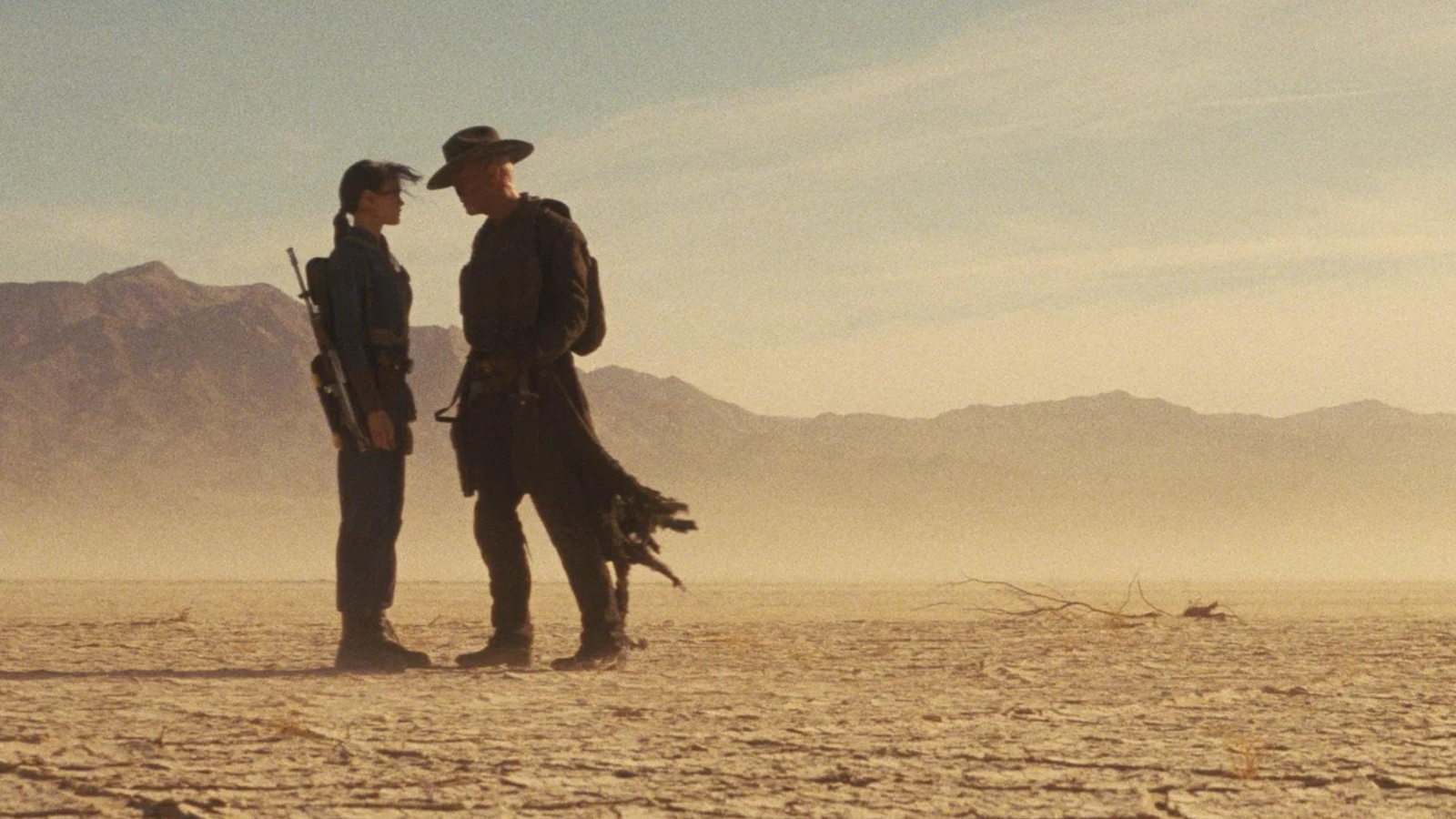
From the start, it’s been clear Fallout is setting up a romance between ex-Vault Dweller Lucy MacLean (Ella Purnell) and Brotherhood of Steel member Maximus (Aaron Moten). Their characters appear to be similar in age, Maximus is visibly smitten with Lucy, and Lucy even propositioned him in a hilariously awkward scene in Season 1, and they later shared a kiss. It’s probably pretty safe to say these two are going to end up together.
And yet I cannot stop thinking about Lucy’s relationship with The Ghoul (Walton Goggins).
The mismatched duo spends most of Season 2 together, but their uneasy alliance can only go so far. In episode 5, “The Wrangler,” The Ghoul agrees to take Lucy back to the Vault as part of a deal with her father, Hank (Kyle MacLachlan). Lucy, understandably, is shocked and hurt — she was under the impression they were tracking down her scheming father together.
“We were actually beginning to get along,” Lucy says, voice cracking.
“Yeah…” The Ghoul agrees.
This is a huge act of betrayal, and knowing Lucy isn’t likely to come quietly, The Ghoul hits her with a tranquilizer dart to ensure the trade goes off without a hitch.
“Couldn’t be helped,” he continues, visibly tearing up. “Family’s a fucked-up thing.”
It’s also worth noting here that The Ghoul is seemingly so overcome with guilt that he begins dissociating, reminiscing on memories of a night he got blackout drunk and woke up being cared for by his wife. If the show’s creators wanted viewers to see Lucy and The Ghoul’s relationship as one that is strictly platonic, surely they’d have shown us flashbacks of him being comforted by Janey instead of Barb.
Unfortunately for The Ghoul, Lucy isn’t the kind of gal who goes down without a fight. Barely clinging to consciousness, she uses her recently acquired Power Fist to punch The Ghoul right out of a second-story window, impaling him on a pole.
Watching this, all I could think about was the first time The Ghoul betrayed Lucy. In Season 1, a very dehydrated Lucy — who was being held prisoner by The Ghoul at the time — is forced to drink irradiated water. The Ghoul looks on in satisfaction, seemingly enjoying the corruption and destruction of this naive smoothskin.
“Oh I’m you, sweetie,” he told her at the time. “You just give it a little time.”


Seconds later, after a failed escape attempt, Lucy bites off The Ghoul’s finger. He responds in kind by cutting off one of hers, before immediately attempting to trade her to an organ-harvesting outfit in exchange for the medication that keeps him from going feral.
After a daring escape, Lucy eventually vows that, although she may one day look like The Ghoul, she’ll never be like him. To emphasize this point, she leaves him with a supply of the medication he so desperately needs.
But as we’ve seen in Season 2, Lucy hasn’t fully stuck to her declaration that she will never be like The Ghoul. Lucy started out as an innocent Vaultie, and while she’s done her best to stick to her morals, Season 2 has seen her character develop into something a bit more complex than a simple “good guy.” While she generally tries to avoid bloodshed (aside from her brief brush with Buffout addiction) and isn’t a fan of killing, she’s at least learned to accept that in the Wasteland, it’s kill (well, maim) or be killed. Yes, she’s still largely shooting enemies in the knee (or the ass) rather than the head, but she seems to have gotten The Ghoul’s message that the Wasteland doesn’t have her best interests at heart.

What’s more fascinating is the effect Lucy has had on The Ghoul. When we meet him in Season 1, he’s a ruthless lone wolf. Determined to find his family, he doesnt seem to care that his quest to get to them had turned him into someone so cruel and merciless that his wife and child likely wouldn’t recognize him even if he hadn’t succumbed to ghoulification. But in Season 2, we’ve caught little glimpses of Cooper Howard peeking through The Ghoul’s rotten exterior. In flashbacks, we’ve seen that Cooper used to believe there was good in the world.
When The Ghoul attempts to trade Lucy to organ harvesters in exchange for his anti-feral medication in Season 1, there’s not a hint of guilt. But when he trades her for the safety of Barb and Janey in Season 2, there are visible tears. He’s grown attached to Lucy, and though I’m sure he’d refuse to admit it (even at gunpoint), his guilt for betraying her once again is palpable.
That’s pretty much the moment my brain decided they belong together.

Look, I get it. He’s a 200-something-year-old ghoul, she’s a beautiful young Vaultie. Not exactly an ideal pair, and I get the distinct impression that the show’s creators want viewers to see this relationship as a sort of pseudo-father/daughter bond. But their constant back-and-forth — The Ghoul repeatedly encouraging Lucy to give in to her worst instincts, and Lucy repeatedly encouraging The Ghoul to accept that somewhere inside his desiccated body are the bones of a good man — makes for seriously compelling television.
Their shared scenes are my favorite part of each episode. Every moment between them crackles with electricity, and you never know what kind of out-of-left-field decision either of them is going to make in any given scene. I surely can’t be the only one who feels there’s far more chemistry between Lucy and The Ghoul than between her and Maximus.
In in the Season 2 finale, “The Strip,” we finally see that trust has been established. Hank, finally realizing that his obedient daughter now has a mind of her own, is moments away from implanting Lucy with a mind-control device when The Ghoul appears, ready to save the day — notably by shooting Hank in the ass, not the head.

“If it was up to me, it wouldn’t be your ass bleedin’ out all over the floor,” The Ghoul tells Hank before kicking the gun over to Lucy. “But it ain’t up to me.”
Poor Lucy already had to kill the feral, skeletal remains of her mother at the end of Season 1, and The Ghoul almost certainly knows she doesn’t have it in her to kill her own father, however deserving of death he may be. But he’s content to let that choice be her own, a move that shows both a sense of trust in her decision-making, and a heartfelt apology for treating her like an object to be sold or traded rather than a human being.
Lucy and Maximus are reunited shortly thereafter, and I’m sure plenty of Season 3 will be devoted to establishing their relationship, since they got so little shared screentime this season. Still, I’m struggling to imagine anything that could make Lucy and Maximus’ scenes anywhere near as engaging — and electrifying — as the scenes Lucy shares with The Ghoul. And I’m really hoping Season 3 gives us more of those, too.