





In February 2025, after completing The Geography of the Theatre Imagination: The Case of Complicité course offered at the University of Gdańsk by Tomasz Wiśniewski, the four student dancers organized a research trip to Manchester where they attended the world premiere of Figures in Extinction, a dance performance developed by Crystal Pite and Simon McBurney. This article presents perspectives through which each of them experienced the outcome of the collaboration between the Netherlands Dance Theater and Complicité.
Part One: Dancers’ Perspective
The four of us are dancers; therefore, while watching dance performances, we notice a greater number of details related strictly to movement. Our focus is directed towards slightly different aspects of a performance, and this perspective is valuable when analyzing or discussing particular works. However, dancers are definitely a minority within the overall audience. For this reason, considering the perspective of a non-dancer is also fascinating for us, as it broadens our understanding of the reception of the performance we experienced in Manchester. It is a common phenomenon that recipients of various forms of art tend to underestimate their own competence, knowledge, or ability to understand and analyze art; this is especially so among younger or less experienced audiences. This often results in fear of misunderstanding the work and being judged by others. Such feelings may intensify when an art form uses communication methods other than more traditional verbal messages and requires profound personal interpretation.
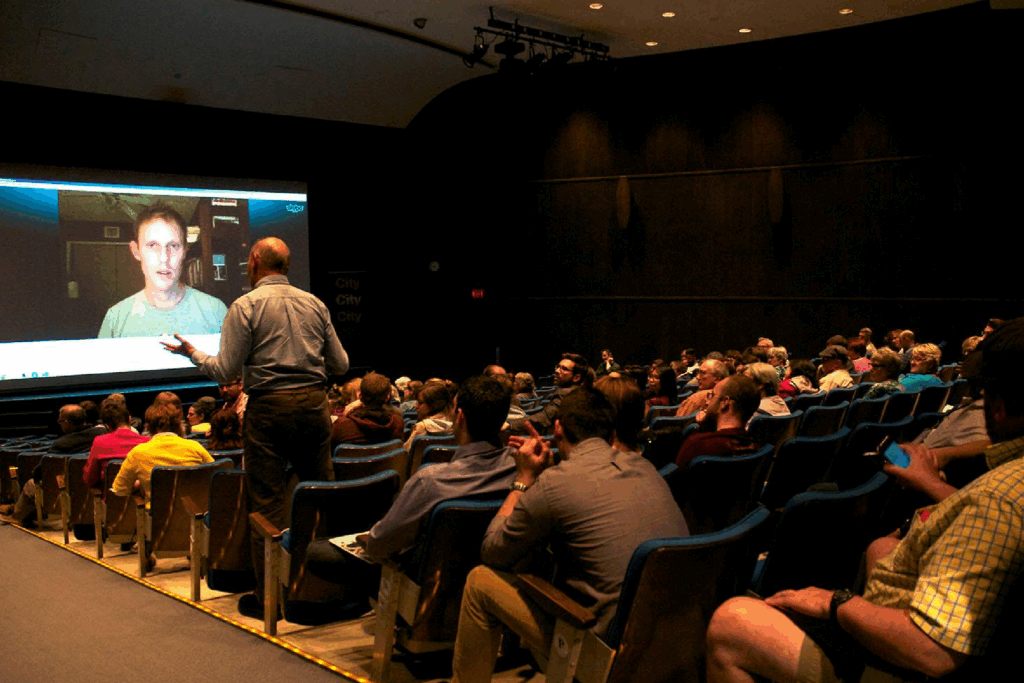
In this context, the panel discussion we attended before the show is worth mentioning in order to provide a more nuanced framework for our analysis and to emphasize the various elements that influenced my perception beyond the choreography. Simon McBurney shared many interesting reflections on the culture which surrounds us in our daily lives and is something we constantly absorb. The panel focused mainly on the collaboration between McBurney and Crystal Pite and how the performance served as the culmination of their work together. The creators discussed behind-the-scenes aspects and revealed interesting details about their work, offering the audience a fascinating insight into their creative process. What caught our attention most was McBurney’s declaration that culture is not something additional to our lives but rather a factor that lies at their very centre. People often believe that special effort is required to participate in culture, which creates a mental barrier that prevents them from engaging with new and diverse experiences. While attending theatre performances or exhibitions is undoubtedly enriching, culture surrounds us constantly, even when it comes unnoticed. Culture is a fundamental part of society and is present in our everyday lives, offering a level of diversity that fosters a strong sense of community and belonging. Being a cultured person means being able to connect and communicate with others through various artistic forms. The growing separation between artists and audiences may stem from forgetting this fact, which creates a barrier between art and its recipients.
The panel discussion additionally covered the issue of overanalyzing art, a tendency that I believe has become increasingly common today. Trapped at times in the belief that everything must be analyzed, we tend to forget this is not necessarily the main objective of a piece of art. One of its primary functions is to evoke emotions in viewers, which can then influence their opinions, attitudes, and ways of thinking. Rather than focusing solely on analysis, audiences should allow themselves to experience, feel, and be present in the moment, connecting with those around them. Dance – as we see it – is a form of art that should primarily be felt rather than always analyzed. It is often approached from different angles, and non-dancer audiences may be unaware of this, which in turn may discourage them from attending dance performances. This is understandable, as not everyone is accustomed to dance as a tool for conveying meaning or telling a story, and it requires certain perceptual skills.
Prioritizing emotional experience over analytical interpretation is the most important aspect for a casual recipient of art. Although the performance in Manchester took place almost a year ago, what we remember most clearly are the emotions we experienced throughout the production, rather than specific movements that were offered in particular episodes. This is precisely why we decided to share our accounts on this extraordinary collective experience. As human beings, we do not always need to analyze movement, because understanding movement is fundamental to us all. Non-verbal communication is accessible to everyone serving as a universal language shared by all living creatures. Even if not everyone can understand a natural language to the same degree, the vast majority of people understand a simple gesture such as shaking one’s head, even when cultural differences are taken into account. This is why topics such as extinction, separation, fear, and loss were so intensely highlighted in the production. For instance, the dancers’ bodies, by mimicking animals, captured the viewers’ attention not only through the meaning they conveyed but also through the impressive way they achieved it. By using animal language and communication tools, the dancers showed that we are able to understand a message simply through the observation of movement.
The performance was deeply emotional because it allowed the audience to identify with certain issues without overanalyzing, but by just feeling the movement. This connection was also created by the dancers’ exceptional skills; they managed to drag viewers into the reality they created by giving their all, both physically and mentally. Each dancer was a perfect individual and, at the same time, a perfect part of the whole, which was an obvious result of both their individual talents and hard collective work. In Figures in Extinction, movement formed the foundation of the performance, while spoken words added another layer of meaning, making the work deeper and more complex. This combination made the overall composition easier to understand and more accessible to non-dancer audiences despite the fact that the movement was of the highest quality and, as a dancer myself, I felt it could have stood alone without any words. Raising awareness of dance performances among people who are not directly connected to dance would be an ideal outcome for me, as someone who deeply values dance and everything associated with it.
Maria Wojtan

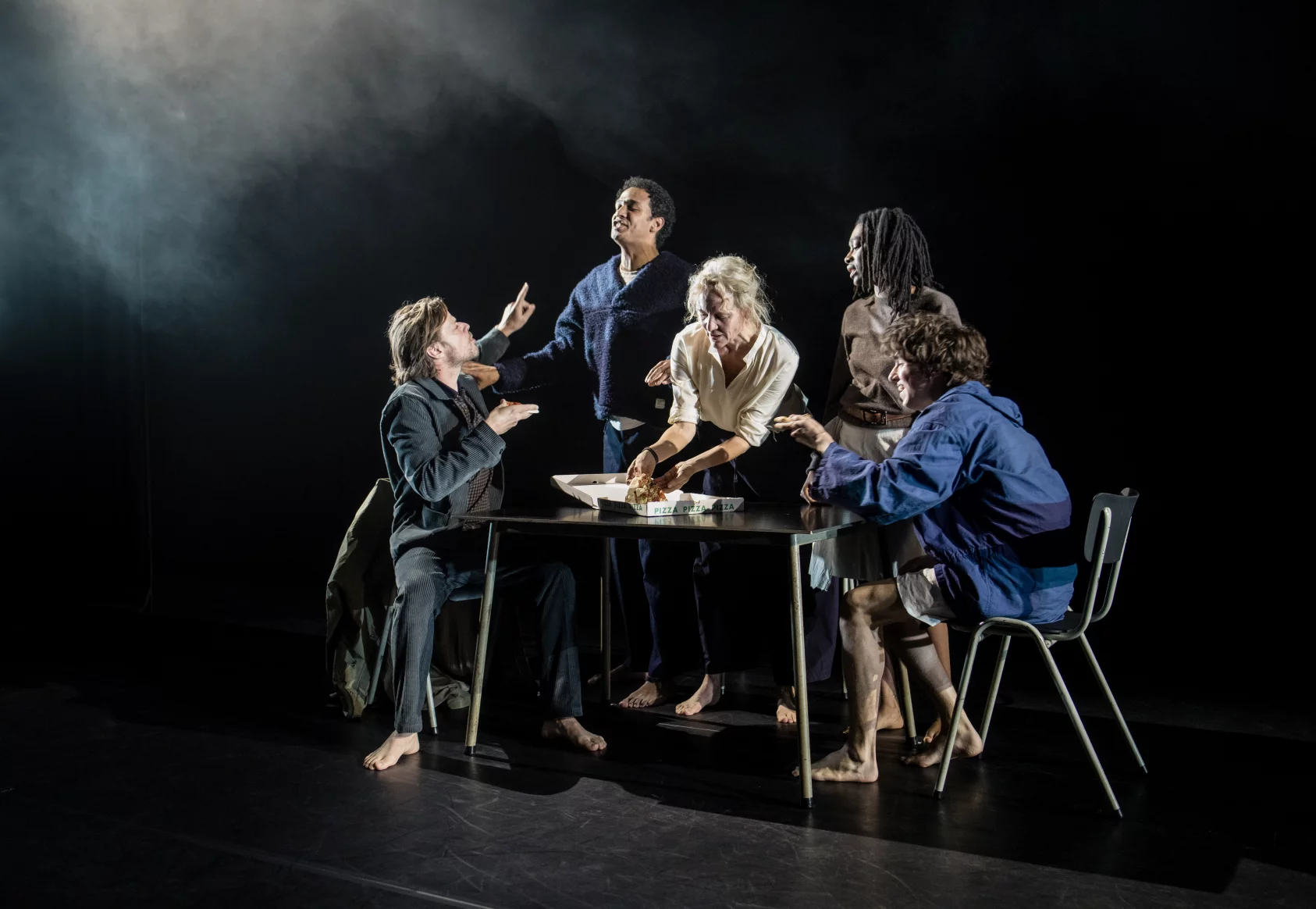
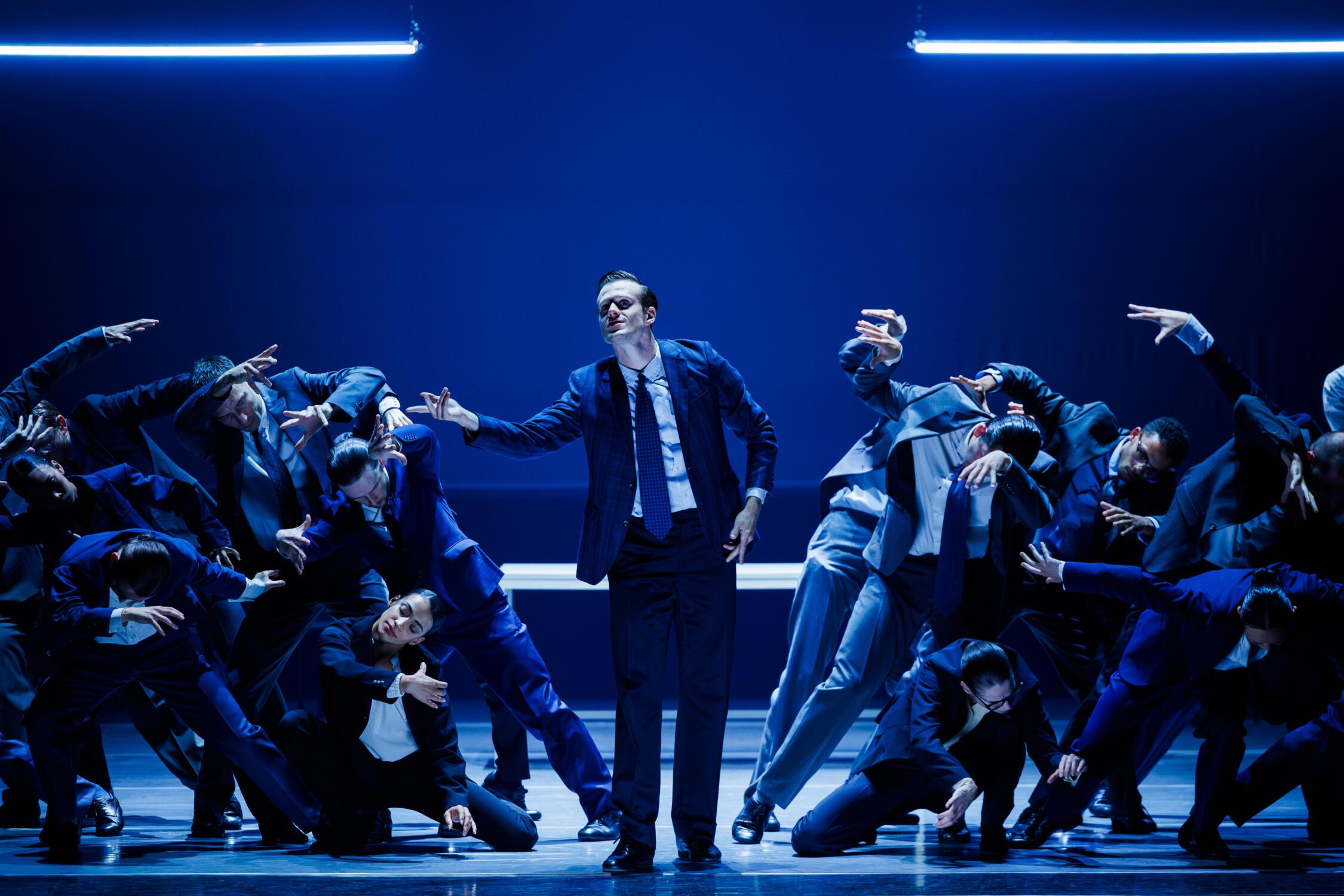
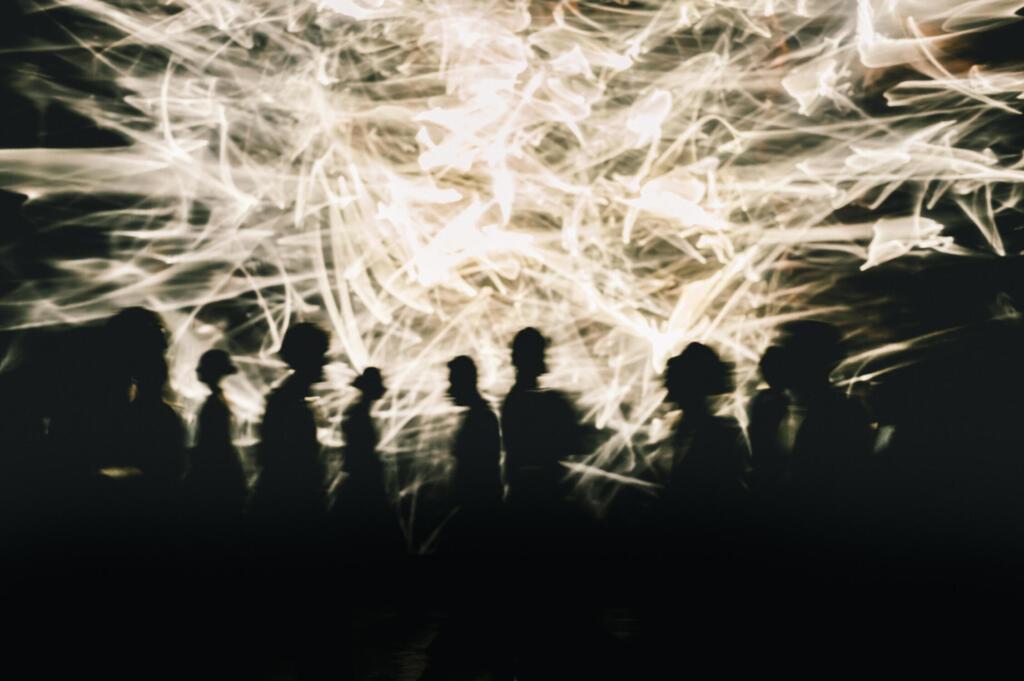
Figures in Extinction, by Simon McBurney and Crystal Pite. © Rahi Rezvani.
Part Two: The Shared Emotional Space
Perhaps the best thing you can say about a piece of art is that it leaves a lasting imprint, inspiring further thought and reflection long after the performance has ended. Since I watched Figures in Extinction, I have not encountered anything that engaged me so deeply on so many levels, both as a viewer and as a dancer reflecting on her own practice. Dancers – and the four of us are dancers – are naturally responsive to the moving body and highly attuned to shifts in energy, intention, and physical detail; however, this experience extended far beyond that familiar sensitivity and moved into something more existential. It was not only about movement, nor just about the theme, even though there is no doubt the production addressed urgent and timely issues such as our growing dependence on phones and digital distraction, the extinction of animal species and the fragility of ecosystems, as well as broader experiences of death, loss, and collective grief. Rather, it was the performers’ authentic creative journey, unfolding gradually in front of the audience, that proved to be the most compelling element of the work.
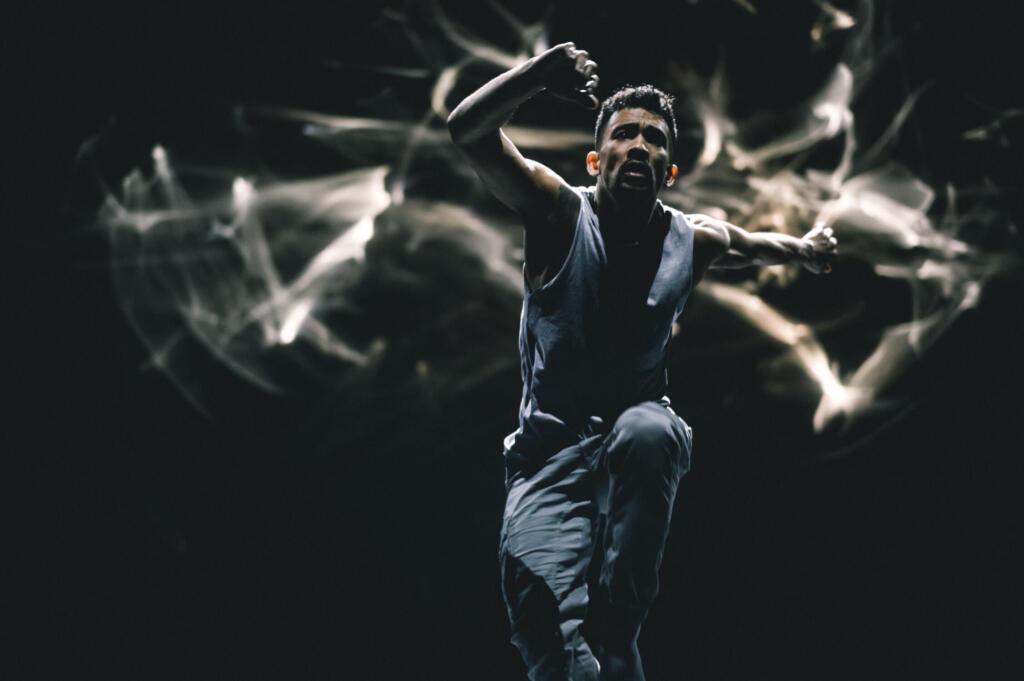
What struck me most was the vulnerability and openness the performers brought to the stage, a quality through which their eyes revealed more than any script ever could, as if their gaze itself carried unspoken stories and emotions that extended beyond the limits of written language. Their movements were audible even in silence, as intention resonated through every step, every reach, every contraction of a muscle, allowing the audience to sense not only the physical action but also the impulse and decision behind it. Each dancer had a unique presence and an individual rhythm, as if their personality was etched into their movement vocabulary, enabling them to tell their stories without the need for words. The human body, as a powerful instrument capable of expressing what often resists verbal articulation, was used to its full potential, revealing layers of meaning through subtle shifts of weight, breath, and focus. Every breath was perceptible and every moment of tension and release visible, and through this physical transparency a sense of truth gradually emerged. This, to me, establishes the very essence of art, because art – particularly dance – exists not to impress but to connect, grounding itself not in perfection but in presence and awareness. By inviting the audience into a shared emotional space, the performance blurred the boundaries between viewer and performer, creating a moment of recognition in which we are reminded that we are not alone in our grief, our longing, or our joy, but part of a collective human experience.
I often reflect on the difference between performing choreography created by another artist and truly embodying movement that emerges from one’s own lived experience, because although both require discipline and precision, they generate entirely different kinds of presence on stage. There is something exceptional that occurs when the artist is not just executing steps, but channeling emotional depth into the movement so that each gesture appears motivated from within. While technical skills are easy to admire and often immediately visible to the audience, the ability to make spectators genuinely feel one’s inner world through movement is far more rare and even more demanding. In Figures in Extinction, the performers reached a state in which they seemed to move not only with trained bodies but with their souls and full emotional awareness, and that is courage that should never go unnoticed.
Theatre remains one of the few spaces in the contemporary world where we are invited to be fully present – not distracted by screens, not fragmented by constant notifications – but entirely engrossed in the experience of the moment. In watching the performance I found myself entirely immersed in this state of presence. I left the theatre emotionally transformed, but more than that, I left with a renewed energy to master the craft of dancing in a deeper and more honest way. Not simply to perform. Not merely to impress. But to speak through the body with clarity, to allow myself to feel without reservation, and to connect with others in a way that feels necessary rather than decorative.
Magdalena Borowska
Figures in Extinction, by Simon McBurney and Crystal Pite. © Rahi Rezvani.
Part Three: The Call for Action
Why are we not doing anything? That was the question that I left Aviva Studios with, and it is one that has been echoing in my mind ever since. Figures in Extinction, a co-production between the Nederlands Dans Theater and Complicité, conceives a precise stage language that can be understood by everybody. The performance comprises movement, sound, music, and words so as to touch the topics of death, the environment, and various types of connections apparent in our lives. The trilogy triggered numerous questions, which I have been trying to address during the months that followed.
It is, perhaps, illustrative to compare watching Figures in Extinction to looking in the mirror, which is particularly visible in the second act of the performance, entitled “But then you come to the humans.” When in the opening the dancers are sitting, doing nothing except for tapping and looking at the screens of their phones, the voice of Simon McBurney’s young daughter asks, “Why aren’t they moving?” The question conveys an impression that it was directed not only to the audience and the performers, but also – in a broader context – to society in general. It refers to the problem that the human species is extremely self-centred. Individuals are here separated from one another. Most of contemporary life is engrossed in digital devices, and filtered through social media and the internet. For this reason, the question of whether the connection between individuals is really lost arises. Moreover, the question triggers the thought: Does separation affect how we react and deal with the challenges and tragedies that we face as humankind. This question is especially relevant nowadays; an enormous number of events and issues bedevil the world; and we can see how differently everybody thinks about and handles them.
Throughout the time that I spent in the theatre, I felt extremely present, close to the dancers and people around me. However I am not sure if the same feeling was shared by all members of the audience. During the intermission, our group was emotionally touched and deeply moved. I have to admit it was a rare experience for me and I do not think I have ever felt as connected to my friends and our shared experience as then. But I was aware there were people around, who were engrossed in casual conversation, eating chips, or checking updates on their phones. It was clear that many members of the audience were doing their own thing, that even though we had sat in the same room and watched the same performance, a sense of togetherness was not really achieved. For some, Figures in Extinction turned into a life changing experience, for others it created a space for reflection, and yet it was possibly also a cultural event that provided just another entertaining evening at the theatre. As fine as all these kinds of experience are, I would stress my appreciation of the fact that Figures in Extinction not only concentrated on the themes of climate change and the death of various species and ecosystems, but also posed questions concerning losing human-to-human connection and the connection between a person and nature, concerning death and the environment. It reminded us that, as a species, we are guilty of the damaging the biodiversity of the planet Earth.
The performance was created to make a shift in people, possibly get in a fight with the society we live in, and provoke transformation of social behaviour. We can experience directly the drastic changes happening to the Earth. In this context, the question that I have already mentioned radiates with new meanings: “Why are they not doing anything?”
Natalia Rutkowska

Figures in Extinction, by Simon McBurney and Crystal Pite. © Rahi Rezvani.
Part Four: A Shared Moment of Awareness
In no other century have we possessed such a vast variety of tools for communication, and yet never before have we felt so alone, so isolated from one another. I believe that Figures in Extinction offers a powerful and deeply necessary response to this condition of contemporary society. By placing the human body at the center of its storytelling, the creators gently but insistently remind us of the beauty that exists in connection – with one another, with the natural world, and even with those who are no longer among us. The work unfolds as a trilogy that confronts some of the most urgent struggles of contemporary existence by creating beautiful and symbolic body portraits of animals, using choreography and dance as an extended metaphor through which complex and often painful themes can be expressed beyond the limitations of language, turning movement into a powerful communicative tool that creates a sphere where no words are needed and where concepts such as death can be understood as something far more layered and emotionally profound than any verbal explanation could convey.
The performance transports us into a space where we are allowed, almost tenderly, to become one with each. It becomes a space in which we are the receivers and the dancers the messengers – a rare and fragile exchange of meaning. The work reminded me of what truly matters and awakened a sense of fragility: of our bodies, our minds, and the natural world we so often take for granted. To witness such artistic vision in the work of Simon McBurney is a privilege; he creates a piece that reaffirms what culture and theatre are ultimately for – the sharing of awareness and wisdom.
One of the fundamental elements that made this performance unforgettable was the intense presence shared between the performers and the audience, a presence so palpable that it blurred the boundary between stage and auditorium and transformed the space into something intimate and deeply human. The work was grounded not in choreography as a fixed structure, but in lived emotions like grief, anxiety, love, and fear which unfolded through the dancers’ bodies with such honesty that it felt less like a constructed performance and more like a shared emotional experience. There was a moment when nothing mattered except the dancers’ bodies, their breathing, and the quiet message carried through movement – delicate, restrained, yet filled with meaning. The air felt heavy and almost tangible, and I remained completely still, as if even the smallest movement might disturb the fragile intensity of that present moment.
It is difficult to single out one exact moment of the performance that provoked such a profound emotional response, as the entire piece was filled with remarkable and unforgettable artistic choices; however, in order to convey the depth of amazement I experienced while watching it, I have chosen particular moments that felt most essential to the deep, rooted sense of awareness that resonated throughout the whole performance.
One of the earliest moments that left a lasting imprint on me occurred in the first part of the performance, entitled “The List,” where, in a scene emotional to its very core, two dancers entered into a duet composed of delicate, almost weightless, bird-like movements that seemed to hover somewhere between vulnerability and quiet strength. The simplicity and visible fragility of their choreography intensified the image rather than diminishing it, allowing every subtle gesture, every suspension of breath, and every shared glance to expand in meaning, while the chemistry between the two performers felt so hypnotic and self-contained that it created the illusion they were the only two beings existing in that space, suspended in their own intimate universe. The scene unfolded as a reflection of what love, in its purest and most truthful form, could and perhaps should be: fragile like the dancers’ bodies, their understated costumes, and the softness of their movements, yet at the same time deeply passionate and tender, expressed not through grand theatrical gestures but through physical proximity, sustained eye contact, and the quiet, almost trembling intensity of their shared presence.
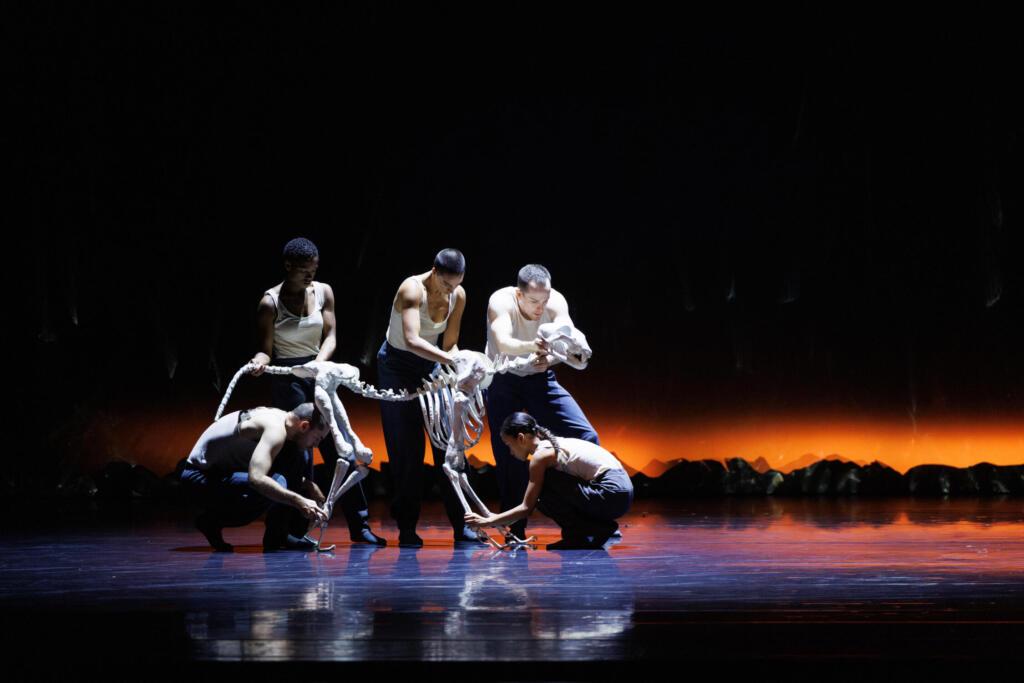
Another moment that I found of particular prominence was the one depicting the appearance of the skeleton of an extinct four-legged creature. Through extraordinary precision, the dancers animated the skeleton, to the degree that it appeared alive yet peaceful. Its movement was slow, detailed, almost monumental but rather than evoking fear, the scene brought a strange sense of tranquility, as if for a brief moment the creature had come back to life.
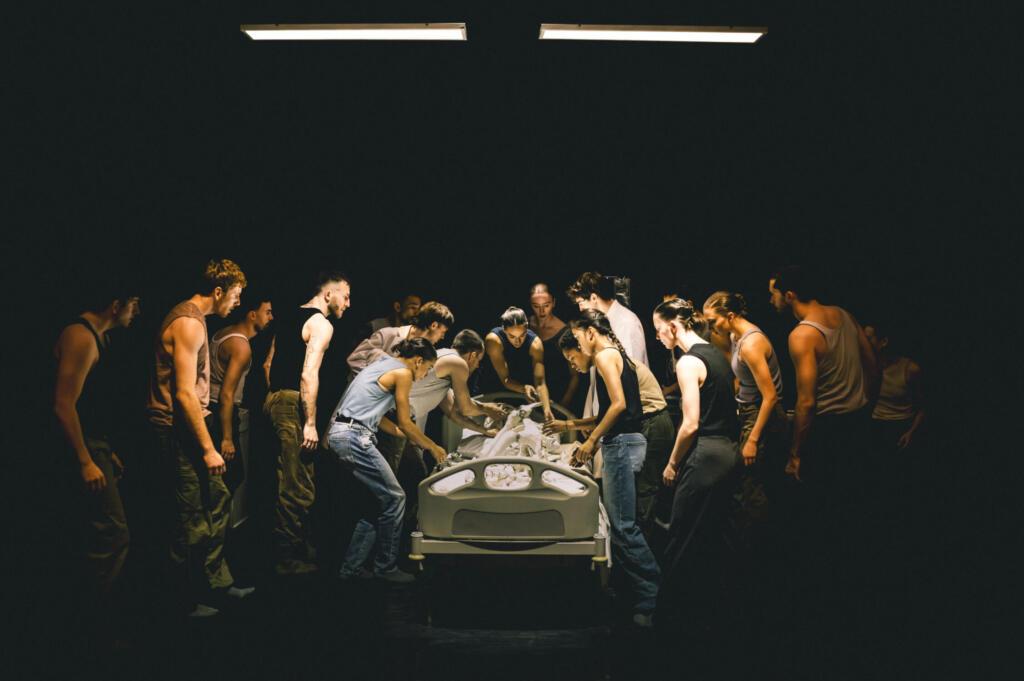
This skeleton reappears later in the performance, in a scene centered around a hospital bed, where a body lies beneath white sheets, and, as the bed rotates rapidly, different figures and situations appear, presenting portraits of people surrounding the hospital bed. The atmosphere is chaotic, filled with grief and tension; when the movement is suspended and the sheets are lifted, the revelation is shocking: beneath them lies the skeleton-creature the audience is already aware of. Motionless as it is, the creature stares directly at the audience in silence. This long stare full of tension and the heavy breathing of the animal evoked deep discomfort in my body, also a disturbing and unknown sense of guilt; the feeling of helplessness appeared in my mind. What struck me most was that, while the creature was hidden, I had imagined a suffering, dying human body beneath the sheets. When the animal finally revealed itself and looked directly at the audience, it felt as though it was sending a message: “Do you really think animals do not deserve grief or empathy?”
Figures in Extinction was not just an ordinary performance, but a shared moment of awareness and connection, where the body became a mirror of truth expressed through movement and presence. I left the theatre not feeling burdened by the disturbing, yet important themes explored on stage, but rather enlightened by them, as if facing these difficult topics had brought a clearer understanding of the world and my place within it.
Barbara Herbasz
Figures in Extinction, by Simon McBurney and Crystal Pite. © Rahi Rezvani.
Conclusion
In conclusion, these four perspectives bridge the ideas from Complicité course with the actual performance of Figures in Extinction. By looking at this NDT and Complicité collaboration, we can see “theatre imagination” in action on the modern stage. It is a clear reminder that to truly understand global art, students and researchers need to get out of the university and into the world.
This article is part of the report on Between.Pomiędzy Festival 2025, available on TheTheatreTimes.com.
This post was written by the author in their personal capacity.The opinions expressed in this article are the author’s own and do not reflect the view of The Theatre Times, their staff or collaborators.