



![24th Jul: Ghost Town (2008), 1hr 42m [PG-13] (6.35/10)](https://occ-0-953-999.1.nflxso.net/dnm/api/v6/0Qzqdxw-HG1AiOKLWWPsFOUDA2E/AAAABTEswF2jp7ORmPT5p05PO3rHjALjqmzyCws-gU1qXGQFes7yuQoRMIL-oU_8RcfZW3QwFcJm37F_6FB18eEys7flhkkAdQelmecn.jpg?r=8af "24th Jul: Ghost Town (2008), 1hr 42m [PG-13] (6.35/10)")


What if the guilt one feels on the death row is not for what he has (allegedly) done?
The Fear of 13, written by Lindsey Ferrentino, and directed by David Cromer, opened on Broadway this April, at James Earl Jones Theatre, has to withstand two layers of scrutiny. Being adapted from the 2015 homonymous documentary, which had a wider circulation than a theatre-confined play, and seeing the pressure of following the story of a living real person (perhaps even seated in the audience) whose actions supported history-in-the-making could cause it not just tear at the seams, but collapse completely.
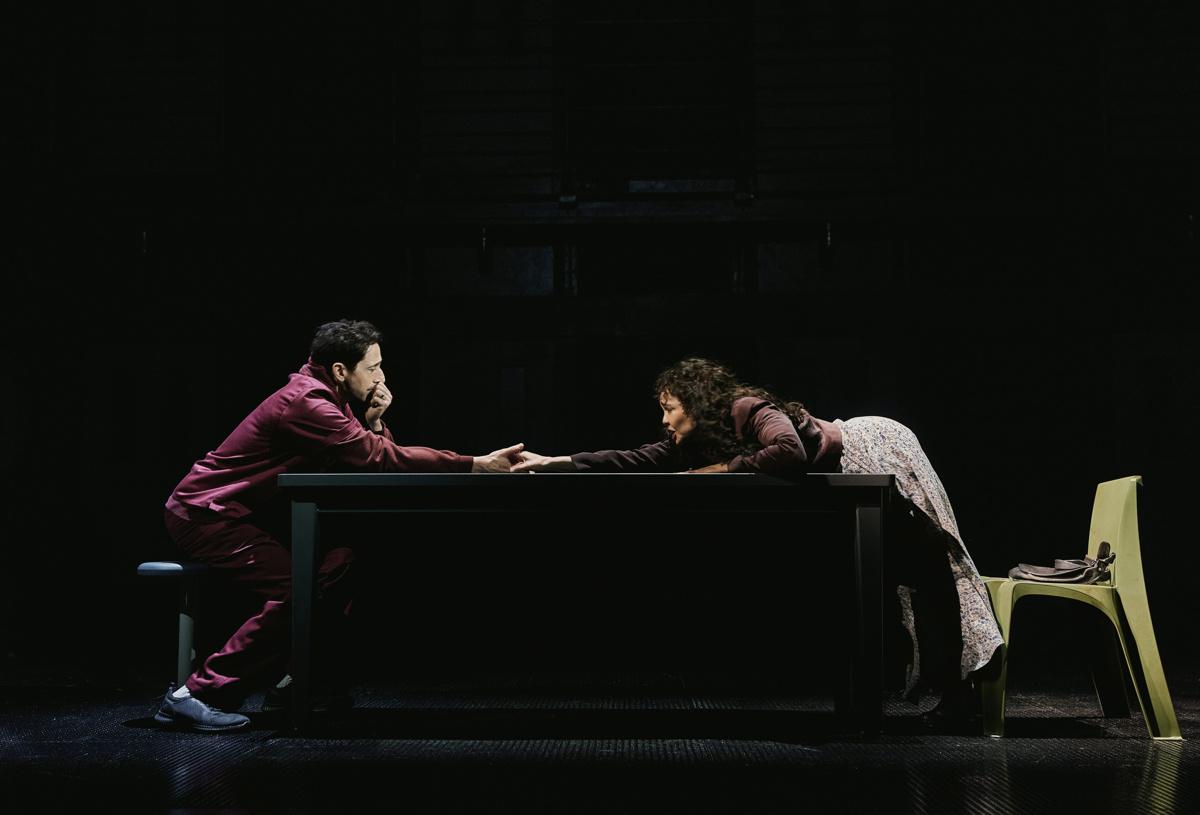
The construction of the show, however, is mainly acting-based, and the two central voices, Adrien Brody (Nick Yarris) and Tessa Thompson (Jacki) steer the story with as much ease as such a plot allows.
The action can be split either into two or three (pseudo)acts, based on whose perspective is the audience seeing the story from, respectively what the major theme is. Starting with police brutality and psychological warfare waged against death row inmates, the action shifts towards softer nuances, with the love story between people who believe in each other’s honesty and strength, in spite of never having had closer proximity than that of a visitation area, eventually returning to what seems to be a pointless fight against a judicial system that forgets its inmates once the verdict is passed. The possible two-partite structure is supported by the middle-mark switch between Nick and Jacki as narrators, each telling a different version of the multiple interlocked stories that make up the plot, surprisingly, not changing the major details from one POV to another. This is where I think the audience starts to believe that Nick is actually telling the truth and to see beyond Jacki’s lovestruck trust.

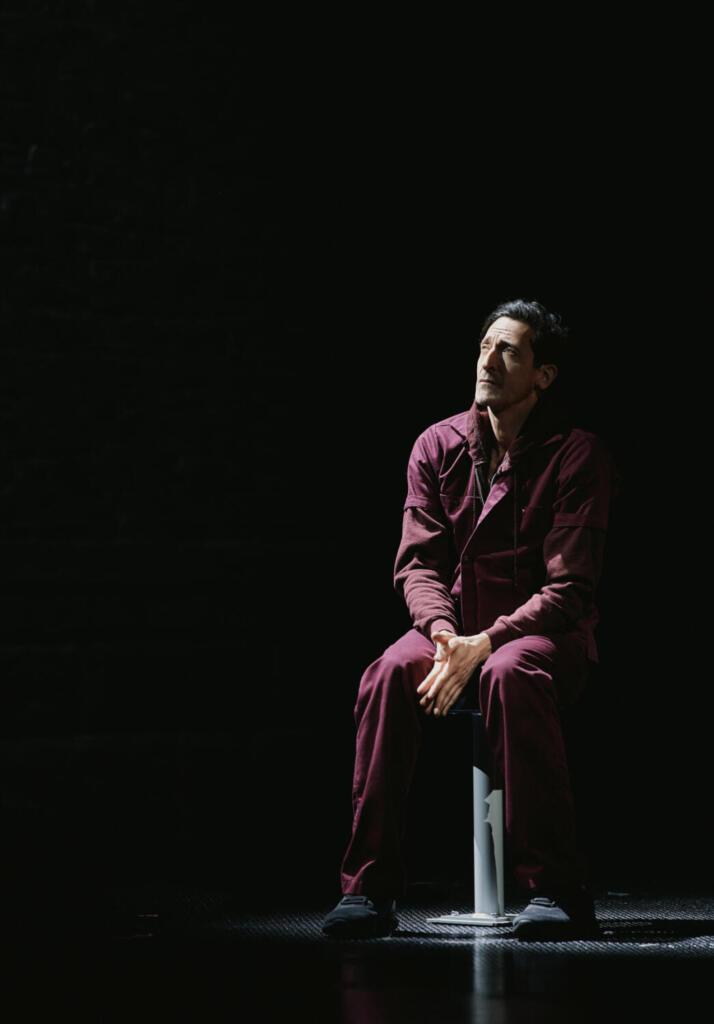
Adrien Brody in The Fear of 13. Photo credits: Emilio Madrid
Although it was introduced as (adjacently) central to the plot, the police brutality trope/theme was not fully finalized and only marked towards the end, pointed out once again though the change of behavior the policeman had towards Nick, raising the question of whether what mattered was his proved innocence or status as a free man. Nevertheless, there is a realistic evolution of a plotline that, albeit very real, requires a dose of hopeless romanticism to believe, in spite of Nick-Brody’s undeniable charisma. What does ultimately matter – the Human, as Jacki sees the inmate, or the societal perception of the convicted murderer (policemen having beaten several men to death, not having led to any trial, or anything for that matter)?
Having recently received backlash for his Oscar win after having used AI to “work” on an accent, Adrien Brody completely reconfigures his character here, through voice and physical mannerisms – showcasing development without losing the constant identity, “spine” of Yarris. With time (implicitly age), the strange, yet funny hand gestures he accompanies his speech with are tuned down, matured in an environment meant to cancel any and every attempt at individualization, yet keeping his contextual eloquence as a linguistic scar of his years spent in prison, reading.



Tessa Thompson in The Fear of 13. Photo credits: Emilio Madrid
The play navigates the ironies of bureaucracy and disrespectful postponements naturally, Adrien Brody’s reactions being righteously explosive in a world where he is nothing but a case file number. There was a beauty in the way Brody does not let his character be overshadowed by the guilt of having tried to (stupidly) help himself decades prior – the grace he is giving himself feels like and is a symbolic resilience amidst absurd and almost comical (systemic) failures.
The death he should be surrounded by, as an inmate of death row, is that of identity and hope, though routine, showcased also in the almost clockwork way in which Jacki is preparing to enter the visitation area, psychological warfare (the silencing of the inmates), initial impossibility of proving his innocence and, when technology finally catches up, through others’ criminal negligence. It makes you wonder if the idea of murderer is not doubled by this chronic disregard, uniformizing all those who work in and around this environment, which, ultimately, situates Jacki aside from the rest by her refusal to accept a life where she couldn’t fulfill her wish to, one day, have children. She is the only one free enough to actually break out of this environment – for her it’s not a punishment, not a job, but a commitment coming from love, cruel parallel to the story of the inmate who committed atrocities to be able to safely have a relationship with his boyfriend, in prison, just to be separated soon after.


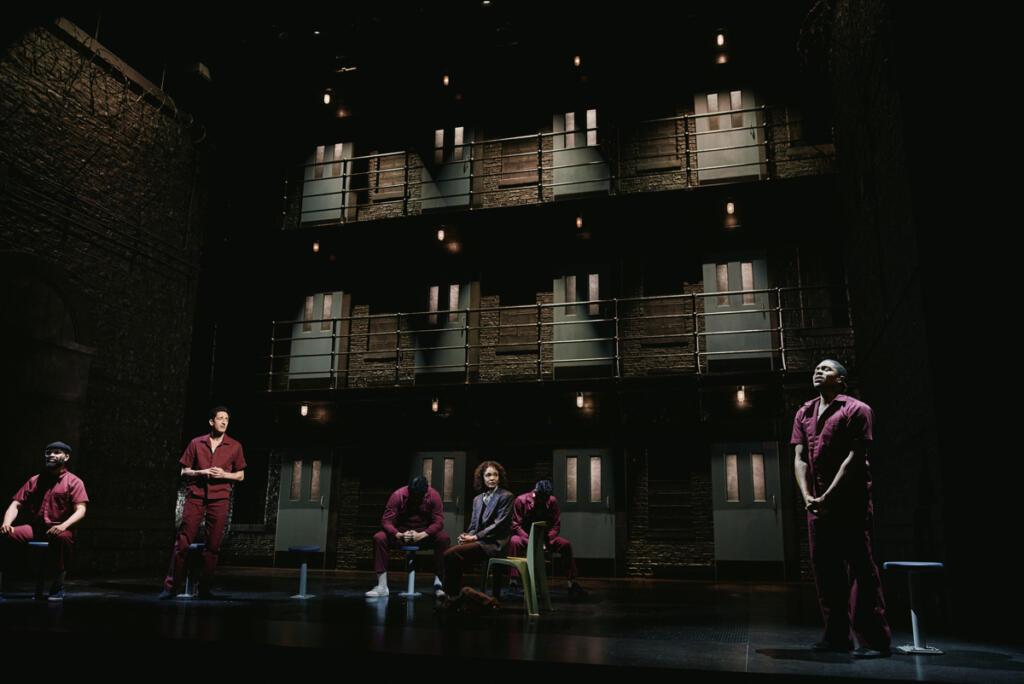
The company of The Fear of 13. Photo credits: Emilio Madrid
There is, strangely, outside the two love stories, no mention of friendship, inmate-ship, or community of any sorts behind the bars, accentuating the feeling of solitude that emanates from the performance, as well as a generalized helplessness coming from the audience in the second half of the 2-hour production. The constant alternation of left-right playing spaces, tiring and dull after a while, further deepened the outsite-inside and interpersonal schisms, creating a sort of competition over “who tells Nick’s story better”, obviously won by the man himself.
What if the guilt one feels on the death row is not for what he has (allegedly) done, but for not having thought things through when he should have? For having trusted a system not yet ripe enough to have the means to be just?
Nick Yarris’ story drenches the audience in frustration, without loosening the grip after the curtain call or giving us anything to stand as a beacon of hope. In spite of technological advancements having proved his innocence, the 20 years spent behind bars weigh heavier for those watching and, doubtless, for those playing, as well. Nevertheless captivating, The Fear of 13 leaves you with the sense of an inner void and an underlying need to take action against injustice, yet powerless enough to only stand and wait.
This post was written by the author in their personal capacity.The opinions expressed in this article are the author’s own and do not reflect the view of The Theatre Times, their staff or collaborators.
This post was written by Teodora Medeleanu.
The views expressed here belong to the author and do not necessarily reflect our views and opinions.