![25th Sep: Blood Legacy (2026), 2 Seasons [TV-MA] – New Episodes (6.15/10)](https://occ-0-3521-1239.1.nflxso.net/dnm/api/v6/0Qzqdxw-HG1AiOKLWWPsFOUDA2E/AAAABZcRugQFjfW0UfFoeKW_lWlou40Y-Uhxjn5CumLrDECuPzc3lc2Z9g4wMgWsOQM7rMIghXvwiE7Bk5l04joS_aMBUjnMlIa5uZY6EQ-HOH0ddsPUs-9p3zQ2lebHOaA1fvqXV1j7CB18tff6Qud8B6oqlOpCOz2xoq_GHKFL.jpg?r=3f5 "25th Sep: Blood Legacy (2026), 2 Seasons [TV-MA] – New Episodes (6.15/10)")







In nearly all productions of Brecht’s The Threepenny Opera I had seen up to this one, I was struck by a clash between the expectations that casting and other directorial choices had developed ahead of the productions and foregrounded in the performances, and the text of the play. More specifically, the productions were frequently vehicles for star performers and there was a clash between the text, which suggests the characters in the play are actually nasty rather than in any way likeable, and the casting and the way the actors chose to play, and were directed to play, likeable characters.
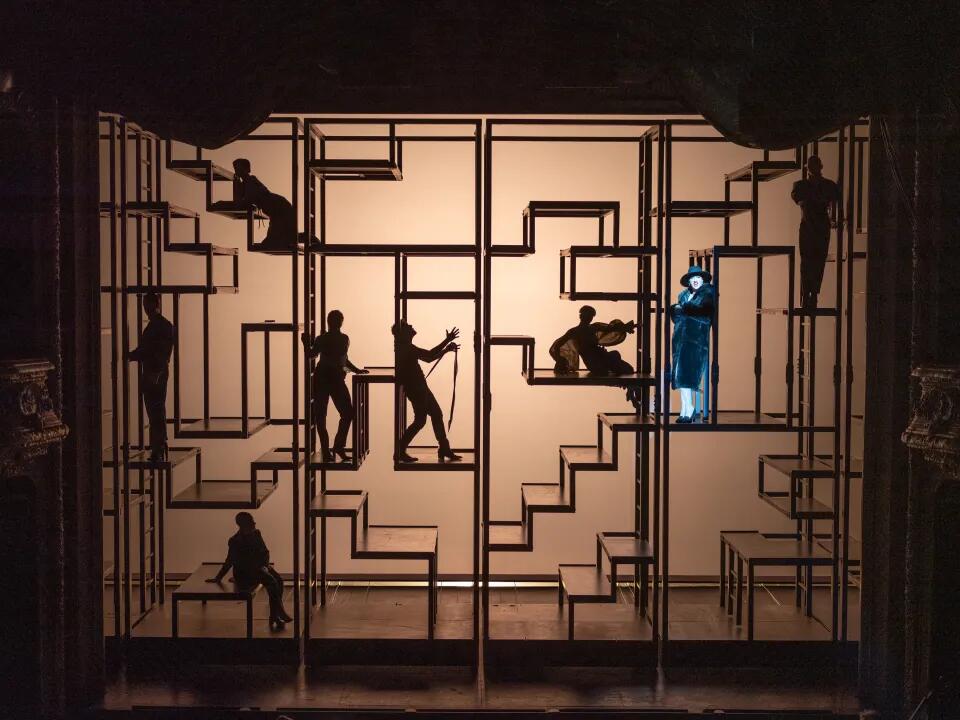
Not so in this production at the Berliner Ensemble, directed by Barrie Kosky, first presented there on 13th August 2021. Relentlessly, the characters climbed around a large multi-level labyrinth: aimlessly, without meaning, purpose or reason, although of course precisely choreographed. They looked like those naked mole rats in a museum exhibit of their habitat, sliced open behind glass to allow visitors to see them bustling about as if in real life (which, for those creatures, it is). Relentlessly, and without exception, the play’s characters were shown to be rather nasty people. Each was, in his or her own way, completely egoistic, without a hint at any kind of genuine feeling for, or compassion towards even the people one would normally consider the closest to them. Relationships were formed and existed solely for the purpose of one’s own benefit – “mutual” was a concept that did not exist. Peachum represented the most detestable kind of businessman, exploiting everyone and everything, twisting and turning any moral truth with perfidious logic. His wife and his daughter (and her husband to-be) were mere commodities, devoid of any personal, human values. Mrs Peachum was no better, a genuine partner in crime. Polly was their daughter, and no surprises there: a spoilt brat, damaged by her parents’ obvious lack of love and the lack of any moral standards as part of her upbringing. With youth came some good looks, which Mrs Peachum claimed to have had as well when she was younger, but Mrs Peachum was the living proof that such good looks never last long. It was therefore no surprise that this Polly fell for Macheath, who was presented as a man without any kind of refinement, a professional criminal from birth, ruthless, uneducated, an alpha male in his prime, sweating, spitting, swearing, without any kind of moral awareness or conscience. As played by Nico Holonics, he reminded me of the more outspoken one of two criminals at the center of the notorious August 1988 bank robbery / hostage case in Germany. The media filmed the two criminals involved in the pedestrian area of the city, in their car, guns in hand and hostages on the back seat; one of them was filmed commenting that he had always been a criminal, knew no other way of life and was prepared to die this way any time. This Macheath was sexually attracted to any female, whatever her age, looks or kind, and was in turn sexually attractive to at least every female of his kind. A very physical, hormonal, instinctual attraction, devoid of any subtlety.
Within the production’s relentless analytic depiction of depravity in all its forms, the instances of Verfremdungseffekt, the music, the songs, served as instruments to create the distance needed, almost desperately, to make the truths conveyed so relentlessly by the production anywhere near bearable.
This post was written by the author in their personal capacity.The opinions expressed in this article are the author’s own and do not reflect the view of The Theatre Times, their staff or collaborators.