









A few months after my Dungeons & Dragons players wrapped up Waterdeep: Dragon Heist, I set them on a new homebrew adventure outside the city limits for an arc I casually dubbed Uncharted. Far to the east, a massive column of green light burst into the sky, plunging the continent of Uta into an endless night full of deep fog. The “Anomaly” of light transformed Uta into a Domain of Dread from Ravenloft — but don’t tell my players that. Many of the maps, mechanics, etc. they’ve encountered in this arc were adapted from Curse of Strahd and Van Richten’s Guide to Ravenloft.
Uncharted ended when they reached Wyndemere, a reskinned village of Barovia. My players have still yet to reach and destroy the Anomaly, years after they left the big city, but that’s largely my fault. I was tired of DM-ing an ambitious, sprawling adventure across monster-filled wilderness. Long-distance travel feels meandering and sometimes frustrating. I longed for something tighter. Then I found a low-level Death House adventure in Curse of Strahd’s final few pages. The party had spent much of their journey east fighting a mix of aberrations, monstrosities, and undead, but since it was early October 2022, I decided to go full-on horror with a good haunting. With Curse of Strahd’s 10-year anniversary on March 15, I’m reminded of this arc — which may have been my strongest ever as a Dungeon Master.
Death House is a level 1 starting adventure included in Curse of Strahd to introduce players to the setting and make their characters gain a few levels before tackling the challenges of Barovia. It’s set in a haunted mansion that was once owned by a cult that used to lure, trap, and sacrifice (and/or eat) wayward travelers. Centuries ago, the vampire lord Strahd von Zarovich slew them all. The house itself has become sentient and seeks to continue the work of the cultists that now haunt its halls. But the party doesn’t know any of this when they’re lured into the trap.


In the dark and mist-filled village, they hear a soft whimpering that draws their attention to a pair of small children cowering in the middle of an empty street. Rosavalda “Rose” and Thornboldt “Thorn” Durst ask the party for help getting rid of a monster in their house. But the situation is far worse than a single monster. Rose and Thorn died of starvation centuries ago, after their parents locked them in the attic, and these two are manifestations created by the Death House itself to lure new victims in.
Once inside, players find a spooky, empty mansion that looks almost too pristine for a run-down village. Oil lamps are ready to be lit. Furniture gleams. The floors are polished. At first glance, it almost feels like the house is welcoming them in — as if it has been waiting. That illusion doesn’t last long.Like many great haunted house adventures, Death House slowly reveals its story through exploration. Portraits of the Durst family stare down from the walls. (You can, and should, make the eyes move!) Secret doors lead to hidden chambers. Letters and journals hint at something darker happening beneath the house. The deeper players explore, the clearer it becomes that this was never just a family home, but the headquarters of a twisted cult obsessed with summoning a dark entity.
Eventually, the party discovers the children’s room in the attic. Two tiny skeletons lie on the floor next to a toy chest and a dollhouse that perfectly recreates the mansion they’re standing in. The realization hits quickly: the children they met outside were never real. They were bait. The mini-adventure culminates as the party finds a way into the basement dungeon where the house itself demands a sacrifice. Refuse, and the house becomes a total nightmare with smoke-filled rooms, rat swarms, and every door replaced by a swinging scythe.
Because my party was around level 8 at the time they faced this adventure and I, like many gamers out there, was obsessed with roguelites, I cooked up a novel twist by adapting one of the coolest Doctor Who monsters ever.
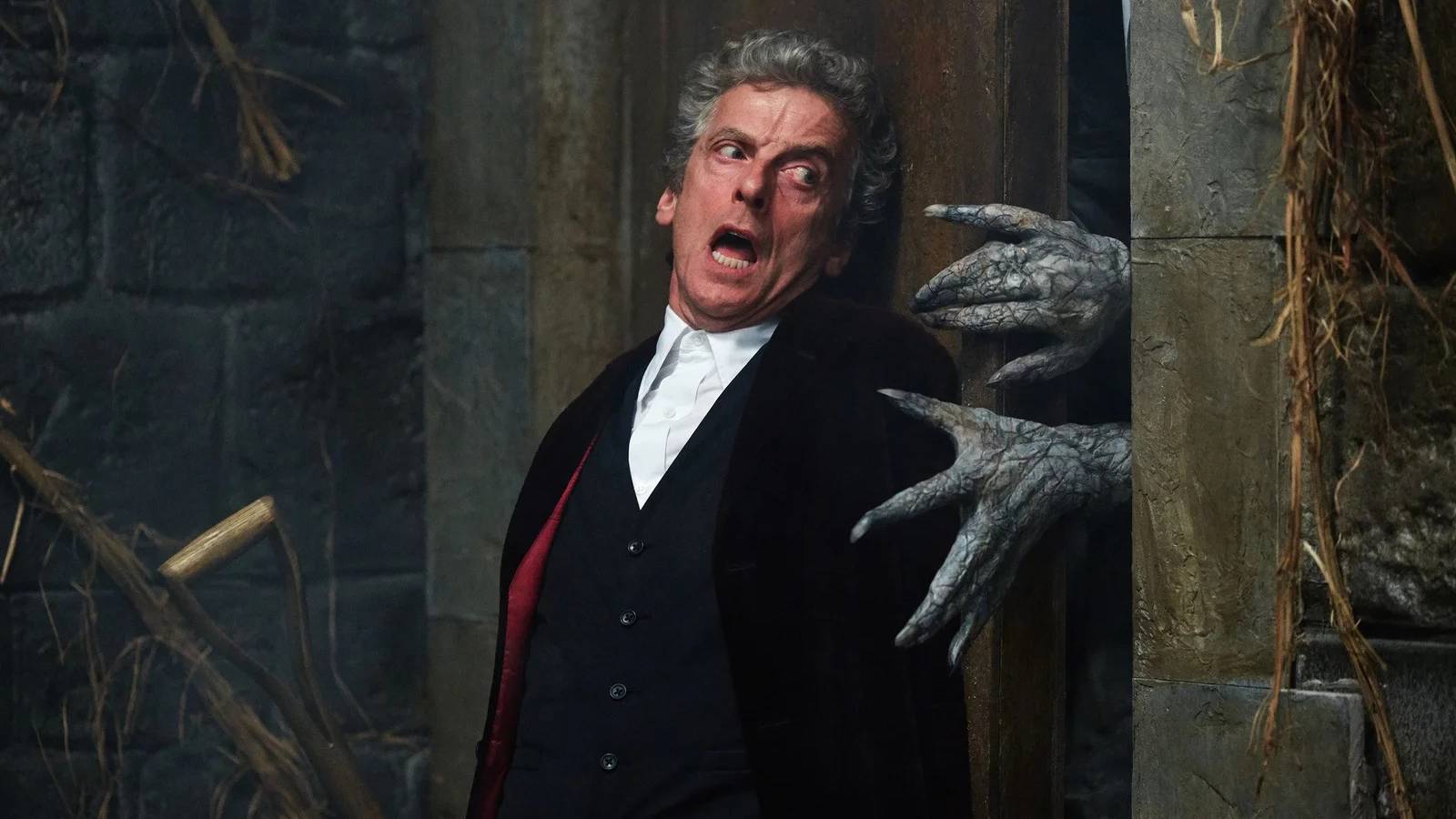
Peter Capaldi’s tenure as the 12th Doctor was uneven at best — he was arguably one of the best-cast Doctors ever, forced to make do with some of the worst scripts. One major exception was season 9’s “Heaven Sent.” In it, the Doctor is imprisoned inside a waterlocked castle, constantly pursued by a slow-moving clockwork monster called The Veil.
What makes the episode brilliant is the twist that slowly reveals itself throughout the story. Each time The Veil catches the Doctor, he slowly dies as the castle resets, and he sacrifices his remaining life force to forge a new copy of himself. Over the course of 4.5 billion years, each new iteration pieces together the fragments left behind by the thousands that came before. Skulls pile up in the courtyard. More and more scratches appear on the same stone wall. Over countless iterations, the Doctor slowly chips away at his final escape.


That idea stuck with me.
Death House already does a lot of things well as a haunted house dungeon, but I needed to scale the difficulty for stronger players while keeping the tension high, even when the players slowed down to investigate rooms or debate their next move. So I added my own version of The Veil that, for some reason, my players named The Sumtic.
After meeting Rose and Thorn, the players went to a local tavern called The Drunken Weeb, where they befriended an eager young bard named Yaskier who wanted to sing their tales. They sent him ahead to the house to “check it out.” When they finally arrived, they met an ancient, rasping man whose body had shriveled to a husk as he still clutched his lute. They turned to leave upon realizing what had happened, only to find the exit had vanished. Gong! They heard the loud ticking of a grandfather clock in the foyer. Slowly descending the large spiral staircase, they saw the Sumtic: a towering, yet frail figure shrouded in a dark veil.
My players aren’t exactly murder hobos that kill indiscriminately, but our barbarian is a “kill now, ask questions later” type. Except even his super-powerful Danzigsword passed right through the Sumtic. And as soon as the creature touched him, the entire party was teleported back to the Death House entrance. Gong! Gong! … Tik … Tok.
I presented the rest of the Death House mostly in its typical fashion but with extra enemies (decorative suits of armor became animated armor traps, for instance), layering it all with lore about how the Sumtic was once Rose and Thorn’s mother. Her husband, the cult’s leader, sacrificed their children to summon a powerful demon. In her sorrow, the mother trapped the demon deep inside an evolving, repeating nightmare. The only way to break the cycle was to slay the demon. That took my party many cycles to figure out as they gradually unraveled the mystery by finding various letters, notes, and overhearing snippets of conversations.


In some cycles, the house appeared shabby and broken down. In others, ghosts of cultists having a party danced through the halls. I had a lot of fun randomly improvising the dreamlike aspects of my iteration. In one cycle, our monk Toto found a possum hiding in a closet. It played dead but then followed the party at a distance. In a later cycle, it reappeared as a clothed humanoid possum named Blossom that tended to their every need. Later, in the nursery, they watched in horror as a Slender Man-looking wet nurse tended to a baby. When our ranger Iona touched the baby, trying to protect the infant, it vanished, only to reappear in another cycle as a younger clone of Iona that the party named Itwona.
In the end, Iona was ready to meet the cultists’ demands and offer herself up as a sacrifice. But Blossom nobly took her place so the party could go on and end the nightmare. (I added a boss fight arena below the default dungeon.)
Death House works as a great starting adventure for level one parties who want to experience a bit of horror, and it’s so solidly written that it’s very easy to alter as much as you want or tack on extra pieces for stronger parties. In my case, it became a time-loop nightmare full of ghosts, cultists, various horror monsters, and a monster that reset the cycle an endless number of times.
My players eventually escaped the house, of course, which was fully restored and became their local hub of operations. These days, a massive portrait of Blossom the Possum has replaced the Durst family portrait. The Anomaly still hangs in the sky over Uta — and somewhere in the fog, maybe the Sumtic is still out there slowly walking.
Death House is available for free on the official Dungeons & Dragons website.


![13th Mar: A Cinderella Story (2004), 1hr 35m [PG] – Streaming Again (5.95/10)](https://occ-0-8465-999.1.nflxso.net/dnm/api/v6/Qs00mKCpRvrkl3HZAN5KwEL1kpE/AAAABQWsApy8DgWnYStW4NnctKebFi-ShMunNfsySOGhcA4DNfkFPYVBdjfbPJkFtf83XcL7Gn7DThK4Qsr47V9qwh3T3_0n2OilxF3X.jpg?r=004 "13th Mar: A Cinderella Story (2004), 1hr 35m [PG] – Streaming Again (5.95/10)")

