




![23rd Sep: Wonka's The Golden Ticket (2026), 9 Episodes [TV-PG] (6/10)](https://occ-0-937-2706.1.nflxso.net/dnm/api/v6/0Qzqdxw-HG1AiOKLWWPsFOUDA2E/AAAABet5gD-iOgPqRY_uDnCviw2yW3DduzfGeDqI5IXul_yof0lfSnqSvlaYa8m0n6TDJv49dTvF6t6EFZDMZUul5JhViXuAHI6Jtckpp8mqFi4E9nV_oPpsTBt_VgPZgYs8VtCb_IHqtyHidSdDGtYhZEXNwMDrmHLOq2GA8w8j1vpOEjDWejYCduutgGPuQWn8UiMv6LPaYC38OTf-XvezIyayYwS3FOpP04rrMb2BDs1ThaGEee3FqnBNV_PoKk8SgTEgL-mHDk8HsdsVcARXTg1ME6P7oYRG1YSB05GBlidSwhH_A9qqySkq11l6pw.jpg?r=51e "23rd Sep: Wonka's The Golden Ticket (2026), 9 Episodes [TV-PG] (6/10)")



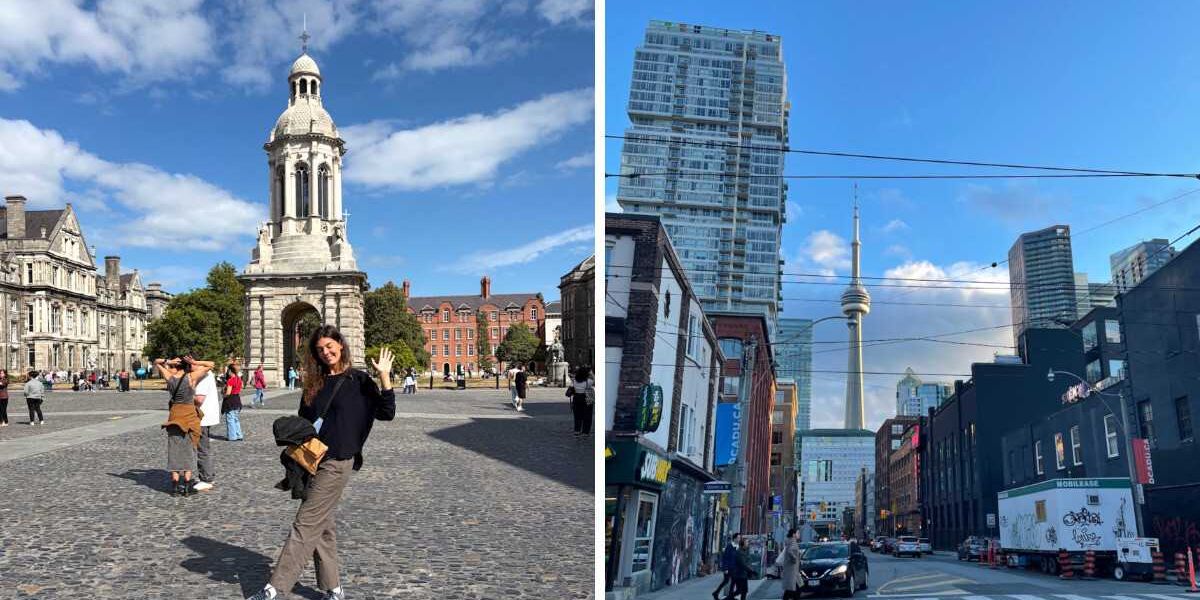
I grew up in Toronto and spent most of my life there, so I’m always going to have a lot of love for the city. It’s exciting, diverse, creative and packed with great neighbourhoods, restaurants and things to do — and now that I live abroad, there’s plenty that I miss about Toronto.
But moving away from Toronto has also made some of the city’s shortcomings a lot harder to ignore. After spending time in other major cities, I’ve realized there are parts of everyday life here — from public transit and walkability to housing, nightlife and public spaces — where Toronto still has plenty of room to improve.
Obviously, no city is perfect, and I’m not interested in comparing Toronto with Paris, Copenhagen or New York just for the sake of complaining. But when it comes to some of the things that make a city easier, more affordable and simply more enjoyable to live in, there are a few areas where Toronto could take some serious notes.
Here are eight ways I think Toronto falls short compared with other cities — from a local who left and now sees it a little differently.
Toronto’s public spaces could be so much better
Toronto has some great parks, but compared with cities like Montreal, Paris or Copenhagen, it doesn’t do the best job of turning public spaces into places where people actually want to gather and linger.
Montreal, for example, pedestrianized a ton of streets this spring, including seven major commercial streets. Toronto does close Kensington Market for Pedestrian Sundays and has experimented with things like expanded sidewalk patios, but so much of the city still feels designed around moving cars through it rather than making space for people to hang out.
Toronto’s waterfront is underwhelming
Toronto sits on an absolutely enormous lake, but huge stretches of the waterfront still feel cut off from the rest of the city by highways, condo developments, industrial land and awkward infrastructure.
Compare that with waterfronts in cities like Sydney, Copenhagen or Marseille and Toronto can feel pretty underwhelming.
To be fair, things have improved a lot. Sugar Beach, Trillium Park, Harbourfront and the Port Lands have all made the water much more accessible over the last decade or so — but for a city built along Lake Ontario, it still feels like there’s so much more potential.
Toronto’s subway still isn’t fully accessible
According to the TTC’s spring newsletter, 64 of Toronto’s 70 subway stations are accessible. That’s real progress, but it still leaves six stations without full step-free access.
The good news is that College, Museum, Spadina and King are expected to become accessible this year, while Islington is projected for 2027 and Old Mill for 2028. It’s great that the remaining upgrades are finally on the way, but for a subway system that opened in 1954, taking until the late 2020s to become fully accessible still feels like a pretty glaring example of Toronto playing catch-up.
For comparison, cities including Los Angeles, Washington, D.C., and Copenhagen already have step-free access across their entire metro rail networks.
Toronto isn’t that walkable
A lot of Toronto’s coolest neighbourhoods are super walkable, but the city’s pedestrian infrastructure gets surprisingly patchy once you move beyond the downtown core.
According to the city, almost 800 kilometres of local roads — nearly one-quarter of them — don’t have sidewalks. Add in constant construction detours, massive intersections and six-lane suburban arterials, and suddenly Toronto doesn’t feel quite as pedestrian-friendly as it likes to think it is.
Compare that with cities like Paris, where pedestrian-only streets and car-free areas are spread across the city, or Barcelona, which has transformed parts of its street grid through its pedestrian-focused “superblocks.” Toronto has plenty of walkable pockets, but outside them, it can still feel like pedestrians come second.
Creativity is getting priced out
I’m not just saying this because rent is expensive — although it is. When housing costs get this high, they also change who can afford to experiment here. Artists, musicians, small businesses, quirky little venues and people in their early 20s often need relatively affordable space to get started — and good luck finding much of that in Toronto.
The average resale price across Toronto and the GTA was $993,410 in August 2026, which is actually low compared with recent years, while Canada Mortgage and Housing Corporation forecasts the average two-bedroom rent at around $2,120.
In my opinion, cities lose so much of their creative edge when every square foot requires a serious amount of money just to exist in it.
Toronto is trading charm for condos
Toronto has gorgeous Victorian storefronts, industrial warehouses, old theatres, corner shops and strange little buildings — along with a remarkable ability to replace them with a glass condo podium containing a Shoppers Drug Mart.
Places like London, Paris and Montreal aren’t immune to redevelopment, obviously, but Toronto can feel especially ruthless when it comes to preserving that architectural texture and character.
I’m sorry, but I’ll never not be nostalgic for the Toronto that had Honest Ed’s and the Galleria Mall.
Toronto needs more late-night hangouts
peaking of Toronto nostalgia — is it just me, or did the city once have way more late-night diners, coffee shops and 24-hour spots? You know, the kind of places where you could sit after a shift, sober up after a night out or chat with a friend for three hours without spending $80 on cocktails.
Cities like Montreal, New York and plenty of places across Europe seem to do this much better. Toronto has no shortage of trendy bars and fancy-shmancy restaurants, but there seem to be far fewer casual third places where you can just hang out late without spending a fortune.
Toronto’s bike lanes are too patchy
This is probably the most Toronto cycling complaint possible, but alas, here we are.
Some of Toronto’s bike lanes are genuinely great. Richmond and Adelaide have seen major improvements, while parts of Bloor, the Danforth and the waterfront are pretty pleasant to ride. But they’re still just pockets of a much bigger network.
If you don’t know a route well, you can be happily pedalling along a protected bike lane only for it to suddenly end and spit you out into mixed traffic on a major road, which can be pretty freaky. Compared with cities like Amsterdam or Copenhagen — cruel comparisons, I know — cycling in Toronto still requires a ton of route planning just to avoid ending up somewhere stressful or unsafe.
Toronto is still a great city, and none of this changes how much I love it. But spending time elsewhere has made me realize how much better some parts of city life could be.
A little more space for people, a little less space for cars, and a bit more room for creativity and character would go a long way!
The opinions expressed in this article are the author’s own and do not necessarily reflect the views of Narcity Media.