

![16th Feb: Jingle All the Way (1996), 1hr 29m [PG] – Streaming Again (5.9/10)](https://occ-0-7328-999.1.nflxso.net/dnm/api/v6/Qs00mKCpRvrkl3HZAN5KwEL1kpE/AAAABVYim4HBp0CsxAS9LAV1PiT6ki4DhIZepsagLnGOc0KAXF4F-wzqcrSB7GXJw45LfHauqa7pDhWsZSKV0gm6dV_ME6BbeTHcJNg0.jpg?r=d79 "16th Feb: Jingle All the Way (1996), 1hr 29m [PG] – Streaming Again (5.9/10)")



After a nine-year directorial hiatus, director Gore Verbinski (A Cure for Wellness, Pirates of the Caribbean) is back with Good Luck, Have Fun, Don’t Die, which takes an irreverent approach to its dystopian story. This off-kilter sci-fi adventure feels like the culmination of our tech-related anxieties, filtered through the lens of slapstick comedy that also embraces the best parts of Black Mirror. While Good Luck, Have Fun, Don’t Die has a lot going for it, Sam Rockwell’s astounding performance as a man from the future does most of the heavy-lifting. And if you’re coming off the high of his latest performance and need more Rockwell in your life, look no further than Duncan Jones’ Moon, a very different (but equally great) movie in which the actor plays an isolated lunar worker eager to return home after completing a three-year stint on the far side of the Moon.
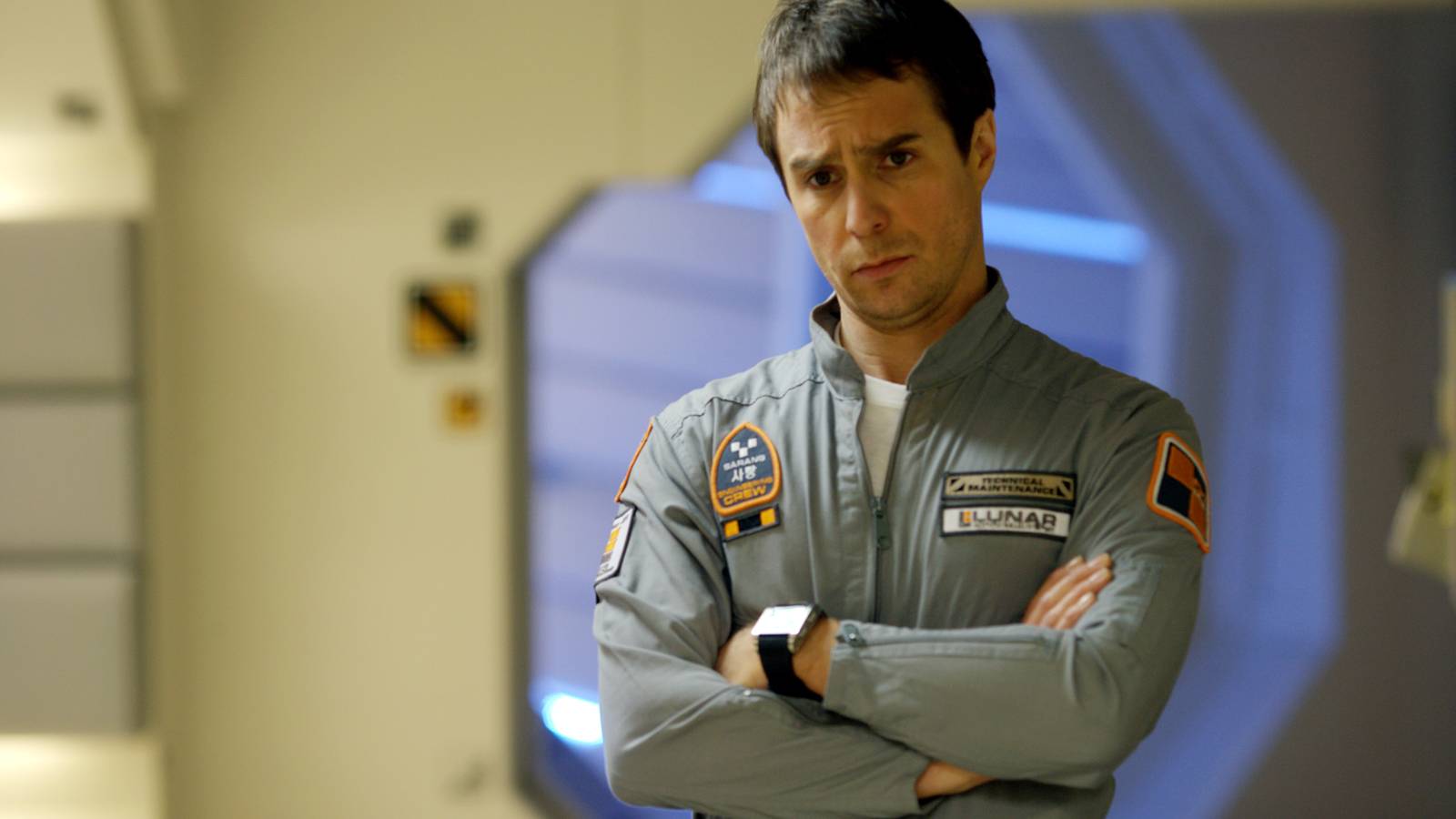
In Moon, Rockwell’s Sam Bell is the sole human responsible for maintaining operations on Sarang Station, the lunar facility built to mine helium-3, which displaced fuel after Earth underwent an oil crisis. Sam’s only companion is a robot named GERTY (Kevin Spacey), as live communications with Earth have been disabled in favor of recorded messages from his wife, Tess (Dominique McElligott). Battling chronic loneliness throughout his mandated three-year mission, Sam counts down the days until he can return home to Tess, who was pregnant when he left.
After a solar storm damages communications equipment, Sam heads to the surface to repair it, but loses consciousness after accidentally crashing his rover. Once he awakens, his sense of reality is shattered as he contends with the truth about his status as an expendable member of Lunar Industries’ workforce.
Jones imbues Moon with quiet and escalating anxiety that lulls us into a false sense of security, emphasized by Sam’s humdrum existence on the automated space station. The peculiarity of his predicament is undercut by the grounded setting of an era that relies on space mining for survival, but Moon destabilizes this foundation as soon as Sam wakes up in the base infirmary with no memory of the accident. As it turns out, the post-crash Sam in the infirmary is actually a clone. After the doubles meet and their conversation takes a violent turn, GERTY reveals that they’re both clones, with a new one being activated at the end of every three-year stint, while the old clones get incinerated.
While discussing the making of Moon, Jones told the Guardian that the two versions of Sam are meant to reflect different versions of the same artificial consciousness, like two selves at different points in their lives:
“We [Jones and Rockwell] both liked the sci-fi films of the ‘70s and early ‘80s — Silent Running, Alien, Outland — and the sense of realism and mundanity they brought to space, with a lot of the day-to-day grind comparable to jobs on Earth […] The frustration and sense of isolation that Sam Bell, the main character, feels is definitely something I was channeling. I also thought there was something interesting about having the opportunity to meet yourself from a different point in your life, to see how a mature version of yourself would interact with a rawer, more emotional one.”
While both versions of Sam contain the cloned consciousness of the real Sam Bell (who is safe on Earth), Rockwell plays this dual role with subtle distinctions. When the two converse, bicker, or indulge in a game of ping-pong, the differences in their worldviews feel subdued yet immediate, as the newer clone is more aggressive and skeptical than the older one. The realization that neither of them is the “original” makes their mutual resentment vanish, as they finally see themselves as what they are — disposable pawns serving an indifferent, well-oiled corporate machine.


A more absurdist version of this premise plays out in Bong Joon-Ho’s Mickey 17, which also riffs on two identical clones working through mutual disdain to overthrow corporate hegemony. While both Mickeys (a stunning dual performance by Robert Pattinson) succeed in the end, Moon makes space for only one survivor, who succeeds only because of the sacrifice of the clone who stays behind. In both films, the antagonistic overlords go to great lengths to prevent a clone-to-clone conversation from happening, terrified of the solidarity that might break through the instinctual haze of self-interest. The moment an expendable clone like Sam or Mickey meets an identical self that mirrors their own exploitation, they have no choice but to rise and revolt against the corrupt systems perpetrating it.
Moon was shot in 33 days, with a mere $5 million budget, but it accomplishes more than it ought to by asking pertinent questions about what it means to be human. Sam’s manufactured identity is based on a real person (not unlike Rachel’s sense of self in Blade Runner, where she undergoes a crisis upon learning the truth), but his implanted memories aren’t real, as he has never experienced them. Every Sam clone is a copy of a copy of a copy, increasingly alienated from the real Sam’s lived experiences on Earth. At the same time, every version of Sam sports a subtly distinct interiority, even when their covert purpose is to complete their three-year mission and die.
Almost two decades after its release, Moon remains a stellar example of science fiction that feels grounded and thought-provoking without being overly didactic. It compels us to ponder the moral bankruptcy that comes with the denial of personhood, even when a clone yearns for a home that was never his to begin with.