



![7th Feb: The Time Machine (2002), 1hr 35m [PG-13] (6/10)](https://occ-0-6631-616.1.nflxso.net/dnm/api/v6/Qs00mKCpRvrkl3HZAN5KwEL1kpE/AAAABWEpzgB_2tXvjjOoZAJflQu63KWNvs4jsphvaxzswUOIywfRzSQspvmODiwXdOhNOjl_h-sKTuvpgLMr4WteKq6CqupcBOUgokYfVVILuVLfNc6vL_NdgnrMD3vpjIEnIDtORzzH44JJv26_w6ZsNF1mstKjVdyuuC8_5LNJ_9m8YQ.jpg?r=f32 "7th Feb: The Time Machine (2002), 1hr 35m [PG-13] (6/10)")



Inception isn’t the first Christopher Nolan to be inducted into the National Film Registry, and likely won’t be the last. While Inception was one of this year’s honorees, Nolan’s Memento (inducted in 2017) and The Dark Knight (inducted in 2020) beat it to the punch. At minimum, it seems likely that Nolan’s 2023 film Oppenheimer will join them at some point, given its status as a multi-Oscar-winning, IMAX-sized smash about a vital period of world history. That acclaim for other Nolan joints squares with the overall status of Inception, an Oscar-nominated hit that is nonetheless in danger of being overshadowed by Nolan’s other achievements — even though it’s his best film.
Inception has plenty of worthy competition. Nolan’s most broadly popular movie remains The Dark Knight, flanked by the impressive scale and scope of his other other Batman movies, Batman Begins and The Dark Knight Rises. Oppenheimer and Dunkirk offer World War II-themed prestige for more traditional-minded fans. For that matter, in recent years, sci-fi-oriented hardcore fans have been going to bat for the less universally acclaimed (but now cultishly adored) Interstellar or Tenet. That leaves Inception looking a bit like the normie’s choice — or maybe nobody’s first choice at all.
Inception made far too much money to be considered a true underdog, and it’s racked up plenty of sky-high ratings on Letterboxd and IMDB. But its overall share of the Nolan adoration pie will likely continue to diminish as he releases more movies, and Inception has been dogged by pervasive criticisms since its release, primarily concerning its buttoned-up approach to science fiction.
The film stars Leonardo DiCaprio as Dom Cobb, a combination thief, con artist, and (in his way) movie director who uses experimental technology to invade people’s dreams, stealing or changing information in their brains on his clients’ behalf. The multiple layers of dreaming make this a particularly dangerous business; in the past, Dom and his wife Mal (Marion Cotillard) experimented with the dream-incursion technology together, and she became trapped in a limbo many dream-layers deep. Dom’s attempt to extract her involved incepting her with a distrust of reality, which she carried with her back to the real world. Attempting to “wake up” from the dream, she killed herself, implicating Dom in her death.
Inception opens with Dom on the run from the law, but hoping his latest client can help. Dom’s been hired to invade the mind of corporate heir Robert Fischer (Cillian Murphy) and subconsciously convince him to dissolve his company. If Dom is successful, his employer will pay him by expunging his criminal record, allowing him to go home again. For this mission, Dom enlists the help of the obligatory Ocean’s Eleven-style team, played by Joseph Gordon-Levitt, Tom Hardy, Dileep Rao, and Elliot Page.
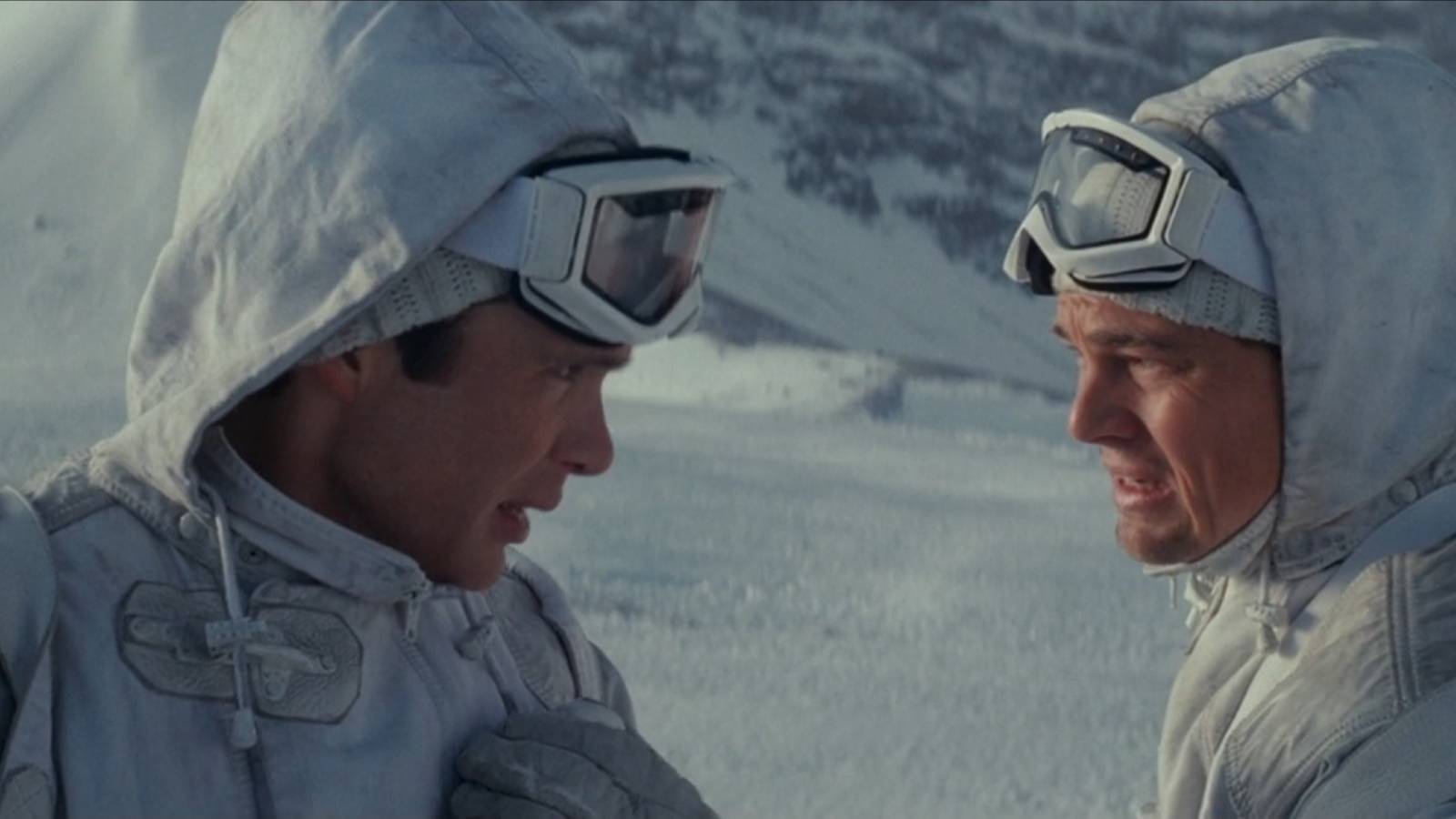
For some prospective viewers, this premise conjured pictures of a surreal, Terry Gilliam-esque (or at least Charlie Kaufman-ish) trip through inventively indescribable dreamscapes, especially given the mysterious folding-city images from the film’s eye-catching trailers. But Nolan’s layered subconscious looks more like On Her Majesty’s Secret Service, the James Bond movie that specifically inspired the snowy-action-sequence level of Robert’s mind.


As such, Inception might appear more like a convoluted video game than the inside of someone’s idiosyncratic brain. Yes, there are flights of visual fancy that quickly became iconic: the gravity-adjusting hallway fight handled by Arthur (Gordon-Levitt), or the cities folding in on themselves when Dom demos the dream-adjusting technology for new team member Ariadne (Page), an image director Scott Derrickson heavily borrowed for Marvel’s Doctor Strange. But the focus of the film is Dom controlling Richard’s dreams, and his control makes them more about uncanny replication than otherworldly spectacle.
Dom’s reason for this approach is to avoid detection; wilder, more out-of-place imagery will tip Robert off to his dream state. The thematic reason should resonate with Nolan fans: His movies are often about men attempting to exert control over their surroundings in ways that fall somewhere between heroic and dangerously obsessive. This obsessiveness can serve as an especially tidy metaphor for filmmaking, and Inception feels like Nolan’s most explicit evocation of his profession through Dom’s elaborate machinations in controlling the fantasy-like worlds inside people’s heads. There’s more to Inception, however, than clever metatext about the film’s own making.
Nolan doesn’t always make science fiction movies; only about a third of his 12 features so far qualify. But more often than not, his work seems specifically designed to evoke an uncanny border between the real and the fantastical. For his actual sci-fi, that means using a lot of practical effects and convincingly tactile imagery even when reaching for something as woo-woo as Interstellar or as convoluted as Tenet.

That’s also the strategy for his Dark Knight movies, which include some sci-fi-adjacent ideas, but also strive for pulp storytelling closer to crime dramas than cartoons. Even his most grounded historical dramas have uncanny elements: Dunkirk’s intercut timelines create an Inception-like effect, as its three different storylines play out simultaneously over a few hours, a single day, and a full week. Oppenheimer depicts the atomic bomb with some ultra-close-ups that look more like, well, something from Interstellar.
Inception and The Prestige — the other science fiction movie Nolan made between Batman installments — are both largely about people designing absurd yet wildly entertaining illusions, using fantastical tools to create something on two different levels of believability. Their illusions deceive the audiences within the film, but look pleasurably “real” to audiences watching the movie, even as the latter understands that elaborate visual effects were involved in their creation. The protagonists inThe Prestige are creating their illusions for the explicit purpose of putting on thrilling shows; one of them uses technology that’s more outlandish than anyone in his audience realizes.
Inception’s Dom has a more personal motivation: pulling off an impossible mind-heist to wipe his record — and, it’s implied, start to clear his own haunted conscience. That gives Dom’s peril a little more emotional heft without sacrificing the snappily dressed showmanship Nolan summons, not just for the movie’s big action setpieces (which remain among his most accomplished) but for the often-derided act of exposition.
Ariadne exists in the story largely so Nolan has an audience surrogate he can introduce to this world, someone to ask questions about how dream-heists work, so Dom can explain it to the audience. This is precisely what makes Inception such a satisfying heist movie; Nolan understands that nearly all “heist gone wrong” movies require scenes where the mastermind lays out the scheme so viewers can follow how it falls apart.

Inception’s exposition generation and tightly controlled dream environments aren’t bugs; they’re features of Nolan’s viselike grip on his audience. This parallels the grip the dream world can hold over its inhabitants, with Mal’s fate and Dom’s guilt serving as a cautionary tale. That consideration of the dangerous lines between fantasy, reality, and subconscious thought makes Inception an unusually organic sci-fi movie, one where the quality of its speculative illusions is exactly what makes it so dizzying. More overtly trippy imagery wouldn’t necessarily get that across; Nolan conveys the potential disorientation and damage through Cotillard’s performance, as well as the desolation of the movie’s limbo world. It’s scary because minds ultimately can be tricked, and therefore slip away.
Dom’s advice about how people in the dream world can root themselves to reality carries over beautifully to a satisfyingly ambiguous final shot. There are other Nolan movies that ask how people locate themselves in their own timelines (Memento; Tenet) or in the greater scheme of history (Dunkirk; Oppenheimer). But of all of them, Inception creates the most impressive and convincing architecture around the idea of getting lost.
Inception is currently available to stream on HBO Max.


![7th Feb: Rob Peace (2024), 2hr [R] (6.25/10)](https://occ-0-1381-999.1.nflxso.net/dnm/api/v6/Qs00mKCpRvrkl3HZAN5KwEL1kpE/AAAABbnZKWSM0fVdQDh2ADspxEFb41r-FIwfae9vBscgIeck3tYm0VGVL1DbBszHr7zIH2tY8CkWtEMdHtW-x3b7TLm1jLX6lvHzH0qIhIO2aTQrgZjlPzDjeRSFwZxS3p9FMXZp9wtjlf1Lijt4GCh2glyNRS3-tmHvwts86rc7Kvt2IA.jpg?r=0d0 "7th Feb: Rob Peace (2024), 2hr [R] (6.25/10)")