



![22nd Sep: Baby Do Die Do (2026), 2hr 1m [TV-MA] (6/10)](https://occ-0-748-1001.1.nflxso.net/dnm/api/v6/0Qzqdxw-HG1AiOKLWWPsFOUDA2E/AAAABZiyMnQM6YUg25_Zx0z-GA0bNaSYGGqlQIYEMDi9KMEiY8dCcwCPWKAfHoN-oDB17uLEKOhMfZrhcI933zftMA3-PaN2lb_vECxa_8VOL_cj5G7zvZuvb7LWGI-dXjNYphKgZWBipx8bJkOhF16csGWMIoH3uN4WJxfW5bN3DrbEbw.jpg?r=72d "22nd Sep: Baby Do Die Do (2026), 2hr 1m [TV-MA] (6/10)")







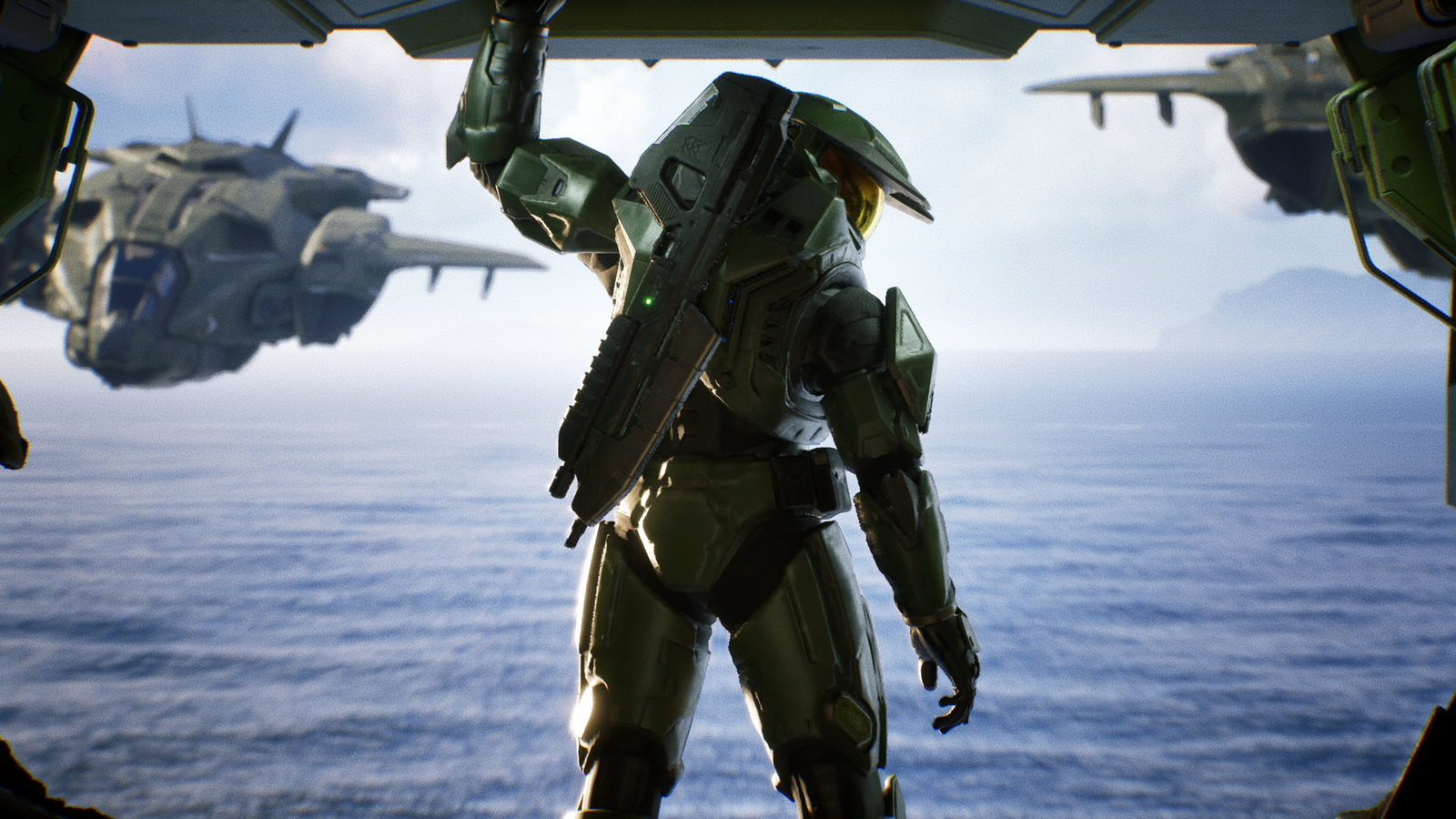
Halo will never be the same. On Tuesday, Xbox announced the next phase of its ongoing restructuring, with a memo from executive vice president Matt Booty citing developer Halo Studios as the first line item in a wave of 268 new job cuts. A “small team at Halo Studios will continue supporting the Halo community and games in-market,” Booty added. Activision, the company behind Call of Duty, will be developing the next Halo game.
This is the sort of news that, a decade ago, would have sounded like a prank. But in 2026 — where golf course moguls can be two-term presidents and Silicon Valley can actively engineer the end of humanity with no blowback whatsoever — it’s business as usual. For Xbox specifically, it’s another chapter in a decade of brand mismanagement, and a symbolic end to one of gaming’s longtime fanbase wars.
Halo, of course, has been the face of Xbox since the very beginning. Bungie’s 2001 shooter Halo: Combat Evolved was arguably the game that moved original Xbox consoles. Its successors, 2004’s Halo 2 and 2007’s Halo 3, are still considered some of the best first-person shooters ever made, as close to universally beloved as video games get. Even the spinoffs, like Halo: Reach, were extremely well-regarded.
Following Microsoft’s divestiture of Bungie, Xbox established 343 Industries — named in part after a character from the original trilogy — to focus on creating new Halo games. Its track record consists of terrific games that were all marred by rocky launches. Halo 4 was the first entry in the series to truly divide fans. The Halo: Master Chief Collection compilation eventually became the de facto way to play Halo games, but it took literal years to attain such stability. Halo 5 marked the series low point — fans thought it was way too derivative of Call of Duty.
In 2020, 343 Industries planned to kick off the new console generation with its biggest game yet, Halo Infinite. Master Chief iconography was literally printed on the retail boxes of launch-edition Xbox Series X consoles. Then, at the eleventh hour, 343 Industries delayed Halo Infinite. It was too late to change the Xbox Series X box art.


This turned out to augur poorly for Halo Infinite, which was eventually released a year later as a free-to-play multiplayer shooter with a premium paid narrative campaign. Despite a truly staggering launch (20 million players!), players bounced and never returned en masse. It was clear the game wasn’t ready: Infinite shipped without many features that were included in prior games, like a cooperative campaign and a player-creation mode. Though 343 Industries eventually patched this stuff in, the damage was done. Halo Infinite was initially conceptualized as a decade-long Halo game. Active development on it ended earlier this year (save for some minor updates).
Some of Infinite’s woes could be attributed to the studio’s split focus. In addition to developing video games, 343 Industries also worked on maintaining the Slipspace engine, proprietary game development software designed explicitly to build Halo games. (Years ago, while I was covering 343 Industries for Kotaku, one developer told me it was like building a railroad while also operating the train.) In 2025, alongside rebranding as Halo Studios, the developer said it would start developing games on Epic’s industry-standard Unreal Engine. The first such game was this summer’s Halo: Campaign Evolved, a remarkably faithful remake of Halo: Combat Evolved that recreated Bungie’s classic almost 1:1 with a few modernizations, like a sprint button.
With the Halo: Campaign Evolved announcement, Halo Studios revealed it had “multiple” projects in the works. The current status of those projects is unclear. Representatives for Xbox did not respond to Polygon’s request for comment in time for publication.
But it is clear that Activision will be developing the next Halo game, “led by a new, purpose-built team that is separate from ongoing development and plans for Call of Duty,” according to Booty’s memo. In other words, the three studios who rotate Call of Duty duties — Treyarch, Infinity Ward, and Sledgehammer Games — won’t explicitly be in charge of whatever the next Halo.


Still, their influence will almost certainly be felt. Call of Duty is about as close to manufacturing-line game development as you can get, with annualized releases that generally follow a similar framework; that sort of ethos comes from the top. This isn’t to say the next Halo game will feel like a Call of Duty game. With Halo: Campaign Evolved, Halo Studios proved that Halo’s unique gravity and physics could be replicated outside of the Slipspace engine. But I wouldn’t be surprised to see many of the other Call of Duty hallmarks — like loadouts, tight seasonal models, and visually busy menus — come to Halo.
Whatever the case, it’s far too early to predict what the next Halo outing will look like, aside from it almost certainly having some sort of competitive multiplayer component. There is simply too much revenue on the table for Xbox, in its current era of worshipping the bottom line at all costs, to ignore. (Campaign Evolved was the first Halo game to launch without one.) But the irony in moving Halo to a company that once was its chief competitor can’t be ignored.
Get Polygon’s Wishlister newsletter
A weekly cheat sheet to what you’ll eventually love to play. No buying, no
commitment — just saving for later.
Sign up free
Free. Unsubscribe anytime.
When both series were at the heights of their powers, Halo was positioned as the cerebral counterweight to Call of Duty’s more straightforward military machismo. The series only stumbled when its makers tried to copy Call of Duty, whether via Halo 4’s loadouts or Halo 5’s significantly sped-up match pacing. Halo Infinite returned the series to its fundamentals, and had its best launch ever. (See again: 20 million players!) After this announcement, it’s hard not to worry about the series taking a step backward, and potentially losing its identity entirely.
In the 2000s, the go-to line, whether you were in a middle-school cafeteria or a college dorm, was “Halo beats CoD!!!” In the 2010s, it was “Halo is too much like CoD now!!!” In the 2020s, when Halo is literally made in the House of CoD, will there be anything left to say?

![22nd Sep: Co-Star Test (2026), 3 Seasons [TV-14] – New Episodes (6/10)](https://occ-0-444-448.1.nflxso.net/dnm/api/v6/0Qzqdxw-HG1AiOKLWWPsFOUDA2E/AAAABc7NDUVmiPO2JJbNuqYbCPDwQZumbUBw9ARKt3g1PPLNiV6QexpVlPfo1im_SBRaj0TowVo5hmFer_UOeNZcHPC2nUjdMNdgpKcFljA0gj2jDotJDr9BCy1jAAlfr_hHkwiUxIDzlkVLJVQ7ZxEAyMT_nitCq1EL5e_1QdCU.jpg?r=429 "22nd Sep: Co-Star Test (2026), 3 Seasons [TV-14] – New Episodes (6/10)")