




Every year, The Nightmare Before Christmas, directed by Henry Selick, is appointment viewing for two major holidays. Selick’s other most famous film, Coraline, recently returned to theaters for its 15th anniversary, and seems to have a steady supply of new merchandise coming out at all times. And yet, a third Henry Selick stop-motion film of equal caliber seems to be comparatively forgotten.
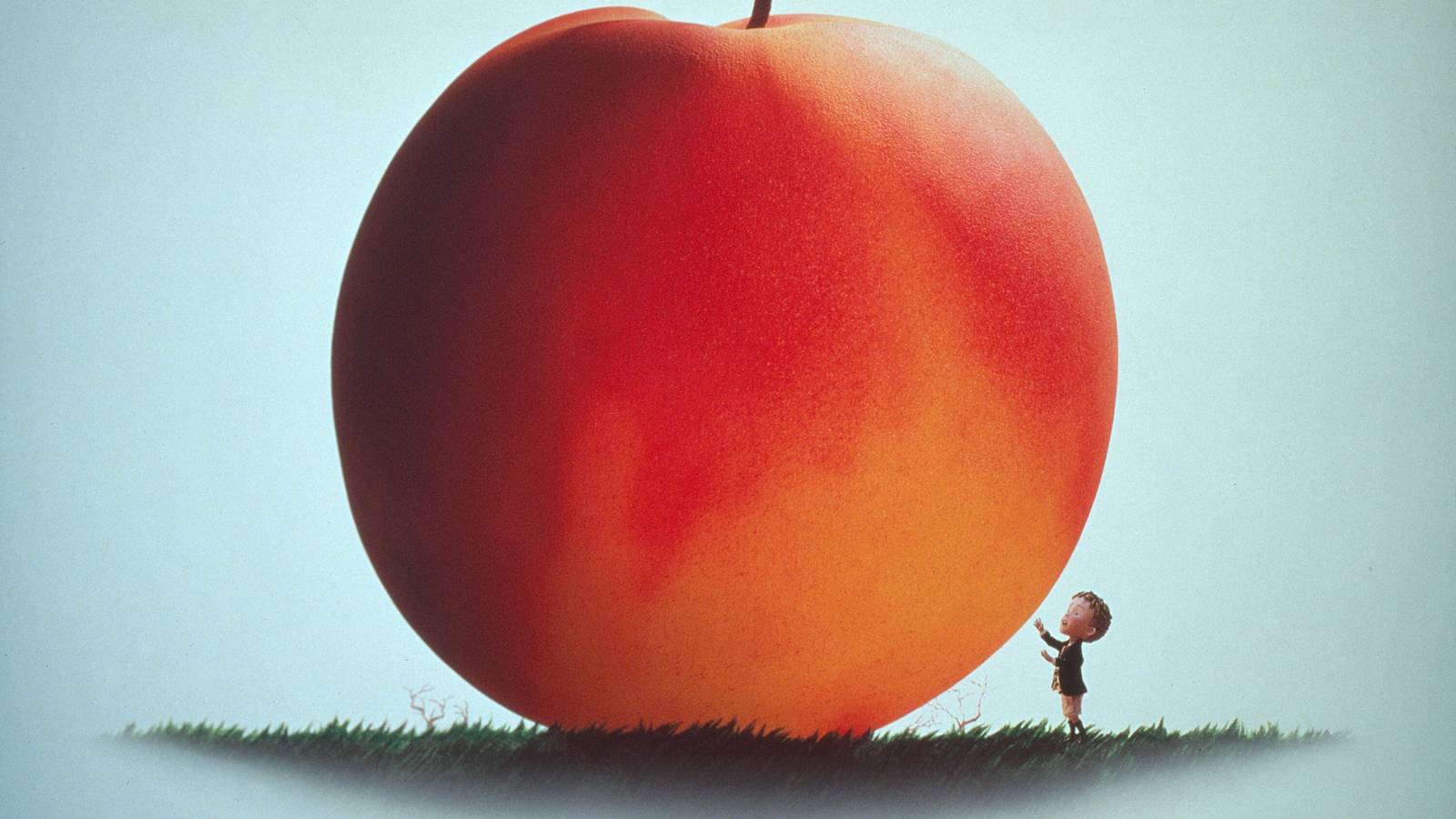
James and the Giant Peach is a Disney film based on the children’s book by Roald Dahl. In it, a young boy named James is orphaned after his parents are, as Dahl put it, “eaten up by an enormous angry rhinoceros.” Forced to live with his mean aunts, James is lonely until a weird series of events causes a magical peach to grow on a long-dead tree on his aunts’ property. It grows until it’s as big as a house. Then James finds an entry hole in the peach and climbs inside.
Once he’s within the peach, James finds a troupe of giant talking bugs who instantly become his dearest friends. They detach the peach from the tree, and it rolls to the ocean. For a while, James and his bug friends journey across the sea in the floating peach, until a shark attack threatens them, and they take flight by tying the peach to hundreds of seagulls. From there, James and his friends venture to a place he used to speak of with his parents, the Empire State Building in New York City.
There’s a lot to love about James and the Giant Peach, and one aspect is its clever use of mixed media. The film begins and ends in live action, preserving the magic of stop-motion for James’ journey. James also transforms from a live-action actor (Paul Terry) to an animated version of himself, and his transformation is one of the film’s most memorable sequences.
This was also the first time Selick made significant use of computer animation in his films, as the sea would have been, especially difficult (if not impossible) to pull off in stop-motion. Fortunately, the computer elements don’t take away from the stop-motion ones. If anything, the contrast between the stop-motion, bright orange peach against the computer-generated, deep blue ocean enhances the film’s dreamlike otherworldliness.


The characters aboard the peach are some of Selick’s best. They include the gentlemanly Mr. Grasshopper (Simon Callow), who plays the violin for James in the film’s sweetest, quietest moment. The funniest moments come from the tough, cigar-chomping Mr. Centipede (Richard Dreyfuss), who speaks with a Brooklyn accent by contrast with the film’s otherwise English voices. James’ most profound connection, though, is with Miss Spider (Susan Sarandon) whom he befriends before he enters the peach, when she’s still a regular spider. Then, once she’s a human-sized, anthropomorphic stop-motion creature, she blends nurturing warmth toward James with a lingering spidery creepiness.


Miss Spider’s almost undefinable mix of contrary elements extends to other aspects of the film, reflecting the contradictions Dahl handled so well in his writing. The movie is bright and wondrous at times, like when the characters wrangle their seagulls-on-strings escape ticket. At other times, it’s unsettling, like anything related to James’ awful aunts. The story is a big, grand, impossible adventure, yet it never loses its more human elements, like Mr. Grasshopper’s violin solo. Even the difficult element of death, as James mourns his parents, is presented with heaviness and humor simultaneously. The film certainly feels like it captures Dahl’s singular sensibilities.
That said, Dahl — who died six years before this film was released — famously hated adaptations of his work, so it’s impossible to say whether he’d approve of it, and it may even be safe to assume he wouldn’t. (Though given Dahl’s complicated legacy as a wonderful writer and an unpleasant, bigoted person, perhaps the best any adaptation can strive for is to honor the work without seeking his posthumous approval.)
Regardless, the film is simply spectacular. Like The Nightmare Before Christmas and Coraline, the movie makes full use of stop-motion animation to tell a story that would have been lacking in any other medium. James and the Giant Peach is funny, creepy, sad, joyful, relatable, and adventurous, often all at once. I just wish it would be recognized as such with the same kind of big anniversary theatrical releases that Selick’s other two most famous works have enjoyed. If any of Selick’s visuals deserve to be seen on the big screen, it’s James’s giant peach.