






Frontmezzjunkies reports: Debbie Allen Revives August Wilson’s Masterpiece at the Barrymore Theatre
By Ross
Some plays don’t just stay with you. They sit beside you for years, quietly waiting for the moment you’re ready to meet them again. I still remember the first time I read Joe Turner’s Come and Gone. It was late, the kind of stillness where the world narrows down to the page in front of you. By the time Herald Loomis reached that final release, his body shaking with everything he had carried for so long, I had to stop. Not because I wanted to, but because I needed a moment to catch my breath. That feeling has never really left me.
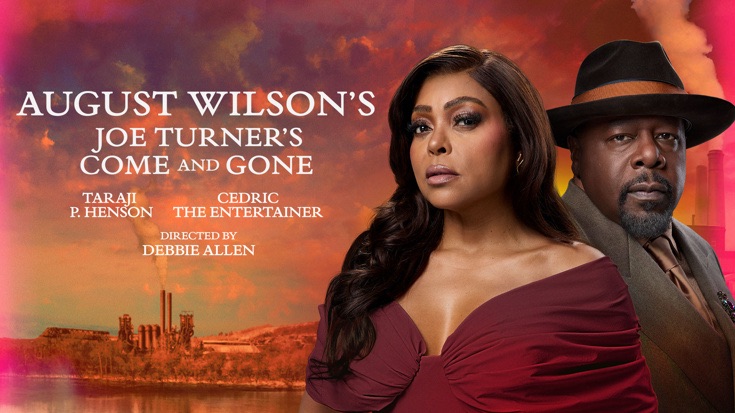
Now, Joe Turner’s Come and Gone returns to Broadway, beginning previews March 30 at the Ethel Barrymore Theatre. Directed by Debbie Allen (Broadway’s Cat on a Hot Tin Roof), the production arrives with a sense of quiet anticipation that feels different from the usual Broadway build. This is not a show that announces itself loudly. It settles in and waits for you to come closer.
Set in 1911, the play by August Wilson (The Piano Lesson) unfolds inside a Pittsburgh boarding house run by Seth and Bertha Holly. Cedric the Entertainer and Taraji P. Henson bring them to life, their performances promising to anchor the boarding house with warmth, wit, and a deep sense of history. It is a place of movement and pause, a space where Black travellers during the Great Migration pass through, searching for work, connection, and something harder to name. And then there is Herald Loomis, portrayed by Joshua Boone, who arrives carrying the burden of seven years of illegal enslavement and the quiet urgency of a man trying to find himself again.
With the promise of a world that feels both grounded and open, there is something deeply fitting about this return to the Barrymore, the very theatre where the play first premiered in 1988. That kind of full-circle moment doesn’t happen often, and when it does, it carries a certain gravity, giving Wilson’s language the space to land with the force it has always held. It invites a different kind of attention, one that is less about discovery and more about recognition.
This is the second play in Wilson’s American Century Cycle, but it often feels like the one most searching. It asks questions that don’t rush toward answers. It gives its characters room to circle, to speak, to listen, and sometimes to simply sit in what has been lost and what might still be found. And that’s what makes this particular return feel so compelling.
Because for those of us who have encountered this play before, there is the chance to sit with it again, to hear those voices in a new room, through new actors, and discover what still lands and what lands differently now. And for those coming to it for the first time, there is the opportunity to step into something that does not try to meet you halfway, but instead asks you to come all the way in. I remember that moment as vividly now as I did then, when I had to stop and breathe after reaching the end of this play. I have a feeling that moment will return when viewing Joe Turner’s Come and Gone, not just for me, but across the room, in the quiet space where breath catches and something long carried finally begins to loosen.