
![25th Dec: Christmas Gameday: Lions vs. Vikings (2025), 4hr [TV-PG] (6/10)](https://occ-0-1081-999.1.nflxso.net/dnm/api/v6/Qs00mKCpRvrkl3HZAN5KwEL1kpE/AAAABTu9gHPcYISb4aupkOwhJqekZzDGPFg3sESjhbxtNejEaQwb4akmpZAFMyIQ8fVXDRrYmE_ZFH2hn1gQy0d4jb8ypeqw60ZJGBHuizy_pCIh0Tz6NHAUwpzUEbCG5xXPW9UGoIGi1MjMlzFFNDo-vBLWyiWfl6ac4LQNtVXYeE8Qwr5mRsDa0VpqsNusWjVkyxN70GQ6xsziQVpcr7gSwQmSIB3kBxnDqt9yN8yFy9qRyUvWwv7AzSrnIQYxPvm8fvQ3DCromtHGgeoAhOA_KR4nJPK8fgxINrdbNwfWhEKcX3Z823PGu3Q.jpg?r=cd2 "25th Dec: Christmas Gameday: Lions vs. Vikings (2025), 4hr [TV-PG] (6/10)")





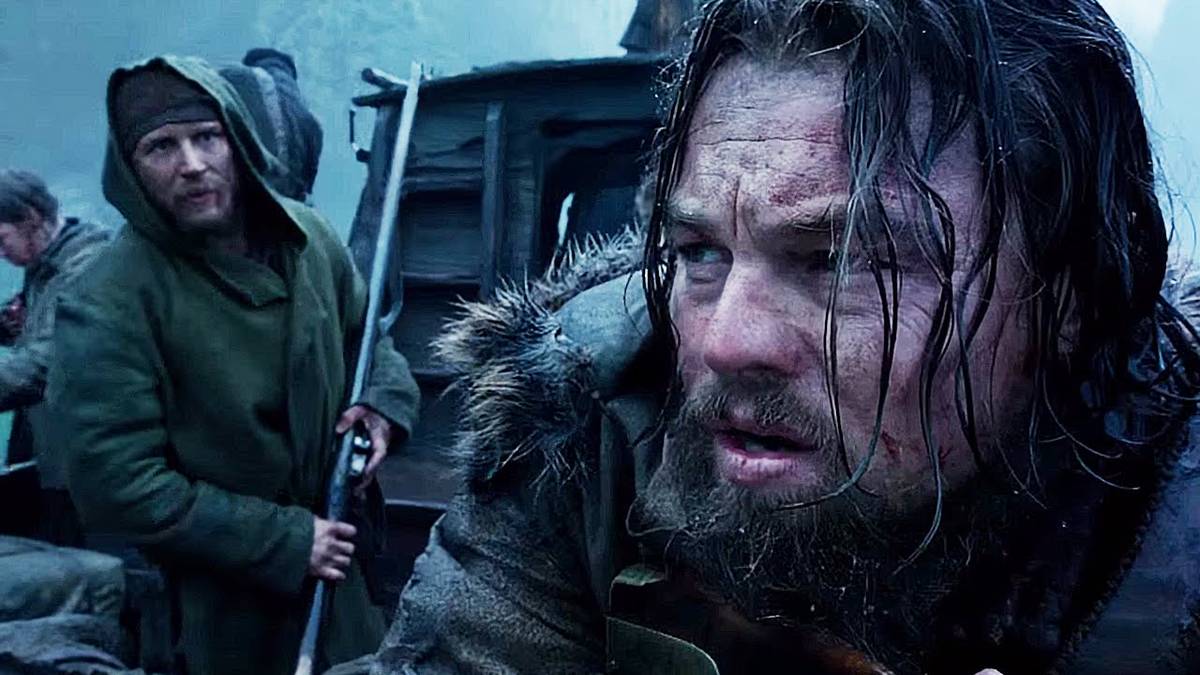
The last time pretty much anybody heard about The Revenant was January 14, 2016 when Leonardo DiCaprio won his overdue Oscar for Best Actor. The consensus at the time was that, because of the harrowing filming process, which included things like eating raw bison liver, risking hypothermia in the Canadian wilderness and, most notoriously, sleeping in a realistic-looking horse carcass prop, DiCaprio had earned his Academy Award through sheer grit.But just like Martin Scorsese winning Best Picture for The Departed instead of for the superior film Goodfellas, the narrative around DiCaprio’s win was that it was also conciliatory, to make up for his previous losses for great performances in films like What’s Eating Gilbert Grape, The Aviator, Blood Diamond, and The Wolf of Wall Street. Because he was such an accomplished actor by that time, and because he hadn’t already won, the Academy essentially “owed him one.” The Revenant’s filming challenges allowed him to Fear Factor his way into a win for a performance that maybe didn’t deserve it.
Maybe those detractors were right. After all, 10 years after premiere on Dec. 25, 2015, The Revenant isn’t the major cultural reference point today that so many of DiCaprio’s films are. But this argument of the movie ignores the fact that, on that same night, Alejandro G. Iñárritu won for Best Director, Emmanuel Lubezki won for Best Cinematographer and the film earned a flurry of other nominations, including Best Picture (that award went to Spotlight). The Revenant is a spectacularly told, heartbreaking story about revenge and survival. It’s also well paced, beautifully shot and an exciting adventure. As a character piece, yes, DiCaprio’s performance ties it all together, but the film is entirely worthy of its 2015/2016 praise — and entirely unworthy of its 2025 irrelevance.
Based on Michael Punke’s 2002 novel, The Revenant, which is loosely based on a true story, centers on Hugh Glass (DiCaprio) who is the most experienced tracker in an expedition gathering fur pelts. While on his own, Glass is attacked by a bear and appears to be at death’s door. The captain of the expedition, fearing an imminent attack by Native Americans, decides to keep the company moving, but he leaves three people back with Glass to watch over him as he dies and give him a proper burial. Those three are Glass’ half-Pawnee son Hawk (Forrest Goodluck), Hawk’s friend Jim Bridger (Will Poulter), and Native American-hating trapper John S. Fitzgerald (Tom Hardy).
Just wanting the extra money promised to him, Fitzgerald proposes they accelerate Glass’ oncoming death, but when Hawk tries to stop him, Fitzgerald stabs Hawk to death as a helpless Glass looks on. Fetching water, Bridger is absent during all of this but is soon told by Fitzgerald that Hawk ran off and that they’re under attack by a tribe of Arikara, so Bridger and Fitzgerald hurry off, leaving Glass to die after being quickly half-buried while still breathing. From there, it’s a revenge story, with Glass making his way through the brutal wilderness to seek revenge on Fitzgerald.
Filmed in the Canadian wilderness, The Revenant captures much of the natural beauty that surrounds glass, but it never indulges in it, mostly by way of contrast. We may see a forest freshly painted with white snow, but it’s against Glass sucking rotten meat off a long-dead animal. And, while a majestic river flows before Glass, we see it as he brutally cauterizes a wound. The film is also almost entirely filmed handheld from an ugly eye-level, with very few sprawling wide shots. The result is that the nature that surrounds glass, while picturesque, always appears like an immediate threat.
Glass’ journey through the wilderness is genuinely exciting. He’s thrown down a waterfall at one point and tangles with French Canadian hunters that are keeping a native woman hostage as a sex slave and who lynch a Pawnee he briefly befriends. In another sequence, while Glass is being chased down by hostile Arikara, he and his horse go over a cliff which he survives by landing in a tree. Trial after trial, Glass perseveres and just keeps on his journey to kill Fitzgerald.
Hardy is diabolical as Fitzgerald but still quite human, and Poulter is equally effective as the young, scared, but good-hearted Bridger. But The Revenant is all about DiCaprio, and he shines, not just because of the obstacles during filming, but because he makes you feel every one of them, both real (like the cold) and staged (like the bear attack). There’s also plenty of nuance to his character, the only one with a seemingly enlightened view of the complex relationships with different tribes of Native Americans. In one of the human scenes, he and Hikuc (his Pawnee friend) catch snowflakes on their tongue like children — almost the only moment of respite in the movie.
Sure, DiCaprio’s other roles like the hilariously drugged up Jordan Belfort in The Wolf of Wall Street and the desperately clinging-to-fame Rick Dalton in Once Upon a Time in Hollywood may be more fun, more memorable and more meme-able, but DiCaprio is at the top of his game in The Revenant — and not just because he ate some raw bison liver.

![25th Dec: Ullozhukku (2024), 2hr 1m [TV-14] (6.8/10)](https://occ-0-937-2705.1.nflxso.net/dnm/api/v6/Qs00mKCpRvrkl3HZAN5KwEL1kpE/AAAABaWWP3SUuwzNUmY8BWuJEkMZFvBxEFQgOAB6il2qSor4yRaMaoM4-K9Ia81puHKRYq52Z8XYytyZfv0PQfeuYtQHuPYlVZqEuLsbakHtSOM1nL4nwx9l6XbKYq9ET6bJfzCSBBgB7NZloRVPa7ktOcuW4OFcBN1_BNB7gkb9wWgVOw.jpg?r=2d3 "25th Dec: Ullozhukku (2024), 2hr 1m [TV-14] (6.8/10)")