








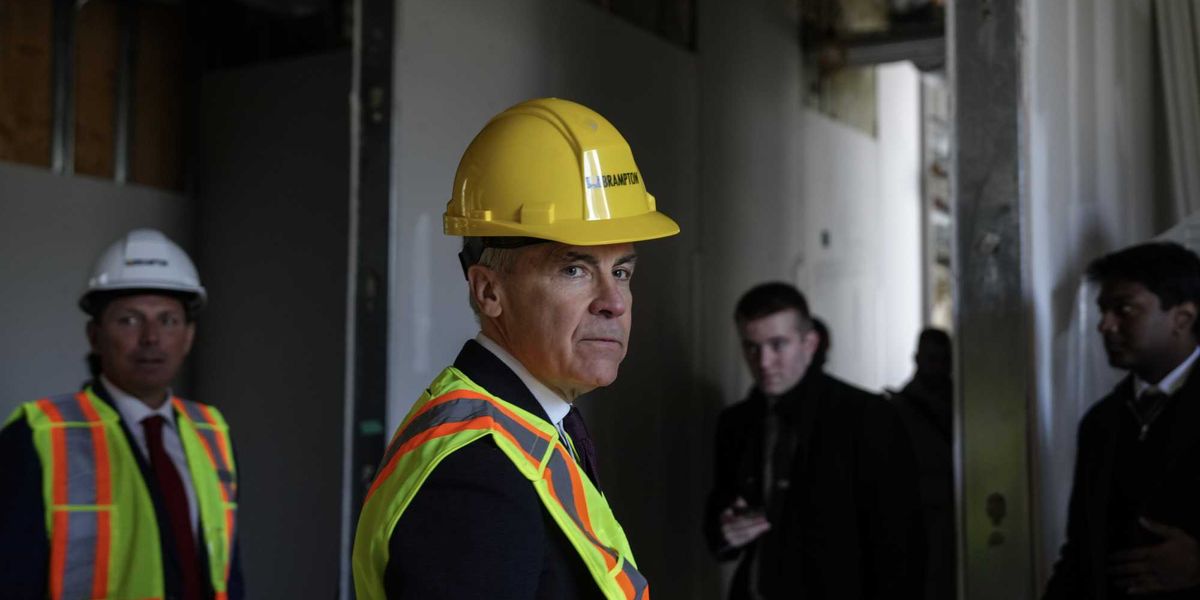
High-speed rail connecting Toronto and Quebec City would be a boon the economy and job creation, Prime Minister Mark Carney said on Tuesday, defending his government’s project as opposition to it continues to grow.
Much of the criticism comes from communities where land will be expropriated for the construction, but Carney said the project will require about 10 metres of land for the route, and people who lose land to it will be compensated.
IN CASE YOU MISSED IT: Pierre Poilievre is pushing to cancel the planned Toronto–Quebec City high-speed rail
Carney said at a news conference in Brampton that the project will create more than 50,000 jobs and contribute more than $35 billion to the economy.
“When you look at the overall, what the high-speed rail does is it’s more cost-effective, it’s more sustainable, it’s connecting our communities, it’s going to be faster,” Carney said.
Last week, Conservative Leader Pierre Poilievre said the government should cancel the proposed rail line, and there has been a growing backlash to the project among rural residents in Ontario and Quebec.
Construction of the first phase linking Montreal and Ottawa is set to kick off in 2029 or 2030, and the full project is estimated to cost between $60 billion and $90 billion.
Carney also said Finance Minister François-Philippe Champagne is following government ethics rules in recusing himself from the project.
“This is a good situation because we have a partner who can pursue her career, the minister of finance who can do his responsibilities, we have lots of other ministers who can take on their responsibilities,” Carney said Tuesday.
In a letter to Carney last year, Champagne said he was proactively implementing a conflict-of-interest screen regarding Alto, the Crown corporation overseeing the project, “due to a personal connection to someone close to me in the organization, to safeguard against any real or perceived conflict of interest.”
Champagne’s partner, Anne-Marie Gaudet, is Alto’s vice-president of environment, a position she took up in August 2025.
This report by The Canadian Press was first published April 7, 2026.