









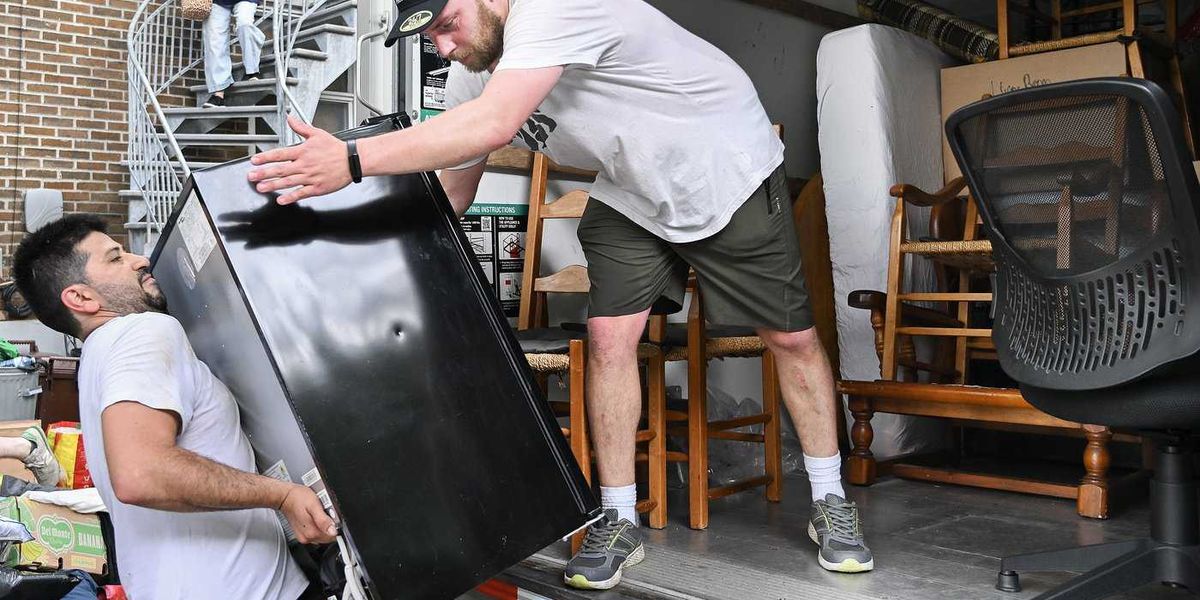
Quebec’s unofficial moving day is on Wednesday, and this year it’s coinciding with a heat wave, leading health professionals to warn about injuries if people don’t take proper precautions.
Traditionally, Canada Day is when leases expire for many households across Quebec, and renters will be loading and unloading moving trucks in temperatures forecast to be in the 30 to 33 C range with humidex readings higher than 40.
The heat wave in southern Quebec, forecast to start Wednesday and stretch into the weekend, will put those who are moving at risk of heat-related illness. The key to combating heatstroke is staying hydrated and taking regular breaks, according to Dr. David Keiser of Montreal public health.
At a news conference Tuesday morning, Keiser said it’s ideal to avoid heavy lifting during the hottest part of the day. He recommends starting as early as possible or waiting until later in the afternoon.
“There’s really no magic solution to moving day,” Kaiser said. “We’re looking at 40 humidex (Wednesday), but there are some measures that at least can avoid the most important exposure.”
Dr. Jehane Dagher, a physiatrist specializing in physical medicine and rehabilitation at the hospital centre affiliated with Université de Montréal, says heatstroke and drops in blood pressure can lead to dizziness, which puts those affected at risk of stumbling, falling or dropping a piece of furniture — which can also injure others helping them.
The most common moving-related injury — by far — is to the lower back, Dagher said. Crushed fingers and toes, sprained ankles or knees are also common. Heavy lifting can lead to muscle strains, especially in the shoulders and calves, when the muscle is stretched beyond its capacity.
Dagher compares moving to a marathon, warning against rushing during sustained effort. It’s best to plan the day carefully to ensure those moving have enough help and respect their limits. It’s crucial, she adds, to distribute weight evenly so boxes don’t exceed 15 kilograms.
“Often, what happens is that people prepare by overloading their boxes. Second, they don’t have enough people equipped to do the job,” explains Dagher.
The other key is to lift heavy boxes correctly, she says. Don’t bend at the waist; instead, bend your knees while keeping your back straight and avoid twisting your body.
Dagher also stresses the importance of appropriate footwear to avoid fractured toes.
“It’s summer, it’s hot, the weather is nice, but flip-flops might not be the best thing to wear when handling heavy loads,” said Dagher. “Closed-toe shoes are ideal. And the sturdier the upper, the better, because these are often blunt objects. A load falling on a toe or a piece of furniture landing on a toe is unforgiving — it hurts a lot.”
Most moving-related injuries can be treated at home, said Dagher. Back pain can vary greatly, ranging from stiffness to a locked-up back or sciatica, where the pain shoots all the way down to the toes.
For minor pains, the physician recommends over-the-counter pain relievers, such as Advil and Tylenol, gentle stretching, and ice packs.
If the pain is severe and preventing someone from walking, Dagher says it’s time to seek medical attention.
This report by The Canadian Press was first published June 30, 2026.
— With files from Erika Morris in Montreal.
—
The Canadian Press’s health coverage is supported by a partnership with the Canadian Medical Association. The Canadian Press is solely responsible for this journalistic content.
By Katrine Desautels | Copyright 2026, The Canadian Press. All rights reserved.
