











Netflix has become the streaming equivalent of a giant video store. Whether you’re looking for an Oscar-winning drama, a true-crime documentary, a reality dating show, or an action blockbuster, chances are you’ll find something worth watching. Netflix built its reputation on offering a little bit of everything, even if not all of it reaches the same level of quality. The platform’s science fiction library perfectly illustrates that balancing act. Netflix has delivered acclaimed series like Stranger Things, Black Mirror, and 3 Body Problem, proving it can produce some of the genre’s most compelling original series. (Even if it still struggles with endings.)
But Netflix has also spent hundreds of millions of dollars on ambitious original sci-fi movies that arrived with blockbuster aspirations only to vanish from the cultural conversation before the streamer could even ask, “Are you still watching?” Whether they suffered from weak scripts, impossible expectations, or simply failed to leave much of an impression, these are Netflix’s five biggest sci-fi flops.
5
IO (2019, Rotten Tomatoes: 33%)
Anthony Mackie and Margaret Qualley headline this post-apocalyptic drama set after Earth has become largely uninhabitable. Qualley plays Sam, one of the last humans still living on the planet while waiting for the final spacecraft bound for humanity’s off-world colony on Io, one of Jupiter’s moons. When another survivor (Mackie) arrives, the two find themselves divided over whether humanity’s future lies among the stars or in trying to adapt to the world they already have.
Much of IO unfolds in a single location, with extended stretches featuring little to no dialogue, making what should have been an intimate character study feel more like a slog. Netflix clearly hoped it had a contemplative sci-fi drama in the vein of Moon or Arrival. Instead, it produced one of its earliest original sci-fi films that most subscribers have long since forgotten.
4
The Cloverfield Paradox (2018, Rotten Tomatoes: 22%)
Of all the movies on this list, The Cloverfield Paradox may have had the most memorable launch. Netflix shocked audiences by dropping the film immediately after Super Bowl LII (Eagles 41, Patriots 33), turning what would have been an ordinary release into one of the biggest entertainment surprises of the year. The movie follows the crew of a space station whose attempt to solve Earth’s energy crisis tears open reality itself, unleashing bizarre phenomena that may be connected to the mysterious events of Cloverfield.
The marketing was brilliant. The movie wasn’t. Rather than expanding one of modern sci-fi’s most intriguing franchises, The Cloverfield Paradox largely brought its momentum to a screeching halt. Clunky dialogue and underdeveloped characters make it difficult to invest in the crew’s increasingly bizarre predicament, while even Bear McCreary’s haunting score can’t disguise how derivative and uninspired the film ultimately feels. It’s the rare sequel that didn’t just disappoint audiences — it made them less excited about what came next.
3
Rebel Moon Parts One & Two (2023-24, Rotten Tomatoes: 22% / 16%)


Fresh off his time in the DC Universe, Zack Snyder set out to build an entirely new sci-fi epic for Netflix. Rebel Moon follows Kora (Sofia Boutella), a former soldier who recruits a band of warriors from across the galaxy to protect a peaceful farming colony from the ruthless Imperium. Across two films, Snyder introduces a sprawling mythology filled with alien races, warring planets, and enough lore to fuel years of sequels.
Rebel Moon wants to be Netflix’s Star Wars, but it spends so much time borrowing from sci-fi classics that it rarely establishes an identity of its own. It’s full of familiar tropes, archetypes, and story beats. It’s all technically impressive but seldom surprising. Snyder’s later director’s cuts added nearly an hour to each film, prompting an obvious question: If these were the definitive versions, why weren’t they released instead? In the end, Netflix’s biggest swing at creating a sci-fi universe proved audiences don’t just want a bigger galaxy, they want one that feels original.
2
Atlas (2024, Rotten Tomatoes: 17%)


Jennifer Lopez stars as Atlas Shepherd, a brilliant but deeply distrustful data analyst who reluctantly teams with an artificial intelligence-powered mech suit to stop a rogue AI terrorist determined to wipe out humanity. With a timely AI storyline, large-scale action sequences, and one of Hollywood’s biggest stars, Atlas looked like exactly the kind of crowd-pleasing blockbuster Netflix excels at producing.
Unlike some of the other movies on this list, Atlas actually found an audience. With Jennifer Lopez, Sterling K. Brown, Simu Liu, and Mark Strong, it had the cast and spectacle of a genuine Netflix event. But the movie has all the staying power of Fruit Stripe gum. For a couple of hours it’s enjoyable enough. Almost immediately afterward, you’re struggling to remember much about it. That’s a dangerous quality for a film that was clearly designed to launch a franchise.
1
The Electric State (2025, Rotten Tomatoes: 14%)


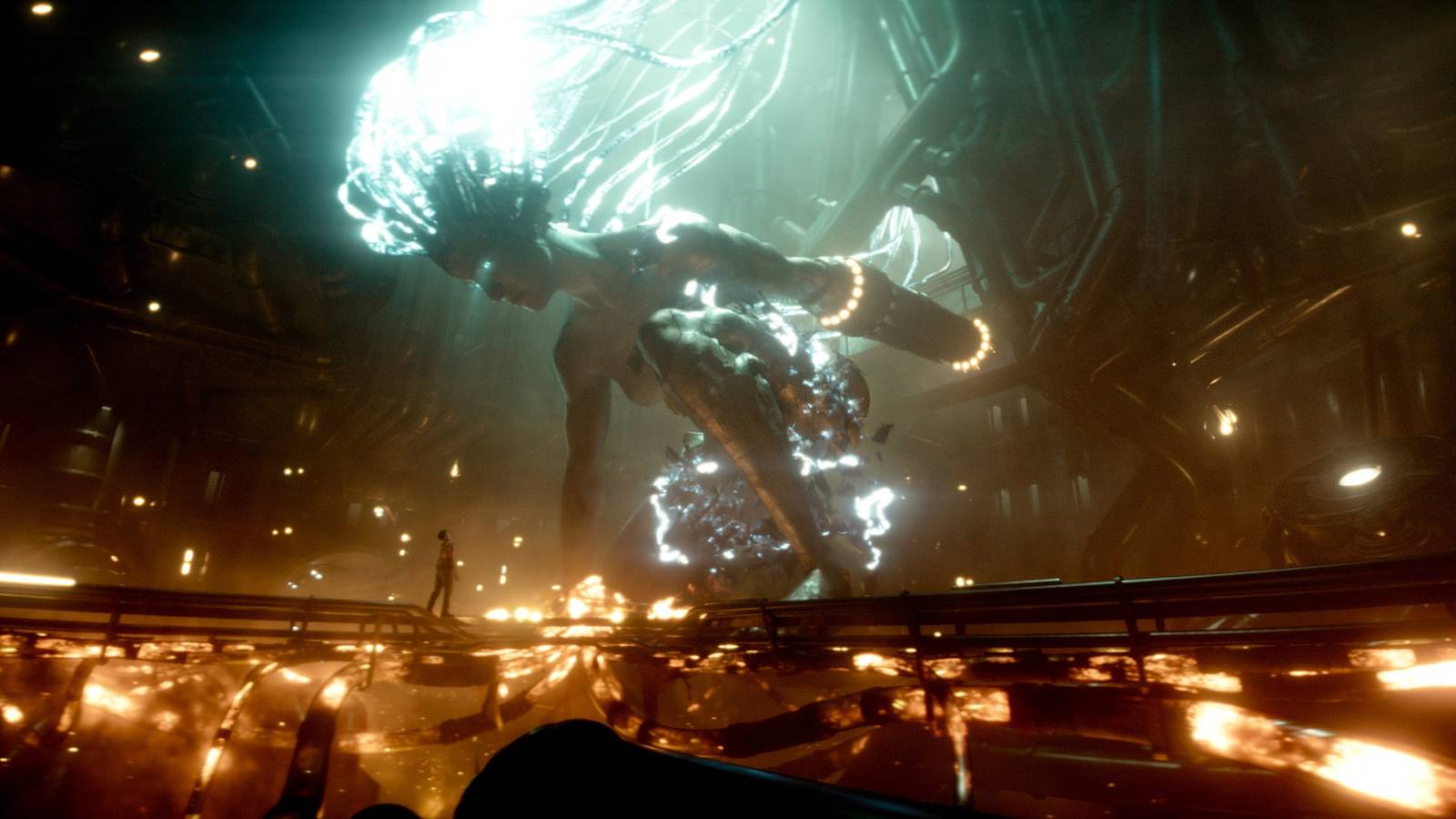
Loosely based on Simon Stålenhag’s acclaimed illustrated novel, The Electric State stars Millie Bobby Brown as Michelle, a teenager who travels across an alternate version of the American West with a mysterious robot and a smuggler (Chris Pratt) in search of her missing brother. Directed by Anthony and Joe Russo, the film paired one of Netflix’s biggest creative teams with the largest budget in the streamer’s history.
On paper, The Electric State had everything going for it. The Russo Brothers were directing, Stålenhag’s beloved book provided the source material, and the reported $320 million budget made it Netflix’s most expensive original movie ever. Stanley Tucci and Ke Huy Quan anchored the live-action supporting cast, while Anthony Mackie, Brian Cox, Jenny Slate, Woody Harrelson, Hank Azaria, Colman Domingo, and Alan Tudyk lent their voices to the film’s colorful robot cast.
The problem wasn’t the talent or the budget. It was the adaptation itself. Stålenhag’s meditation on artificial intelligence, consumerism, and humanity’s growing dependence on technology was transformed into something far more conventional and forgettable. The Electric State feels like a lame imitation of a Steven Spielberg sci-fi romp with none of the joy, creativity, or ingenuity that makes that director’s work so special. In the process, the Russo Brothers lobotomized the ideas that made Stålenhag’s graphic novel worth adapting in the first place.

![28th Sep: Last Trace with Kaelyn Moore (2026), 1 Episode [TV-14] (6/10)](https://occ-0-748-1001.1.nflxso.net/dnm/api/v6/0Qzqdxw-HG1AiOKLWWPsFOUDA2E/AAAABRgiBU3u-RO0IYB22mBLC13mui-x1MaNWSzO5-nhnojAPPXSM990zzQhwuHCuZF0GeSg2_G1o9St8zkTJtH551sS-LBQZ-U22AfeguU5ASfejiHnTbEMuYbP1n3OAl-c4GJirpxE1ksZvcywAXvmbNt0XvxDEJLxCJHAfelZ8nFJlRatB_D7mL-p7mWKKAYXGOiJXJ7RPX-P8-GhlBxm6bsjD61wcNH5IOlqpYXN9OLrusVNdobNwEz7Twb1ICjePY-croMZo1bfmzOs3I9lyESKqdx7gosuGJS3GSzS4iYz0rlivziilQ_ekBl-Kfssr-ej1R-0D-Dvir-6rsO-fsaGS7yjXhL4PIDsbD7t5mAnjWBAMyLTDl0cxmPB-c7XaSBCYKyy8GnEQsg_k9BkUxs5dPWCDFVPBnspru9GZvy8XYg--9MojRvG65G-4tZlZ4ouUd5BEdYxkkIldPJ9mj1bcLjuIpjiDcc0VrRS0q2pHsA8pgb8XJMr097Bez-XLdwr3ylfv9Nh9u2qEHM0_MTUdicV050JkrEJR6qLIcHtFhKAMeBplvyTDe05EK6B.jpg?r=97b "28th Sep: Last Trace with Kaelyn Moore (2026), 1 Episode [TV-14] (6/10)")