






These characters are often muscled by nefarious forces (government, corporate or criminal), Yang framing them submissively around the megastructures of glass, steel and neon, and they face a spiritual pull between the nostalgic past, a sad present and a promising future. His films almost always feature a sudden murder—as if to remind us of the emergent dangers of city crowds, with their many influencing forces and pressures, that all it takes is one; we are not in control. While his love story debut That Day on the Beach was a success, Yang summarized the backlash to Taipei Story: “What? You call this a love story—people breaking up? But that’s how I looked at the city at the time—we were breaking away from the past, and our ties to the past are inevitably romantic ones.”
We see those ideas borne out across his work—Terrorizers is an elliptical jigsaw in which a mischievous prank triggers a deadly chain of consequences, A Confucian Confusion follows a group of social climbers who treat their love life like corporate takeovers, and Mahjong, a comic remix of Rebel Without a Cause, tracks punk kids whose lives fall out of control as their tricks are used against them.
A Brighter Summer Day, ostensibly the least like the rest of his films, uses its four-hour length to chronicle the punishing political conditions of 1960s Taipei in a spin on West Side Story and Goodfellas, with the youth in revolt to tragic ends. Just as people joke that Paul Schrader keeps remaking Bresson’s Pickpocket, Yang repeats variations of the same events and characters film to film, an eternal recurrence that echoes the repeating fractal rhythms between N.J. and his children, as though one more loop will reveal a new path to the future.
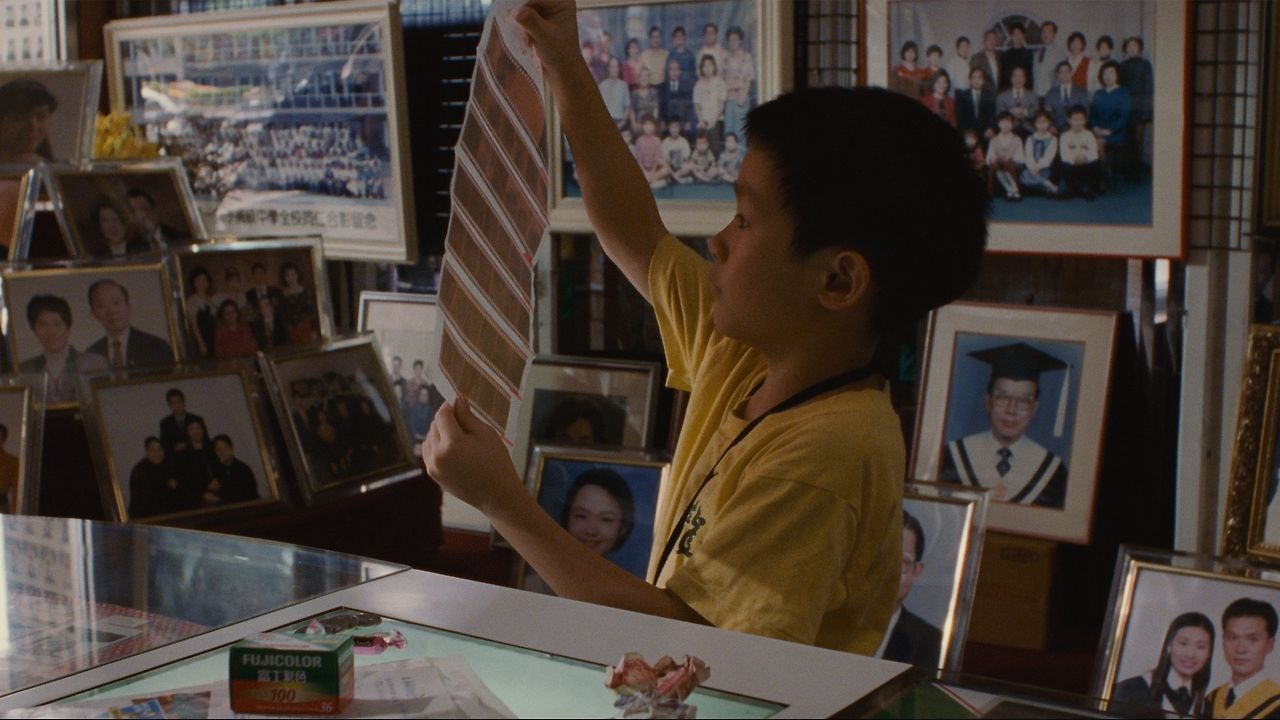
Yi Yi is that path. Without losing the narrative geometry or bittersweet complexities of his earlier work, Yang’s tragically final feature is also his kindest, most healing and wisest. In a crucial early scene, Min-Min mourns the relatable vacancy of her life, crying “I have so little. How can it be so little, I live a blank!”, a questioning refrain that could have been said by so many of Yang’s previous heroes. After seven films, Yang finally gives an answer. N.J. tells his wife, “I had the chance to relive part of my youth. I suddenly realized, even if I was given a second chance, I wouldn’t need it.” Like a child’s photographs that expand our sight to the back of our heads, Yang’s quietly cosmic masterwork shows us who we really are, but with eyes more compassionate, tender and bright.