




It’s easy to forget, now that Ridley Scott has spent a quarter-century as a reliable workhorse, burnishing his status as the director of Alien and Blade Runner while continually trying out daring new takes on different genres, but the legendary (and Legend-ary) director spent much of the ’90s at a low ebb. Counterintuitively, it took a divisive serial killer sequel to bring his mainstream career fully back to life.
Though he kicked off the ‘90s with instant classic Thelma & Louise, Ridley Scott quickly entered what appeared to be his historical boat-adventure period. In 1992, he made 1492: Conquest of Paradise, an impossibly dull Christopher Columbus movie, followed by 1996’s White Squall, a better-regarded nautical adventuring movie that recently celebrated its 30th anniversary. Put together, the two movies cost around $75 million, and grossed less than $20 million combined. In 1997, G.I Jane did substantially better, but still drew mixed reactions compared to his previous foray into action-movie feminism, which had only grown in stature.
Scott would soon release one of his biggest hits with his Oscar-nominated Gladiator, and score a second Best Director nomination in two years with Black Hawk Down. But it’s the movie made in between those two that feels, in retrospect, like a true confirmation of Scott’s return. With Hannibal, Scott made a vastly different sequel to someone else’s horror movie, just as James Cameron had done with Scott’s Alien. It did not go quite so well.
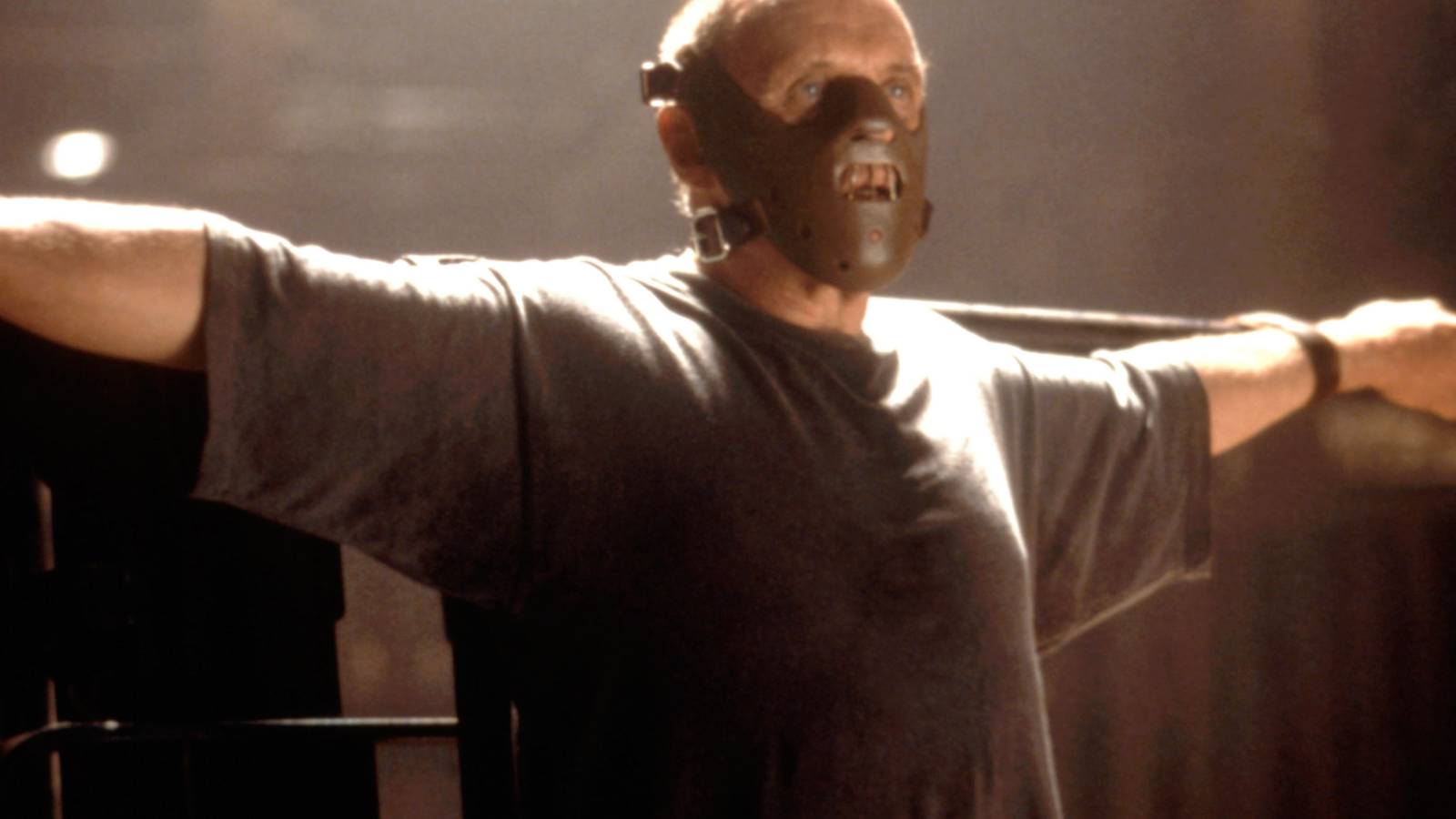
At least not reputation-wise, anyway. Financially, Hannibal was bigger than any of the Alien movies; such was the power of The Silence of the Lambs, the movie it was sequelizing, as well as the Thomas Harris books both movies adapted. Specifically, Scott was bringing back Anthony Hopkins as the erudite yet terrifying cannibal killer Hannibal Lecter, the role that won his first Best Actor Oscar for Lambs. His fellow winner Jodie Foster turned down the film and was still replaced with the critically acclaimed Julianne Moore. Hannibal, based on the then-recent bestseller from Harris, offered something else new in addition to a recast Clarice: Hannibal unleashed. For the first time, the character would spend the majority of the story roaming free, rather than menacing the lead character from a prison cell with limited screen time.
This threatened to make Hannibal seem less scary, overexposing a well-restrained villain. But the task of actually visualizing Hannibal’s crimes, rather than relying primarily on descriptions (whether his own, as in the previous film, or the author’s in the books), was seemingly embraced by Scott, returning to horror for the first time since Alien. He signed on before either of his stars, replacing original director Jonathan Demme, who held misgivings about the Harris book, particularly a divisive ending that saw Lecter and Starling shacking up together.
Brian Raftery’s entertaining new book Hannibal Lecter: A Life explores the making of each Lecter-related book, film, and TV series, and, as such, the character’s status as a cultural phenomenon. When discussing how the Hannibal movie came together, he quotes colorful producer Dino De Laurentiis as dismissing Demme’s rejection thusly: “When the Pope-a die, we create a new Pope-a. Good luck to Jonathan Demme. Goodbye.” (De Laurentiis was evidently fond of this form of kiss-off. When Jodie Foster conveyed her pass through her agent, he apparently responded with a curt, “Give my love to Judy Foster. Goodbye.”)
This new Pope-a seemed like a good match for the character’s contradictions. As Raftery writes, Scott’s other films are both “ornate and precise, classy and mischievous.” That’s certainly visible in Hannibal, where its sections about tough FBI agent Clarice Starling (Moore) are icy, hard-edged, and surveillance-state glitchy, alternating with scenes of Hannibal sneaking around Florence, Italy to commit elaborately gory murders that play like a painterly monster movie, with blood and guts sometimes serving as the paint.
Eventually, the two sides to this story and Scott’s style converge, and true to the film’s title, Hannibal wins out. Scott and screenwriter Steven Zaillian did decide to tinker with the book’s ending, which struck seemingly everyone involved as going too far (and perhaps more to the point, seemed less likely to inspire a sequel than a movie that kept Clarice and Hannibal apart, still roaming through the general population). But they still wind up with Clarice drugged up at the dinner table with Lecter, as he sautees a piece of brain extracted from her nemesis Paul Krendler (Ray Liotta) and feeds it to the dazed man before he dies. Clarice doesn’t succumb to cannibalism (or romance), but it still feels as if the rococo Lecter sensibility has thoroughly trounced the half-hearted crime thriller part of the story.
Perhaps it was that imbalance that resulted in highly mixed reviews for Hannibal, indicating that it was precisely the duality pointed out by Raftery that made Scott a less crowd-pleasing steward of the character. Yet it also seems clear from Scott’s words that he wasn’t setting out to alienate audiences. “I’m very competitive,” Raftery quotes Scott as saying before Hannibal’s release. “So [Hannibal] may even be more interesting than The Silence of the Lambs.”


It sounds lofty, though “interesting” may be the correct choice of words. Hannibal is superior to Lambs in almost no respects, but it is full of interestingly strange choices. The movie almost feels like an uncanny, extended nightmare the “real” Clarice from Silence of the Lambs might have. It’s that gutsiness that feels most like a confirmation that Scott’s Gladiator comeback was no fluke. To make Hannibal immediately after the most traditionally crowd-pleasing movie of Scott’s career indicates a director no longer in danger of succumbing to the torpor of 1492.
So while Gladiator marked Scott’s return, Hannibal, released less than a year later for his fastest movie-to-movie turnaround ever, was an announcement that he wasn’t retreating. Though it doesn’t stand as one of Scott’s most beloved films, there are distinct echoes of it in several of his movies that followed. He would go on to take a new crack at a familiar character (Robin Hood), flirt with gruesome slasher sensibilities (Alien: Covenant), and alienate an audience looking for a more straightforward crime thriller (The Counselor).
Scott would also make plenty of turns that couldn’t be more different from the messiness of Hannibal, just as that messiness bore little resemblance to Gladiator or Black Hawk Down, apart from still using that frame-speed-adjustment technique to make certain action sequences look hyper-real. Scott was no longer making two seafaring epics in a row. He seemed to be embracing his eclecticism, and after making just four movies throughout the ‘90s, he averaged almost one film per year throughout the 2000s and 2010s. He emerged from the potential disaster of making a Silence of the Lambs sequel not just unscathed, but with what looked like a new hunger. In that sense, he did Hannibal Lecter proud.