










Most of Minnesota now in some level of drought
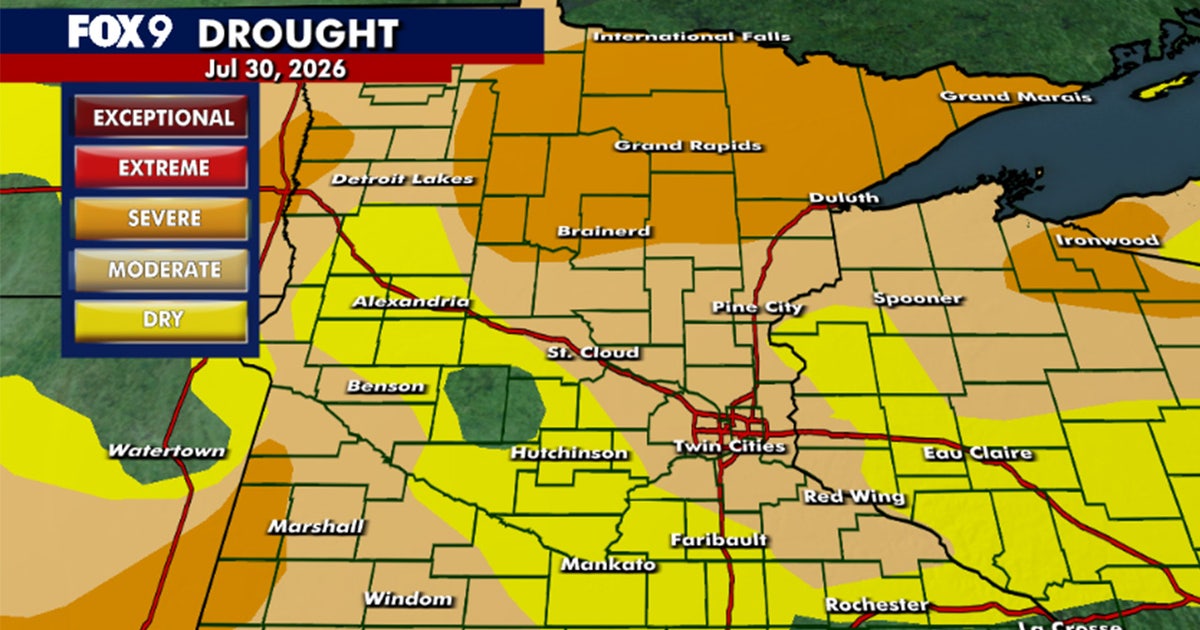
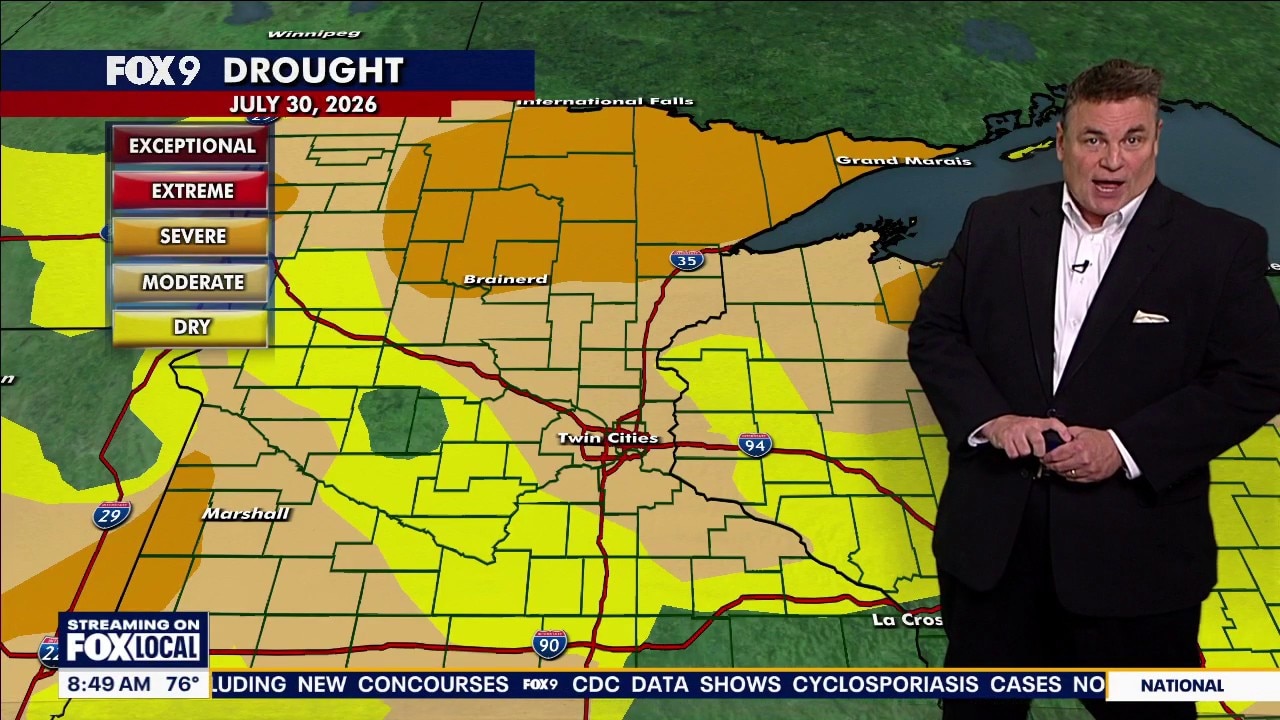
Drought conditions have worsened across Minnesota, with most of the state now experiencing some level of drought. The latest U.S. Drought Monitor was released on Thursday, showing nearly all of northern Minnesota is in severe drought. The Twin Cities metro has gone from dry to moderate drought conditions.
(FOX 9) – Drought conditions have worsened across Minnesota, with most of the state now experiencing some level of drought.
Minnesota drought conditions
By the numbers:
Over 95% of the state is in some level of drought, according to the latest U.S. Drought Monitor released Thursday. That’s up from nearly 87% of the state in last week’s report.
Nearly all of northern Minnesota is currently experiencing severe drought conditions. The hot, dry weather has spurred on the wildfires burning in the Boundary Waters Canoe Area Wilderness and the larger Superior National Forest.
The Twin Cities metro has gone from mostly dry to moderate drought conditions over the last week. Over 75% of the state is currently experiencing at least moderate drought conditions.
Minnesota is hardly alone: At least half of the continental U.S. is experiencing moderate drought or worse.
What Minnesota’s drought means for you
Local perspective:
Because of the very dry and hot conditions, trees might start turning colors like its fall. The trees start turning early because the very dry soil triggers their defensive response to go dormant, hoping to survive to next year.
Grass and lawns also turn noticeably brown, the soil cracks and gets very hard, and crop yields fall quickly. Communities may begin to issue watering restrictions as well.
When watering the lawn, it only needs about a third to a half inch of rain a week to survive (depending on grass type). It may stay rather brown with that little water, but it will be able to survive until the rain returns.
QUICK LINKS: Minnesota weather forecast | Download the FOX 9 Weather app to get alerts | Latest Minnesota drought news
The Source: Information in this story comes from the U.S. Drought Monitor and FOX 9 meteorologists.

