





When Pokémon Champions launches on April 8, the Pokémon video game franchise will never be the same.
Champions itself is less a video game and more a platform through which gamers can participate in Pokémon battles online, streamlining the competitive experience to make it more approachable than ever before. It’s also replacing the most recent Pokémon game as the default setting for all battles in the Pokémon World Championship Series, a major change that may be permanent moving forward.
On my very first day at PAX East 2026, I rushed to the line for Pokémon Champions as soon as possible. The line attendant told me that based on where I stood, I’d be waiting three hours until I was able to play (so, effectively the TSA lines at any major airport this month). By a longshot, it was easily the most popular demo at the convention. So I elbowed my way to the side of the line where I could watch people play. Each demo included three pre-made teams of six Pokémon:
- Team 1 was built around straightforward offense with Dragonite, Infernape, Quaquaval, Delphox, Primarina, and Glimmora.
- Team 2 offered some trickier options with strong staples in a team that included Zoroark, Polteageist, Snorlax, Sylveon, Audino, and Lucario.
- Team 3 felt like a more comprehensive competitive build with Tyranitar, Gengar, and Lucario as the cornerstones, along with Polteageist, Zoroark, and Audino.
Altogether, these team comps felt like a curated display of typical competitive strategies.
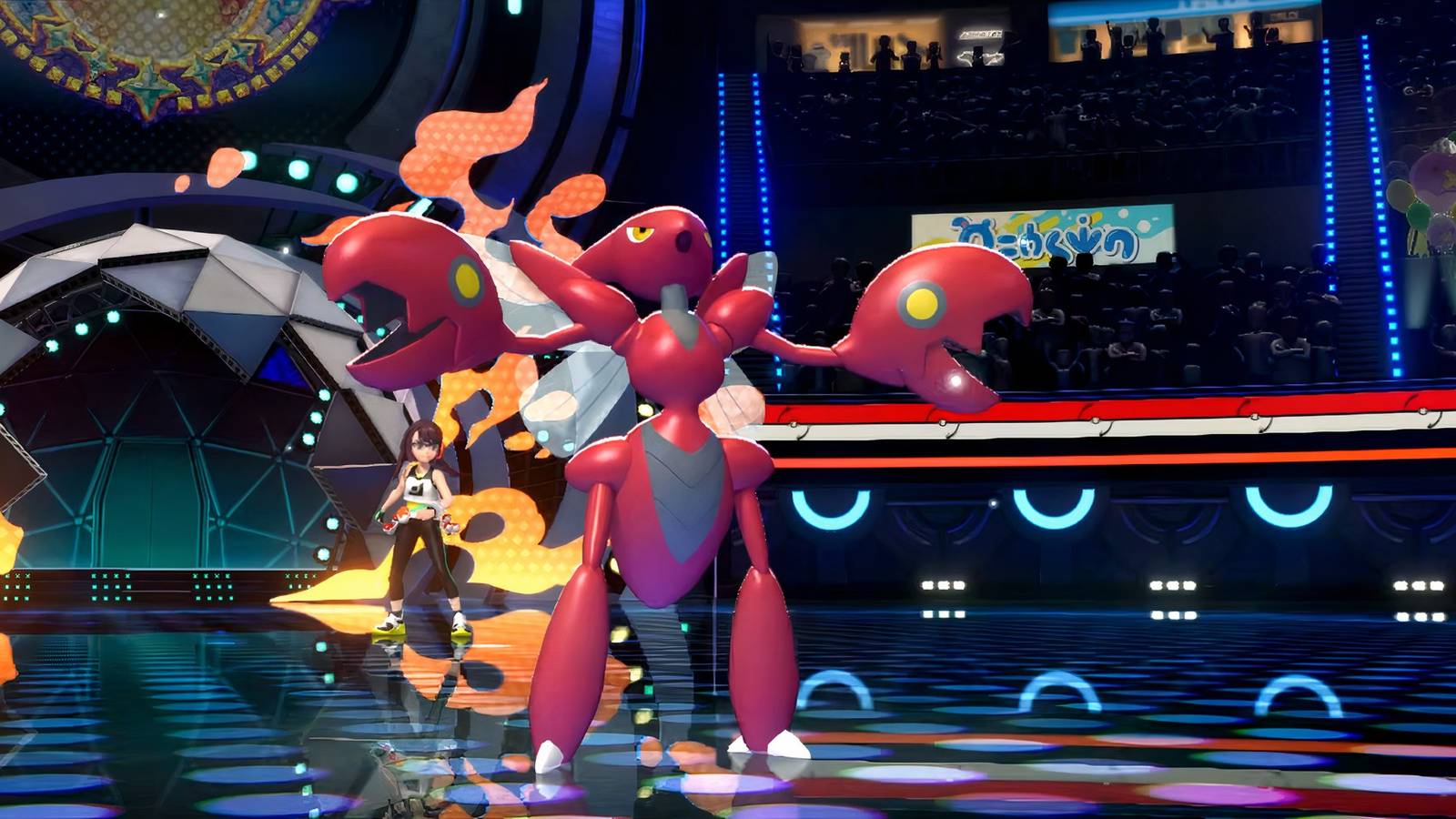
In 1v1 matches you select three Pokémon from your team whereas in 2v2 matches you select four. If you’ve ever participated in a Pokémon battle, then the core gameplay in Champions won’t really surprise you, even if there are new animations for most moves.
The crowd was positively bursting with enthusiasm for Pokémon Champions, but the more I watched and learned about some of the nuances at play, the more hollow it felt as a game.
The greatest thing going for Champions is full integration with Pokémon Home and Pokémon Go. That feature wasn’t on display in the onsite demo, but being able to gather all of your Pokémon from various games into one place is a huge draw. At launch, it’ll also include Mega Evolutions through the use of an in-game device called the Omni Ring. That item also includes symbols for the Z-Moves, Dynamax, and Terastalization battle gimmicks, suggesting these mechanics will come to Champions in later seasons — because in addition to daily and weekly quests, there will also be some kind of battle pass. (Hence why it’s labeled as “free-to-start.”)
Within minutes of booting up Champions, you can recruit random Pokémon from Roster Ranch and change their moves, nature, ability, and even stats before sending them to battle. Every 22 hours, you can recruit one from a roster of 10 random Pokémon for free — but you only keep them for a week-long trial period unless you want to pay extra Victory Points (VP), an in-game currency earned by winning battles, or spend Teammate Tickets, earned through in-game missions. All of this sounds rather streamlined and potentially exciting, but what’s really at stake here cuts to the heart of what this series is about.
For years, since the days of Pokémon Diamond, I’ve ported my beloved Jolteon from game to game just because of our shared history. I got him as an Eevee way back in 2006, when Diamond was released in the U.S.. He had strong IVs and a Timid nature, which boosts speed and reduces attack, making him the perfect candidate for evolution into a Jolteon. I named him Sparky. With a simple Thunder Stone, Sparky became the cornerstone of my very aggressive party. Long after we beat that Elite Four, I even went through the convoluted process of bringing him into Pokémon Black then from Pokémon Transporter into Pokémon Bank and finally to Pokémon Home. I don’t even really use him. I just like having Sparky around.
Yet now in Pokémon Champions, having this perfect level 99 Jolteon doesn’t matter whatsoever. Traditionally, every Pokémon has Individual Values (IVs) and Effort Values (EVs) that influence their stats. The former represents genetic variation between zero and 31 on each stat. The latter shifts various stats based on a Pokémon’s training. Defeat another Pokémon with high special attack, and your Pokémon’s special attack will grow slightly. But there are no IVs or EVs in Champions. Instead, you can distribute up to 66 stat points wherever you want by spending VP.


You can also change a Pokémon’s moves whenever you want (outside of battle) by spending some VP. That includes any move a Pokémon would learn normally by leveling up and any Technical Machine (TM) it’s capable of learning. (Hidden Machines (HMs) are apparently missing from the game.) But when every facet of the monster becomes mutable, doesn’t that render it meaningless? You can take any Jolteon and make a Sparky — probably one with better moves, too.
Pokémon Champions is great in a lot of ways, particularly in how easy it makes competitive battling for anybody. But it depersonalizes and dilutes the core Pokémon experience. Isn’t this a franchise about imprisoning cute little monsters inside balls and forcing them to be your friends and go on adventures?
I used to be a diehard fan of the franchise, but my enthusiasm waned over time because the storytelling and gameplay innovations felt lacking. The one part that always mattered when it came to collecting pocket monsters were these sorts of stories like Sparky. I don’t love all Jolteons equally. I love my Jolteon because of the special memories we’ve shared. Champions renders that simulated experience of being a Pokémon trainer kind of pointless. And here I thought Pokémon was less about the fighting and more about the spikey yellow friends we made along the way. I guess I was wrong.