
![25th Sep: UNABOMBER (2026), 1hr 40m [R] (6.05/10)](https://occ-0-171-92.1.nflxso.net/dnm/api/v6/0Qzqdxw-HG1AiOKLWWPsFOUDA2E/AAAABSHKOxDs_gE5lCil__PAU8wSDr669b8W9LkmKgS2diGFCd-rpWn7pYIsjIXW47pOJSjoNf6Pd7A7ztryBztnCQZ7B2UfF7ANTk3f0k5EnS8fHCV6iGInVdzn0lsQBCs_29DZgjul5YOPGZJR8lI3eFt5CGeRIUtV5MvN2ez8Dstumg.jpg?r=286 "25th Sep: UNABOMBER (2026), 1hr 40m [R] (6.05/10)")




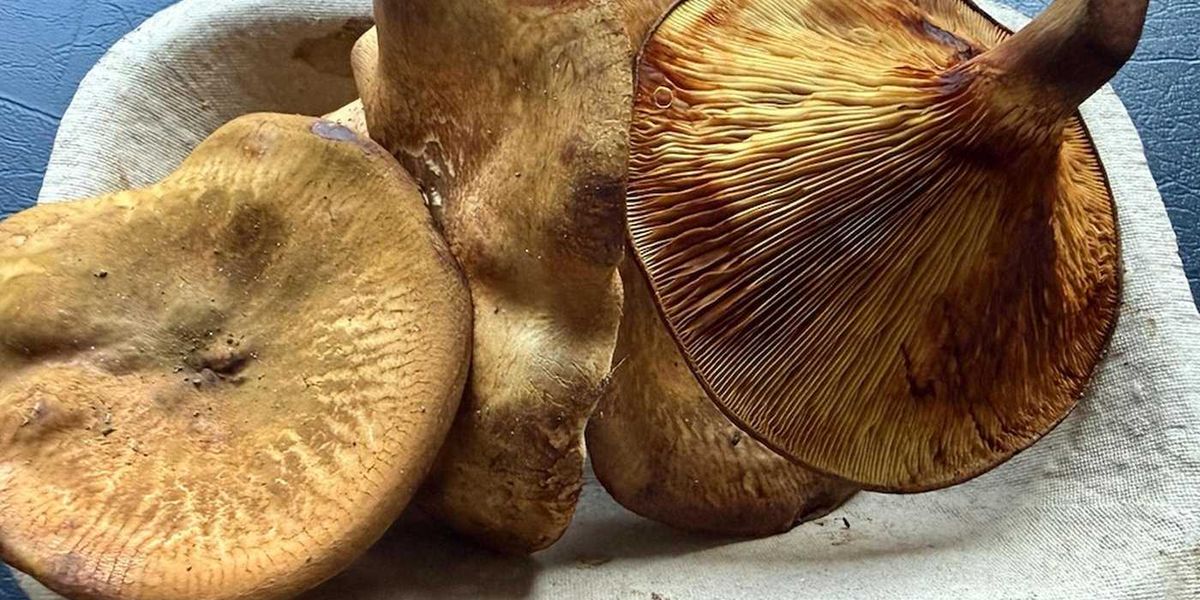
On Sunday Naomi Legg sold mushrooms she incorrectly identified as chanterelles at her Dreamcatcher Farm Harrop stand at the Harrop community hall farmers market, about a 30-minute drive north of Nelson.
Later that day the mushrooms were tentatively identified as Paxillus involutus, which can cause severe health outcomes if ingested.
Interior Health got involved, issuing a public health notice later that day, warning people not to eat the mushrooms.
About 10 trays of mushrooms were sold. The BC Drug and Poison Information Centre has received a “small” number of calls reporting minor illness, Dr. Andy Delli Pizzi, medical health officer for Interior Health, told The Tyee.
So far no major illness has been reported, he said. It is not clear if anyone who ate these mushrooms is out of the woods because not a lot is known about how this mushroom makes people sick, he added.
Interior Health is still working to confirm that all customers who may have bought the mushrooms have been contacted, he added.
“It is important people do not consume this mushroom,” he said.
The Tyee contacted Legg to ask what happened, but she declined an interview.
Paul Kroeger, who has studied fungi in B.C. for 50 years and works as the chief mushroom identifier for poison control and the BC Centre for Disease Control, said the mushroom may have been Paxillus involutus, but it may also have been another species of Paxillus.
Paxillus involutus is a known toxic mushroom, although it does not always seem to negatively affect people and the risk of toxicity seems to increase when the mushroom is eaten regularly, he said.
Interior Health said poisoning symptoms generally start within two hours of ingestion and include nausea, vomiting, dark-coloured urine and diarrhea.
In more extreme cases, eating Paxillus involutus can cause autoimmune hemolytic anemia, a potentially life-threatening condition in which the body’s immune system attacks its own red blood cells, Kroeger said.
B.C. is home to about 3,500 species of mushrooms, so it can be hard to identify a mushroom from a picture, Kroeger said.
He said Legg believed she’d correctly identified the mushrooms because she perceived an apricot-like smell. While true chanterelles can have an apricot-like smell, Paxillus involutus has a “sour, fetid” smell, not a fruity one, he said.
This is in part why the mushrooms sold have been only tentatively identified as Paxillus involutus.
Monika Fischer, an assistant professor in the departments of botany and forest and conservation sciences at the University of British Columbia, said it’s “extremely difficult” to mistake Paxillus involutus for chanterelles.
Paxillus have true gills, which are the thin curtain-like lines that run underneath the mushroom cap. Paxillus also bruise brown.
Chanterelles have false gills, which are more like forking veins bumping out of extremely muscled limbs, and don’t bruise.
In B.C., toxic mushrooms can have effects ranging from vomiting and horrible gastrointestinal upset to permanent organ damage to death, she said.
The severity of toxicity can vary from person to person, depending on their body, their health and the mushroom involved, she said.
The rule of thumb is to eat each new mushroom as if you could have an allergic reaction to it, she said.
Mushroom poisoning is rare in BC
Despite the high risk posed by some mushrooms, mushroom poisoning and fatality are rare in B.C.
Between 100 and 150 British Columbians are exposed to potentially dangerous mushrooms every year, Kroeger said.
Luckily, fewer than 20 per cent of those cases ever develop symptoms of illness or get a positive identification on a poisonous mushroom, he said.
About 40 per cent of the cases include edible mushrooms that made people sick because the mushrooms were improperly stored, eaten raw or undercooked, or a person ate too much, he said.
Mushrooms should always be cooked.
In 1991 the Vancouver chief of police retirement banquet poisoned 77 people by serving raw morel and shiitake mushrooms. One man was hospitalized for rehydration after eating both his own and his spouse’s portion, Kroeger said.
Mushrooms have killed about six people in B.C. in the last 40 years, he added. This includes a toddler killed in 2016 after eating a meal of harvested wild mushrooms, according to the BC Centre for Disease Control.
How Paxillus was confused for a chanterelle
Legg has posted apologies on Facebook and on her farm’s website.
“I am sending a public apology for this health scare that I unknowingly created. It has shaken both me and many of you to the core and has eroded trust. I want you to know that I am deeply sorry,” she wrote.
“Please know that I will never be selling mushrooms of any kind ever again,” she added.
It is not clear if Legg previously sold mushrooms or what experience she has harvesting mushrooms. Her website currently lists vegetables, fruit, flowers and preserves, and no online record of her website selling mushrooms was found by The Tyee.
An Instagram post from an account under Legg’s farm’s name from October 2023 shows a basket of harvested wild mushrooms, a specialized knife used for harvesting mushrooms and a copy of Mushrooms of British Columbia, a local foraging guidebook recommended by Fischer.
The Tyee didn’t see any other Instagram posts from the account that showed or referenced mushrooms.
The Tyee showed Kroeger the Instagram post. He said it looked like Legg was harvesting the edible honey mushroom, either Armillaria ostoyae or Armillaria sinapina.
“It looks like she has foraged mushrooms for a while, so the mistake she made seems odder,” he said.
Kroeger said he reviewed Legg’s farm’s website and that they seem “well-meaning and sincere.”
“It would probably have been better if they had partnered with specialist mushroom pickers if they wanted to include mushrooms,” he said.
Best practices for harvesting wild food
The best practice for all wild, foraged foods is to never eat something you can’t identify, said Jake Burt, an amateur mycologist who helps run online groups on Reddit and Facebook for identifying mushrooms in the Pacific Northwest.
This requires foragers and vendors to be self-aware of the limitations of what they can identify, he said.
“Foraging wild mushrooms can be very safe, enjoyable and possible for a vast majority of people as long as we’re not ignoring any aspects of good practice,” he said.
He said Legg made two major mistakes: first, when she did not correctly identify the mushrooms or understand her limitations in identifying the mushrooms, and second, when she sold mushrooms she hadn’t correctly identified.
Selling the mushrooms put her in a position of trusted authority and put people at risk, he said.
It’s important to understand this was a potential mass poisoning event that could have had catastrophic outcomes if she had unknowingly sold a different, more toxic mushroom, he said.
Burt shared screenshots of a Facebook messenger conversation between him and Legg. In it Legg told Burt she had grown the mushrooms in her garden and eaten them herself.
“As soon as someone let me know that I had possibly falsely identified these mushrooms I took all the steps I could to make sure public health and safety happened,” she told him in their conversation.
But Burt said he doesn’t feel Legg has taken full accountability for her mistake.
In a now deleted Facebook post, Legg told customers to cook any mushrooms bought from her “really well” or to throw them out.
“I don’t want to take any chances and someone has said these might not be safe in rare occasions if undercooked,” she said in that post.
Fischer said it’s not known if cooking Paxillus mushrooms reduces the risk of toxicity.
Kroeger agreed that this could have been a mass poisoning event and said more could be done to improve the safety of wild mushroom sales in B.C.
In many other jurisdictions around the world there are regulations around wild foods, he said. Some places have government inspectors who will double-check the ID of wild foods, or have a list of approved wild foods that can be sold. In Europe, pharmacists and other experts are trained to identify wild foraged mushrooms.
There are no such mechanisms in North America, he said, although public safety could be improved by requiring vendors to label wild foods. This could help customers ID the food, list when the food was harvested and by whom, and remind customers to always cook mushrooms, he said.
Every couple of years a misidentified wild mushroom will be sold and eaten in B.C., usually with people suffering from mild illness or requiring dialysis for a week, he said.
Burt said he wants Legg to commit to never selling wild or foraged food again. He said he believed her mistake will negatively affect other foragers who follow best practices.
Legg has said on Facebook that she will no longer sell mushrooms.
It’s best to learn about foraging mushrooms by joining a local mycological society, Kroeger said. Fischer also recommended buying a local mushroom field guide.
It’s important for the field guide to be as local as possible because mushrooms in Europe, for example, can look similar to ones in B.C. but vary in edibility or toxicity, she said.
By Photo via Reddit., The Tyee | Copyright 2026, The Tyee. All rights reserved.