





In their political campaigns and discourse, Americans often dig up a chestnut dating from the early 1990s: “It’s the economy, stupid.”
An appropriate variation in Alberta these days might be “it’s the electricity bill, stupid,” as the province and its people sort through the implications of a potentially massive, Big Tech-driven expansion and upgrade of the wires and pipes that keep their lights on.
Electrical bills are not the only worry for Albertans when they talk about the boom of data centres designed to serve artificial intelligence. But polling does put the possibility of higher bills at or near the top of their list.
Breaking Down the Bill
Two lines on your household electrical bill could face upward pressure in the era of AI data centres, observers say.
One is the transmission and distribution charge, which is a pass-through divided among consumers.
T&D fees allow utilities — privately owned ones like AltaLink and ATCO, and the municipally owned duo of ENMAX and EPCOR — to pay for building, operating and maintaining all those towers, poles, meters, substations and wires that ensure electricity gets where it’s supposed to go.
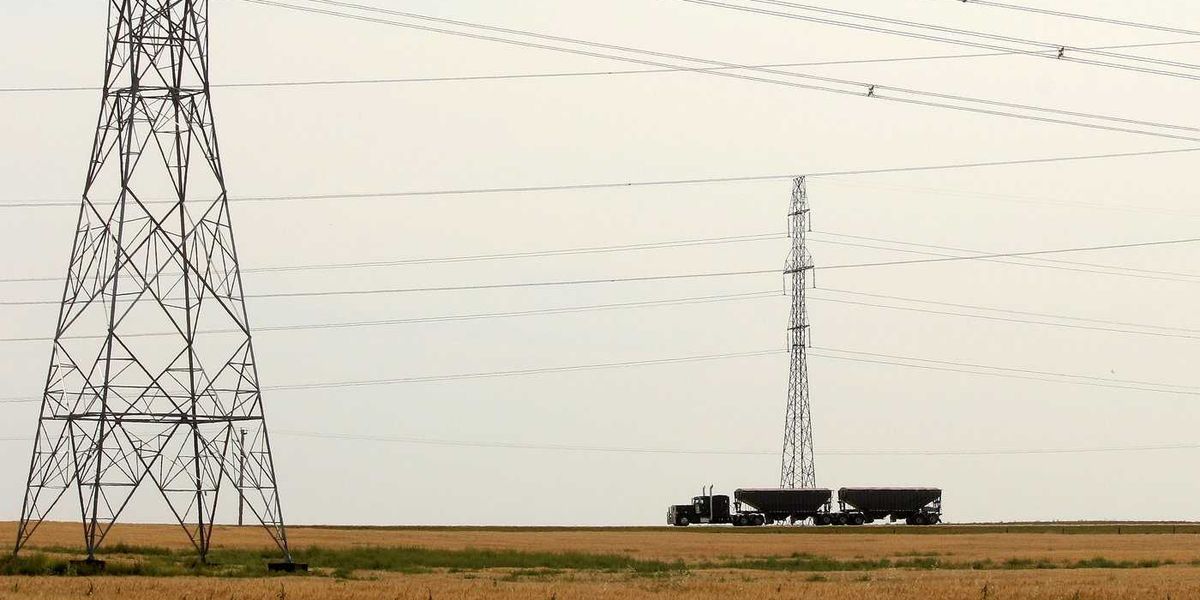
When you hear the word grid, that’s T&D, and it includes 26,000 kilometres of transmission wires for major corridors and another 200,000 kms of distribution wires.
The other potentially volatile number on your bill is the cost of energy itself, which is heavily influenced by the market-driven price of the natural gas that fires most electrical generation in Alberta.
As of late September, power generation attached to the data centre boom represented a 20.6-gigawatt queue before the Alberta Electric System Operator, the independent not-for-profit that acts as the grid’s gatekeeper and is mandated to keep it safe and dependable.
The number amounts to a near doubling of the typical draw from the grid in today’s Alberta.
Data Centres Use, Data Centres Generate
Under Alberta’s bring-your-own generation model, data centre builders are responsible for generating their own electricity. That doesn’t necessarily mean they won’t need or rely on T&D, however.
Even if generation happens behind a centre’s fenceline, it may need grid support in the short term or in emergencies. Other data centres are partnering with offsite generators, in arrangements that match in-and-out amounts.
Increased draw on the grid when there’s a like amount going in elsewhere means T&D expansion.
But Alberta’s UCP government has designed a regulatory framework that makes sure transmission and distribution charges aren’t driven upwards, the province’s minister of affordability and utilities maintains.
In fact, the opposite will probably happen, R.J. Sigurdson told The Macleod Gazette in an interview last week.
That’s because data centres, like other customers, pay for T&D based on their consumption.
“We’re a very diverse province with a widespread population,” he said. “When we see these large data centres coming online, they have an exponential opportunity to decrease T&D charges for the average resident.”
Sigurdson added that Alberta has so much natural gas that data centres are unlikely to push energy charges up dramatically.
Reserves of about 130 trillion cubic feet of natural gas are proven and recoverable, representing enough to heat every home in Alberta for roughly 700 years.
“We have natural gas companies that are drilling on a consistent basis, and I just don’t see how we would ever end up with a major flux on the price of natural gas,” Sigurdson said, noting that there’s a large supply “readily available underneath the feet of Albertans.”
‘No Subsidies, No Backstops’
In an emailed statement, the office of the Ministry of Technology and Innovation put it this way: “Data centres pay for their own power, connections and infrastructure. Alberta offers no subsidies, no discounted electricity and no taxpayer backstops.”
The statement requested by The Gazette continued: “Any project that goes forward in Alberta will do so on Alberta’s terms, with the strongest protections for our communities, resources and for the benefit of Albertans.”
But voters remain concerned about their bills. Water use, climate change and other environmental impacts are also top of mind, as a dozen or more data centres or campuses line up for power.
Noise and other impacts on neighbourhoods are among Albertans’ concerns, too. So are long-term job creation, a confusing array of approvers, regulators and processes at play, and how much they can trust major players like Meta, which is building a $13-billion campus in Sturgeon county near Edmonton.
The Pembina Institute, a clean energy think tank, calculates that the natural gas-fired power plant for Meta — the company that owns Facebook, Instagram and WhatsApp — will emit three million tonnes of greenhouse gases a year to generate 932 megawatts of power. That footprint is equal to about 10 per cent of the emissions created by Alberta’s entire electricity sector today.
Pembina also estimates that the one facility alone could add between $267 and $462 a year to a typical household bill by 2031.
A Crossover Concern
Indeed, utility bills are a dominant crossover worry for Albertans. Polling results in the summer suggested that concerns about bills resonate within pro- and anti-data centre camps.
Leger, a Canadian-owned market research and analytics firm, surveyed 1,000 Alberta adults online between July 17 and 19 about AI data centres. The poll found that about 80 per cent of Albertans are concerned about what data centres will do to their utility bills.
About 40 per cent of Leger’s respondents in Alberta said the province should move forward with data centres for AI. But 42 per cent favoured an approvals pause to allow for a review of impacts on electricity prices and water use.
Panels like the one Leger used can’t be assigned a margin of error because they don’t randomly sample the population. A comparable probability sample would have a margin of error of plus or minus 3.1 percentage points, 19 times out of 20.
More polling has happened since. A research poll commissioned by the CBC found that only seven per cent of respondents strongly supported AI data centres.
Thirty-one per cent of respondents strongly opposed them, another 26 per cent mostly opposed them but believed some should be built, and 36 per cent were either undecided or mostly supportive but with concerns.
The most common reasons for hesitation were environmental impact and the cost of electricity.
Run by Janet Brown Research, the hybrid phone and online poll gathered opinions from 1,200 Albertans between Sept. 8 and Sept. 21. Its margin of error is plus or minus 2.8 percentage points, 19 out of 20 times.
The governing UCP and Opposition NDP listened firsthand to concerns like the ones reflected in the polls, when each hosted real-world and virtual consultations in the late summer.
Pause or Proceed?
The NDP heard enough from “thousands of Albertans” to call for an immediate pause on approvals for new data centres, Nathan Ip, the shadow minister for technology and innovation, said in an emailed statement.
“This pause would allow government to properly review incoming proposals against clear standards before projects move forward,” Ip’s statement to The Gazette said.
On the government side, townhall feedback is “directly shaping our provincial rules to establish consistent, provincewide siting standards to keep large data centres away from residential neighbourhoods,” Technology and Innovation said in its statement.
“Every project must earn approvals from independent bodies, including the grid operator and utilities commission, the environmental regulator and municipalities,” said the ministry office.
“Every project undergoes environmental assessments and reviews and must address impacts to air, land and water, and demonstrate the project can be built and operated safely before any project can proceed.”
An NDP blueprint for AI data centre development calls energy costs “one of the biggest pressures on household budgets,” noting that household electricity bills have risen faster in Alberta under the UCP than anywhere else in Canada.
Electricity providers and industry experts predict average prices will nearly triple within the next few years due to data centre demand, says the blueprint.
“We are calling for a pause on data centre approvals until a robust impact assessment framework, one Albertans can have confidence in, is in place,” says the blueprint.
Each assessment for each project needs to look at community benefit, including creation of permanent jobs, it says.
Assessments would make sure that projects are on properly zoned land with adequate setbacks from homes, that the use of water is minimized and that “meaningful consultation” takes place with nearby residents and businesses.
Projects mustn’t increase utility prices and must mitigate emissions. They would be required to have full lifecycle plans in place, including end-of-life reclamation.
And they’d have to respect privacy and contribute to Canada’s data sovereignty.
Sigurdson, meanwhile, said the grid buildout will happen at a rate the province can absorb, thanks to “one of the best system operators in the world.”
Through Alberta Electric System Operator, the province is taking “a measured approach,” the minister of affordability and utilities said.
“Our number one commitment to Albertans is a reliable grid, and that’s AESO’s job,” Sigurdson said. “They are not going to allow any connections to the grid that put Albertans at the risk, and they’re going to do so at a pace that fits as well. This is why we have a system operator.”
He continued: “We understand how important it is to make sure that nobody gets their lights turned off at any time in the year. Alberta has one of the most reliable grids in North America. That’s a record that we’re very proud of, and we will continue to protect that.”
Copyright 2026, The Macleod Gazette. All rights reserved.
George Lee, Local Journalism Initiative Reporter, The Macleod Gazette.