





![The 10 Best Kids Furniture Stores Toronto [2026]](https://torontoblogs.ca/wp-content/uploads/2022/05/281851266_731112644898841_3392962168746798303_n-1.jpg "The 10 Best Kids Furniture Stores Toronto [2026]")


![20th Feb: Famous Last Words: Eric Dane (2026), 50m [TV-14] (6/10)](https://occ-0-6210-1007.1.nflxso.net/dnm/api/v6/Qs00mKCpRvrkl3HZAN5KwEL1kpE/AAAABaDqVSPVBB9Nf4RKzPSV5z7zoKxYURQ_FCVFkg5t_kiSyzIZCvCPvUJzLoWlG27tDu12rmL2KQMbf2dATJfey1LP1JGITfYOKsRakCUMJHiCbxrsZY4jbe9UEYrMxeKsD2vRGRzpxDWCODNNLDogCD1Kxj1dkmW6RixmgEFxlh3qOw.jpg?r=811 "20th Feb: Famous Last Words: Eric Dane (2026), 50m [TV-14] (6/10)")



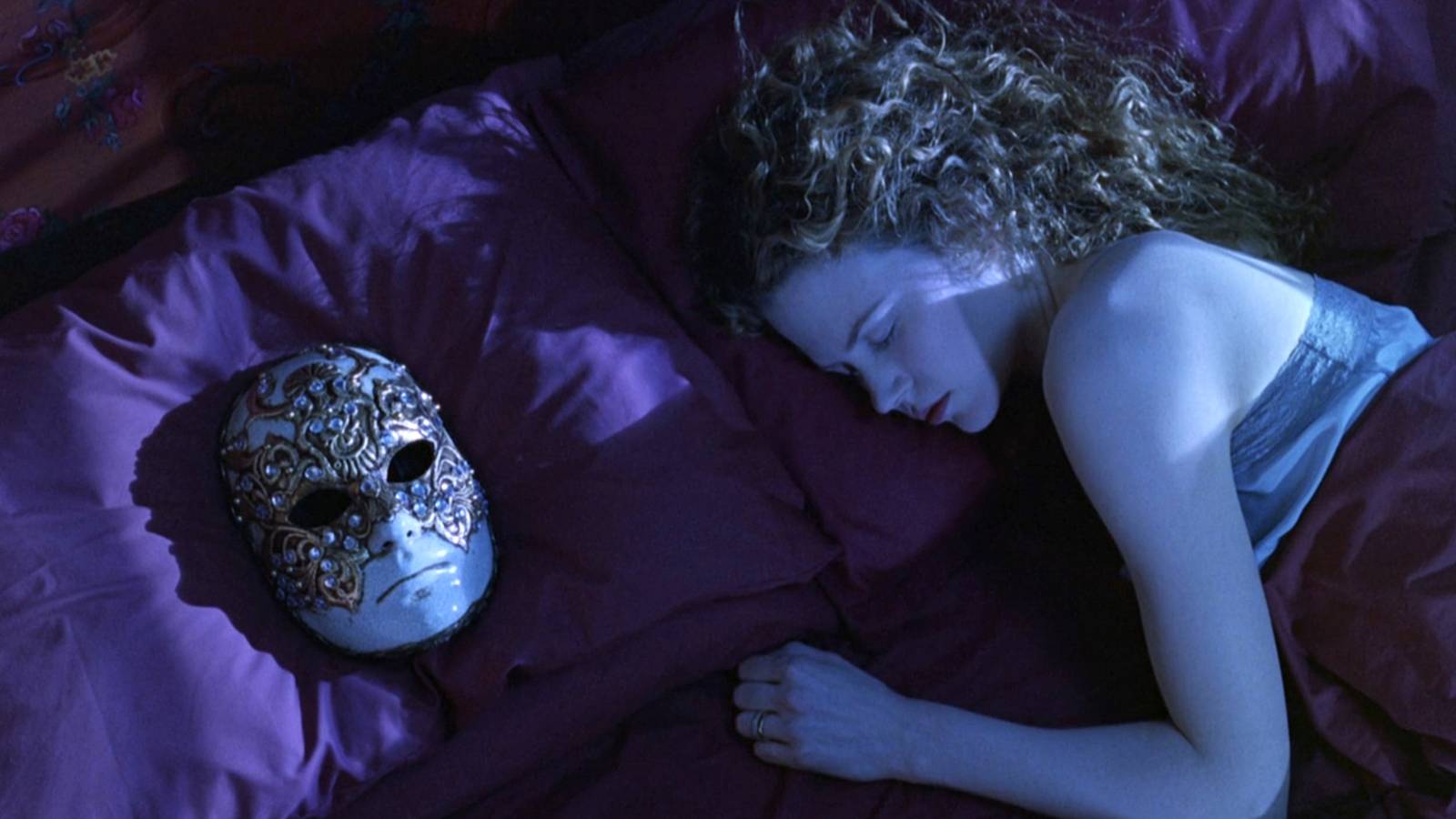
Stanley Kubrick’s final movie, Eyes Wide Shut, came out in 1999, but the director obtained filming rights for its source material as early as the 1960s. Arthur Schnitzler’s 1926 novella, Dream Story, inspired Kubrick’s film, which centers on a married couple (played by Tom Cruise and Nicole Kidman) whose relationship fractures after they open up about their erotic fantasies. Schnitzler’s novella makes good use of its early-20th-century setting: Its publication coincided with Europe’s turn-of-the-century Decadent movement, which prized human fantasy and artistic hedonism. Kubrick transposed the novella’s Vienna setting to 1990s New York City, and that alone recontextualized the movie’s central relationship. But Eyes Wide Shut — now streaming on Tubi — also enriched the themes of Schnitzler’s novella in unprecedented ways.
While Eyes Wide Shut was Kubrick’s highest-grossing film at the box office, its audience reception was abysmal at the time: a baffling D- on CinemaScore. Several factors could be responsible: Kubrick’s unexpected death, six days after he privately screened a supposed final cut of the film, fueled rumors about its actual state of completion, while also raising questions about the record-breaking production shoot, which lasted 400 days. Also, Warner Bros. made the unfortunate decision to market the film exclusively as an erotic thriller, banking on the popularity of leads Tom Cruise and Nicole Kidman, who were married at the time. While Eyes Wide Shut is provocative, Kubrick’s interpretation unravels like a paranoid fever dream, rejecting traditional narrative structures in favor of an anxiety-inducing humiliation ritual that Dr. Bill Harford (Cruise) experiences overnight.
In Dream Story, married couple Fridolin and Albertina exchange sexual fantasies while acknowledging the erotic temptations they’ve faced since their wedding. Fridolin is especially disturbed by this revelation: His masculinity is fragile, and he’s incapable of comprehending Albertina’s sexual agency, even though he’s struggled to stay faithful himself. Perceiving his wife’s fantasies as a betrayal, he walks the streets of Vienna to pursue his own sexual temptations, but every attempt ends in utter failure. These dreamlike escapades end in a masked ball, where a young woman’s death snaps Fridolin back to the reality of his strained marriage.
At a cursory glance, Kubrick’s film faithfully recreates these story beats. But Kubrick injects the dynamic between Bill and Alice (Kidman) with such visceral claustrophobia that it haunts the film from start to finish. What starts as an uneasy peek at marital deception quickly turns into a snapshot of Bill’s psychosexual frustration. Every woman he meets that night is treated like an object by the men around them. His encounters with them feel purely transactional. Sex becomes a currency that pierces through the rules of social hierarchy, with Bill viewing women either as passive conduits for male desire, or doting damsels in distress. Kubrick had already explored the extremes of dysfunctional misogyny in A Clockwork Orange, which omits the final chapter of Anthony Burgess’ novel to evoke a bleak, lurid ending. But Bill’s failure to understand women as sexual beings with their own desires is cloaked in a misguided savior complex, which adds to the disorienting nature of his odyssey.
The masked ball in Dream Story also serves a completely different purpose than the ritualistic high-society orgy in Kubrick’s film. Fridolin is shocked by the ball’s vulgarity, but he actively seeks out women who resemble Albertina. “In every woman — believe me, even though it may sound trite — in every woman with whom I thought I was in love, it was always you that I was searching for,” Fridolin tells Albertina at one point, contextualizing his psychosexual pull toward his wife even when he’s actively trying to cheat on her.


By contrast, Bill’s presence at the ritual is solely fueled by unchecked jealousy. He wants to get back at Alice for expressing her fantasies by participating in a perverse social ritual he wasn’t invited to. Unfortunately for Bill, he’s cornered and exposed within minutes, and threatened with the uncomfortable reminder that he must pay a hefty price for trespassing. A masked woman takes the fall, paying the price for his social transgression.
Schnitzler unambiguously presents Fridolin’s journey as a literal dream. The anxiety caused by Albertina’s confession about her sexual fantasies leads to the creation of a thrilling, risk-laden dream world, which Fridolin uses to cope with his frustrations and hubris. This internal detour is necessary for Fridolin to face his insecurities head-on, as it ultimately helps him reconcile with Albertina toward the end of Dream Story. Kubrick takes a more ambiguous approach, since the malevolent threats Bill faces are rooted in the real world.
The mansion where the ritual takes place is still there the morning after, and Bill receives a letter warning him to keep his distance. Bill’s high-society patient Victor Ziegler (Sydney Pollack) also confirms the existence of the secret society Bill encountered, while denying all suspicions of wrongdoing. This complicates our understanding of Bill’s dream story. It feels less like an erotic escape and more like the adventures of an insecure man who accidentally stumbles into a circle of hell that he briefly mistakes for paradise.


The most important distinction between the two versions, however, lies in Kubrick’s treatment of Alice. In Dream Story, Schnitzler views Albertina through her husband’s eyes, and she never offers her own perspective. Alice, on the other hand, is refreshingly forthright about her desires and challenges Bill’s attempts to belittle her autonomy. Alice’s refusal to be subdued by or defined through male desire bothers Bill enough that he seeks out other women, but his repeated failure leads him back to his wife.
But when he returns, Alice isn’t passively waiting for him. She appears changed by Bill’s journey, as if she’s subconsciously aware of the cracks in their dynamic. Kubrick bathes both characters in a stifling (but beautiful) shade of blue lighting in their reunion scene, blurring the lines between reality and nightmare. Dream Story is a complex parable, but Eyes Wide Shut refines it into incisive commentary dressed up in dream symbolism. In Kubrick’s meticulously crafted world, no dream is ever just a dream.
Eyes Wide Shut is streaming free with ads on Tubi, and is available for digital rental or purchase on Amazon, YouTube, and other platforms.


