




![2nd Oct: Chicken Shop Date (2026), 9 Seasons [TV-MA] (6/10)](https://occ-0-788-1001.1.nflxso.net/dnm/api/v6/0Qzqdxw-HG1AiOKLWWPsFOUDA2E/AAAABUDqIOZVh5ujuUXQb0113bBeoHfay71UOAtj-XIyxRBCuCtBw7LqxnlE2sKC72wYEWAHpG85nXhadIRuxg4zUNJ_5p1O7_wrZFsyNxoB2XhnEh3EIleFb4BM6wmSu8OYMj69bVKYUCC5i3Uzt05hgG_7zt3nL5pTmxnb74Qm7CSWJdvuo2OHimHYf7Pf3jx8sPVtDga7-L6IiDUDAqYAhEhI24X_alQhZHPWd59yWRFqVXYXpnsyHuHR676uPVW8073k3g_yDCvU9UuL0SD0XRCJ9LqguK-GxXMoACJu3tfx-qx5QuCc3gzaLs5S2Q.jpg?r=2ae "2nd Oct: Chicken Shop Date (2026), 9 Seasons [TV-MA] (6/10)")


![2nd Oct: Despicable Me (2010), 1hr 34m [PG] – Streaming Again (6.8/10)](https://occ-0-788-1001.1.nflxso.net/dnm/api/v6/0Qzqdxw-HG1AiOKLWWPsFOUDA2E/AAAABX-xImdF1eu8puqedRaTQrftXKyDleVo7HTZuGbHv8R8OVEgynhYXUrtJFElnemyjLV3IBKzs97G-79dv-dSiwzuG_J3T5tqUIM1.jpg?r=f23 "2nd Oct: Despicable Me (2010), 1hr 34m [PG] – Streaming Again (6.8/10)")


Mention the name “Stephen King” and most people immediately picture haunted hotels, killer clowns, possessed cars, and enough small-town nightmares to keep Maine’s tourism board awake at night. More than 50 years after Carrie launched his career, King remains synonymous with horror. King’s best stories, however, were never simply about monsters. They were about ordinary people forced to answer impossible questions. What would you do if your child had terrifying supernatural powers (Firestarter)? Would you knowingly send an innocent man to his death (The Green Mile)? Would you rewrite history if it meant sacrificing the life you’d built (11.22.63)? Horror was never the destination, it was the mechanism that forced his characters into impossible moral choices.
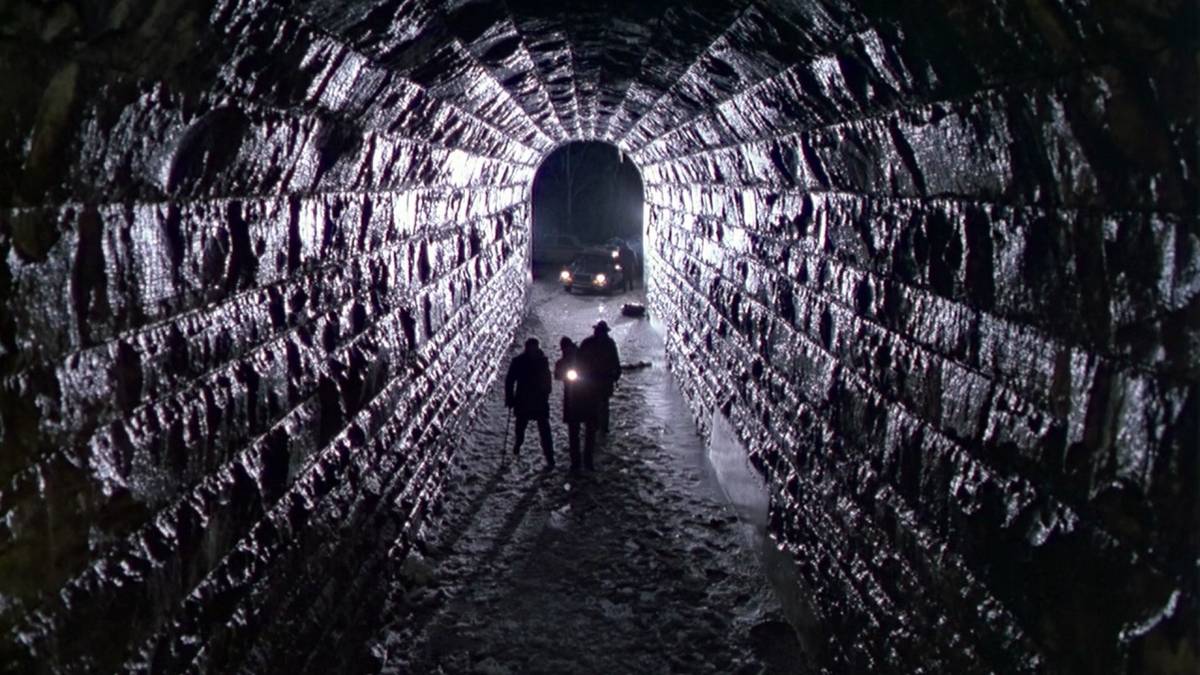
Few films capture that better than David Cronenberg’s The Dead Zone, now streaming free on Tubi. Released in 1983 and starring Christopher Walken in one of the finest performances of his career, the film begins like supernatural horror before quietly transforming into something far more unsettling — a psychological thriller about whether one man has the right to change the future.
Before Johnny sees the future, Stephen King destroys his present
Stephen King has never been shy about putting his heroes through unimaginable suffering. Paul Sheldon (James Caan) is held captive by his “number one fan” (Misery). Louis Creed (Dale Midkiff) loses the child he’s desperate to save (Pet Sematary). Andy Dufresne (Tim Robbins) spends decades imprisoned for a crime he didn’t commit (The Shawshank Redemption). But Johnny Smith endures a different kind of tragedy because his greatest loss happens before the supernatural ever enters the story.
A mild-mannered schoolteacher, Johnny’s life is shattered by a car accident that leaves him in a coma for five years. When he finally wakes up, the world has moved on without him. The woman he planned to marry has married another man and started a family. His teaching career is gone. The future he imagined has vanished. Then comes King’s final twist of the knife: Johnny discovers he can now see people’s futures simply by touching them. His psychic gift isn’t a reward. It’s another burden placed on someone who’s already lost almost everything.
It’s also fitting that Johnny’s tale begins in Castle Rock. The Dead Zone marked the first appearance of the fictional Maine town that would become one of the defining locations in King’s bibliography, later serving as the setting for stories including Cujo, The Dark Half and Needful Things.
Two horror legends made something unexpectedly human
The Dead Zone arrived at a fascinating moment in David Cronenberg’s career. At the time, the Canadian filmmaker was best known for visceral body horror like Scanners and Videodrome, movies fascinated by the terrifying ways the human body could mutate and betray itself. Three years later he’d cement that reputation with The Fly.
Yet instead of emphasizing the movie’s supernatural premise, Cronenberg focuses on Johnny’s emotional wounds. Christopher Walken complements that approach with one of the most understated performances of his career, playing Johnny not as a prophet or reluctant superhero, but as a grieving man who happens to possess an impossible ability. The body horror that defined Cronenberg’s early work gives way to psychological horror, the slow realization that knowing the future can be just as terrifying as any monster. In many ways, The Dead Zone foreshadows the morally complex dramas Cronenberg would later make with Viggo Mortensen, including A History of Violence and Eastern Promises.
The real horror is certainty

Most moral dilemmas exist in shades of gray. We rarely know whether our choices are truly right because we can never see the future. The Dead Zone removes that uncertainty. Johnny doesn’t suspect that rising politician Greg Stillson (Martin Sheen) might someday become a danger to the world. He knows it.
That certainty transforms the movie from a supernatural thriller into something closer to a philosophical one. The question isn’t whether Johnny’s psychic abilities are real. The audience accepts that almost immediately. The real question is whether anyone should have the right, or the obligation, to act on knowledge no one else possesses.
The impossible choice at the heart of The Dead Zone

By the time Greg Stillson emerges as Johnny’s greatest challenge, the supernatural has almost faded into the background. The serial killer investigation, the disturbing visions and the psychic phenomenon itself all exist to force Johnny toward a single impossible decision.
That’s why The Dead Zone lingers long after its supernatural elements fade from memory. Its greatest scare isn’t psychic visions. It’s realizing there may not be a morally correct answer.
For decades, Stephen King has been celebrated as the master of horror. But The Dead Zone understands what has always made his best stories endure. The supernatural has always been in service of something bigger: forcing ordinary people to make extraordinary choices. That’s why it remains one of King’s greatest movie adaptations. Not because it’s one of his scariest, but because it never loses sight of what the story is really about.
The Dead Zone is streaming for free on Tubi.
