






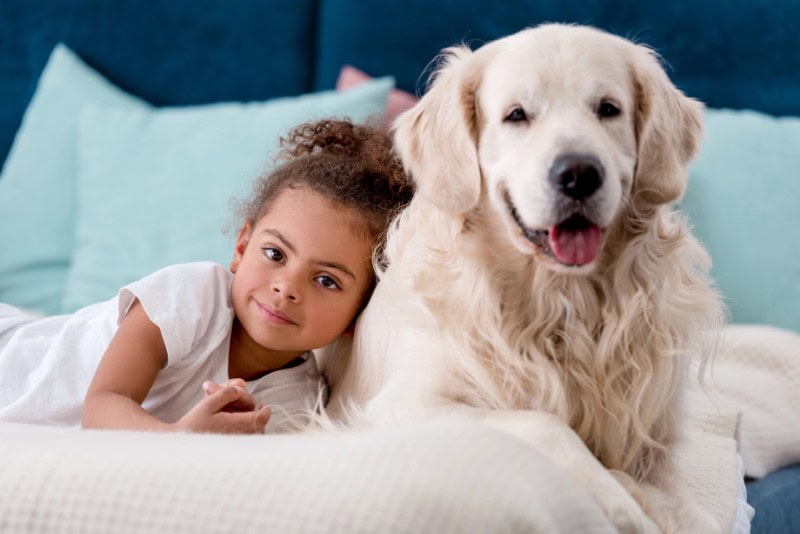
Dogs can be some of the most wonderful teachers in our kids’ lives. They show up with unconditional love, loyalty, and a whole lot of patience. Growing up around dogs often helps kids develop empathy, responsibility, and emotional awareness.
But dogs are still animals. They have boundaries, moods, and ways of communicating that don’t always line up with how kids naturally interact with the world. Teaching dog safety isn’t about creating fear. It’s about helping kids understand respect, awareness, and how to move through the world safely around animals, whether that’s your family dog, a friend’s pet, or dogs they see when out in public.
The tricky part is that even adults sometimes miss dog behavior cues. So breaking this down in a way kids can actually understand takes a little intention. The good news is that these conversations can grow with your child, getting more detailed as they get older.


Why These Conversations Matter More Than We Think
This part is uncomfortable but important. When a dog attack results in death, children are most often the ones hurt. In many cases, the dog is one the child already knows, like a family pet, a neighbor’s dog, or a dog in a friend’s home.
Research published in the World Journal of Pediatric Surgery shows that children under nine account for over 80 percent of dog bite injuries in the pediatric population. Younger kids are also more likely to be bitten on the head, neck, or face, which can lead to more severe injuries.
The reassuring part is that most dog bites are preventable. Supervision, education, and teaching kids how to read dog body language make a real difference. Kids who understand boundaries and safe interactions are far less likely to get hurt.
Teaching kids about dog safety isn’t just for pet owners. Dogs can be found everywhere from parks to playgrounds to streets to homes of friends and family. Teaching your children about dogs from an early age means that they’ll grow up better knowing the proper response for every situation.


Teaching Dog Safety by Age
Babies and Toddlers
At this stage, the teaching is really for adults (and the dogs). Babies don’t understand rules yet, but they learn by watching. Model gentle behavior, like soft touches and leaving the dog alone when it’s eating or sleeping.
Never leave a baby or toddler alone with a dog, no matter how calm or trustworthy that dog seems. Even the gentlest dog can react unpredictably if startled or hurt.
It also helps to positively condition your dog to having a baby around. Calm exposure, patience, and treats can go a long way. At this age, you’re teaching the dog more than the child, and that’s exactly how it should be.
Ages 2 to 4
This is when simple rules start to click. Keep the language short and consistent.
Teach your child to always ask the owner before petting a dog in public, especially in places like parks or areas where neighbors walk their dogs.
Gentle touches only. Show your child how to softly pet a dog on its back and step in right away if they start pulling, poking, or grabbing.
Dogs need space too. Sleeping dogs and eating dogs should always be left alone.
Teach the “be a tree” rule. If an unfamiliar dog approaches, your child should stand still with their arms at their sides. Running or screaming can scare a dog or trigger chasing behavior.
At this age, repetition matters more than long explanations. Calmly reinforcing the same messages again and again really works.


Ages 5 to 7
Kids in this range can handle more detail and usually have better impulse control. This is a great time to introduce basic dog body language.
Signs of a happy, relaxed dog include:
- A loose, wiggly body
- Tail wagging in wide, sweeping motions
- A slightly open mouth that looks like a smile
- Relaxed ears
Signs a dog is stressed, scared, or uncomfortable include:
- Tail tucked or held very stiff
- Ears pinned back
- Growling or showing teeth
- A very still or frozen body
- The whites of the eyes showing
Reinforce earlier rules and expand on them. Dogs should be left alone when they’re eating, sleeping, chewing toys, inside crates, in cars, or when their owner isn’t around.
Teach kids how to approach dogs safely. Approach from the side instead of head on. Let the dog come closer first. Pet on the side or back, not the top of the head. Movements should always be calm and slow.
If your family is thinking about getting or already has a puppy, this is also a good time to explain that young dogs are still learning and may get overwhelmed more easily. Their bite control also isn’t refined yet so they should avoid overly exciting a puppy, especially in the nibbling stage.


Age 8 and Up
Older kids are more independent and more likely to encounter dogs without you right beside them. Now the focus shifts to confidence and judgment.
Teach them that context matters. A dog might be friendly at home but nervous in crowded spaces. Some dogs are protective on a leash but playful when off leash.
Encourage kids to trust their instincts. If a dog makes them feel uneasy, it’s okay to walk away. They don’t need a perfect explanation to listen to that feeling.
If you have a family dog, narrate your own behavior out loud. Say things like “I’m giving her space because she’s sleeping” or “He looks stressed, so I’m stepping back.” Kids learn a lot by watching how you interact with animals.
Even as kids get older, supervision still matters. Staying consistent and compassionate helps build lifelong confidence around dogs and other animals.
Final Thoughts
Teaching dog safety isn’t one big talk. It’s an ongoing conversation that grows as your child grows. With consistency, modeling, and age appropriate guidance, you’re giving your child tools that help them feel confident and safe around animals for life.
Teaching kids about dog safety isn’t a once and done lesson but something that should occur over the course of their entire childhood. Not only so that they stay safe, but also so they get to fully enjoy a wonderful world full of dogs.