










This summer has been absolutely stacked with incredible fantasy shonen and manga adaptations leaving fans speechless. From Daemons of the Shadow Realm and Black Torch to Smoking Behind the Supermarket with You and The Ghost in the Shell, there’s no shortage of stellar shows to lose yourself in. Even Chainsmoker Cat, a series all about poverty and addiction, is getting tons of praise this season despite being called “disgusting” on social media.
There might be plenty of anime to watch right now, and even more to get excited for on the near horizon, including films like Grotesqqque and To You and Beyond or marquee series like Fool Night and Star Wars Visions: The Ninth Jedi. But I’d happily give them up to watch the third season of Jujutsu Kaisen all over again. Somehow, MAPPA always finds a way to make age-old shonen brawls look like cinematic masterpieces, and there’s no better excuse for a rewatch as the latest season expands its domain over Netflix on July 22. And if you’re a newcomer who’s curious, the show’s best season yet now hitting Netflix, is the perfect excuse to start.
Jujutsu Kaisen follows Yuji Itadori, a kind-hearted teenager who swallows one of the cursed fingers belonging to the legendary King of Curses, Ryomen Sukuna, to save his friends. What begins as a supernatural coming-of-age story gradually descends into tragedy, reaching a devastating turning point with the Shibuya Incident. By season 3, Satoru Gojo has been sealed away, countless civilians have died, Yuji is crushed by the guilt of the destruction Sukuna unleashed through his body, and the jujutsu world has effectively declared him a dead man.
The heroes aren’t simply trying to stop the next big villain anymore, but they’re fighting to salvage a world on the brink of collapse, all while carrying enough grief to break even the strongest sorcerers. That emotional weight gives every battle in season 3 an extra layer of urgency as some of our favorite characters try to claw back any tiny piece of hope. It’s a thrilling 12-episode arc that pulls Megumi Fushiguro, Maki Zenin, and Yuta Okkotsu into the spotlight for some of the show’s most harrowing face-offs.
Megumi continues to grow into one of the franchise’s most compelling characters, balancing his quiet resolve with the crushing expectations that come with his lineage. After the events of Jujutsu Kaisen 0, Yuta Okkotsu has had nearly a year to refine his overwhelming power, cementing his role as one of the series’ most formidable and emotionally grounded sorcerers. Then there’s Maki Zenin, whose unwavering resolve to surpass the clan that measured her worth solely by cursed energy makes her one of the season’s most captivating figures. Together, they transform Jujutsu Kaisen from a story centered on a single protagonist into an ensemble drama where every sorcerer carries their own scars, convictions, and reasons to keep fighting to the bitter end.
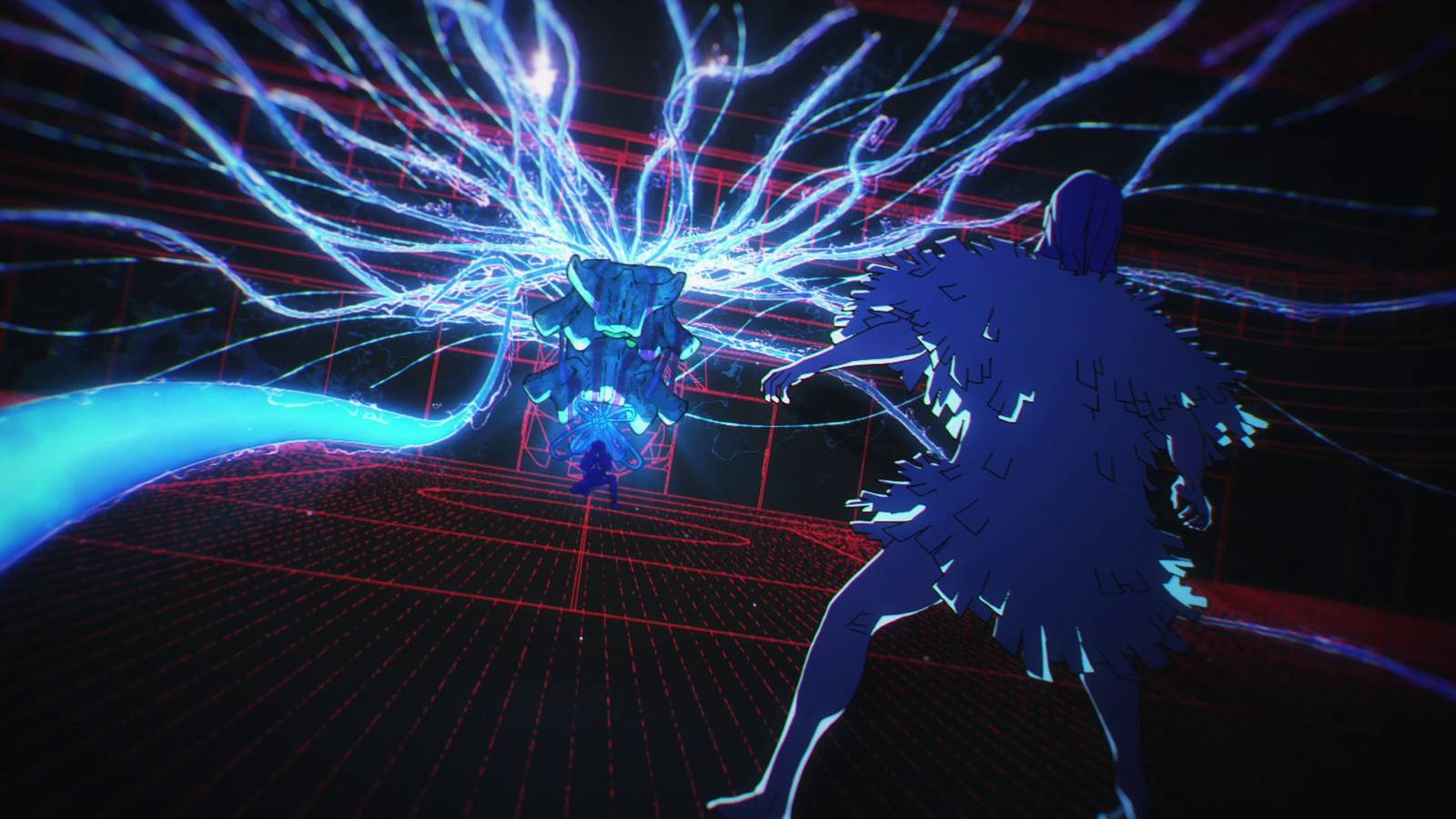
Jujutsu Kaisen has gradually shed the cleaner, more conventional look of its first season in favor of something far looser and more experimental. Characters stretch and smear across the screen, with impacts conveyed through frantic brush strokes and bursts of color rather than rigid realism. It often feels closer to watching an animator sketch directly onto the screen than a polished digital production — and that’s exactly what makes Jujutsu Kaisen season 3 so exhilarating.
Director Shōta Goshozono and the creative team embraced a more animator-driven style beginning with season 2, giving artists greater freedom to emphasize movement and emotion over perfectly on-model drawings. Combined with a significantly longer production schedule than the famously troubled second season, the result is a show that somehow looks even more confident despite attempting some of its boldest action sequences.
Then there’s Yoshimasa Terui’s score. The soundtrack has always been one of Jujutsu Kaisen’s secret weapons, but this season may be its strongest showcase yet. Terui knows exactly when to unleash pounding percussion during a chaotic battle and when to pull everything back into eerie silence. The music rarely tells you how to feel. Instead, it amplifies the tension already simmering beneath every confrontation, making the show’s biggest moments feel even larger without overwhelming them.
I still think season 2 delivered some of the series’ highest emotional peaks. Sukuna’s terrifying clash with Mahoraga remains one of the most jaw-dropping showcases of controlled chaos I’ve seen in TV animation, while Toji’s confrontation with Megumi carried an emotional sting that lingered long after the credits rolled. Those fights weren’t just spectacular, but they mattered on a grander scale. Even so, the latest season gave us many more fights to look back on, standoffs that may not echo narratively but strike us to our core visually. Everyone has their favorite season 3 faceoff, but it’s rarely the same.
It’s easy to praise Jujutsu Kaisen’s third season for its jaw-dropping spectacle — and believe me, there’s plenty of spectacle here — but what keeps me coming back is how confident it has become in its own identity. Plenty of anime feature gorgeous animation; just look at The Ghost in the Shell or Sonny Boy. Far fewer trust their artists enough to let every sequence feel handcrafted, even if that means embracing rough edges in service of motion and emotion.
If you’ve somehow missed one of modern anime’s defining action series, Netflix has just handed you the perfect opportunity to finally witness greatness. Or, if you’ve already experienced the emotional roller coaster that was Shibuya, this next chapter serves as a reminder that Jujutsu Kaisen is still finding new ways to leave viewers in awe, and the road to Jujutsu Kaisen season 4 is just starting to heat up.
