










In 2021 and 2022, as a fledgling platform offering an elevated form of news journalism, it was difficult to educate the masses because the major media companies were deleting or hiding our very accurate content on such key issues as COVID-19, climate change, energy transition, and political patronage.
But those media companies are no longer hiding the truth from you. Nowadays, many simply hide the facts from themselves.
Many continue to follow mainstream media organizations despite the fact that their preferred sources have been brutally inaccurate regarding the big issues.
It is not uncommon for those who fell for the false narratives to protect their egos by ignoring the facts as they are uncovered, or doing mental gymnastics to find new justification for their ill-founded and outdated beliefs.
They see a headline or post that conflicts with their viewpoint, and rather than explore with intellectual curiosity, they bury their heads in the sand and pretend that they were never duped.
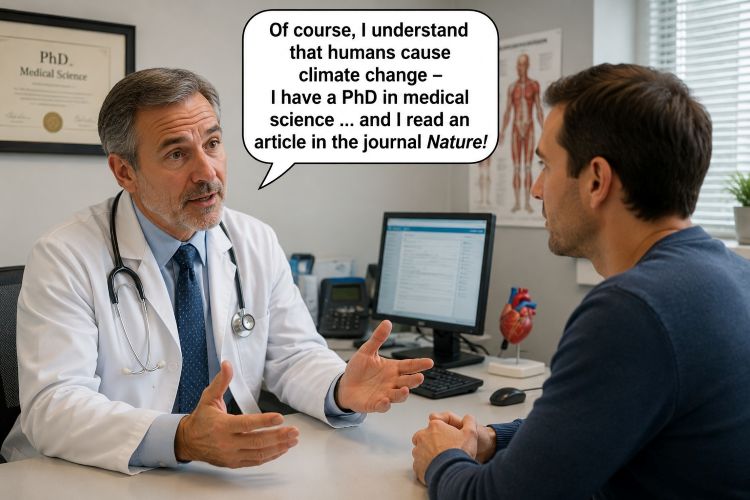
I believe it largely comes down to a psychological phenomenon known as the Dunning-Kruger effect, a concept documented in 1999 by psychologists David Dunning and Justin Kruger.
An AI overview from a Google search on the topic, which references Wikipedia, Psychology Today, Medical Centric Podcast, Reddit, Einzelganger/YouTube, Splunk, and TED-Ed:
The Dunning–Kruger effect is a cognitive bias where individuals with low ability, limited knowledge, or little experience in a specific area greatly overestimate their own competence.
Understanding this psychological phenomenon involves several key concepts:
The “Double Burden”
People who struggle in a particular domain suffer from a dual burden:
-
- They make mistakes, reach incorrect conclusions, and make poor decisions.
- Their lack of knowledge prevents them from recognizing those very mistakes.
The Confidence Curve
In visual representations of the effect, confidence typically shifts as expertise grows:
-
- The Peak of “Mount Stupid”: After acquiring a small amount of information about a topic, individuals often experience a massive spike in confidence. They believe they are experts because they do not yet know enough to see the complexities of the subject.
- The Valley of Despair: As people learn more, they realize how vast the subject is and how much they don’t know. Confidence plummets, and feelings of inadequacy or “imposter syndrome” set in.
- The Plateau of Sustainability: As true expertise develops over time, confidence gradually rises again to accurately match actual competence.
How to Overcome It
The primary defense against this bias is continuous learning and metacognition – the ability to objectively analyze your own thoughts and performance. Practical steps include:
-
- Seeking regular feedback: Actively ask for constructive criticism from peers, mentors, and experts to uncover blind spots.
- Assuming there is always more to learn: Adopting a growth mindset keeps overconfidence in check.
—
Now, we at BIG Media help you avoid the Valley of Despair by educating you on fundamental principles and critical context related to the most pressing matters.
The truth is out there, and the easiest way to see it is to step away from the sensationalism, emotional triggers, and overt bias of our media rivals and support the group that focuses on practical knowledge, logic, and constructive discourse.
And if you believe I suffer from DKE, please comment below or send a direct message. We all grow when we challenge each other respectfully.
(Rob Driscoll – BIG Media Ltd., 2026)
