

![28th Aug: Dilan ITB 1997 (2026), 1hr 49m [TV-14] (6.95/10)](https://occ-0-8167-92.1.nflxso.net/dnm/api/v6/0Qzqdxw-HG1AiOKLWWPsFOUDA2E/AAAABdgB4xjiqgKLexPsK2RisD1c_OeG9Nw2zvJ5KoOWH7m9tqnnMzwAOpMmpundtzZMpXNCQ1Nt4kABriUjan1AshU0IVueK28Jp9UttZo6oIyU4agupH6ue7BgeJ0d6QueB4n8drMZ4k5g2W0i6uYp4hmF7A2t2XSZ28a48UFrdKn12Q.jpg?r=113 "28th Aug: Dilan ITB 1997 (2026), 1hr 49m [TV-14] (6.95/10)")




“In my restless dreams, I see that town.”
Since its inception, Silent Hill fans have treated the town of Silent Hill as the franchise’s most important ingredient. It’s in the name, after all. Yet the series’ current trajectory suggests something different. With Silent Hill: Townfall taking players to a remote Scottish island and Silent Hill f shifting the focus to 1960s Japan, the franchise appears more willing than ever to look beyond the fog-choked streets of its namesake — and that’s a good thing.
The resort town may have given Silent Hill its name, but maybe it’s time for the series to finally let go of Silent Hill.
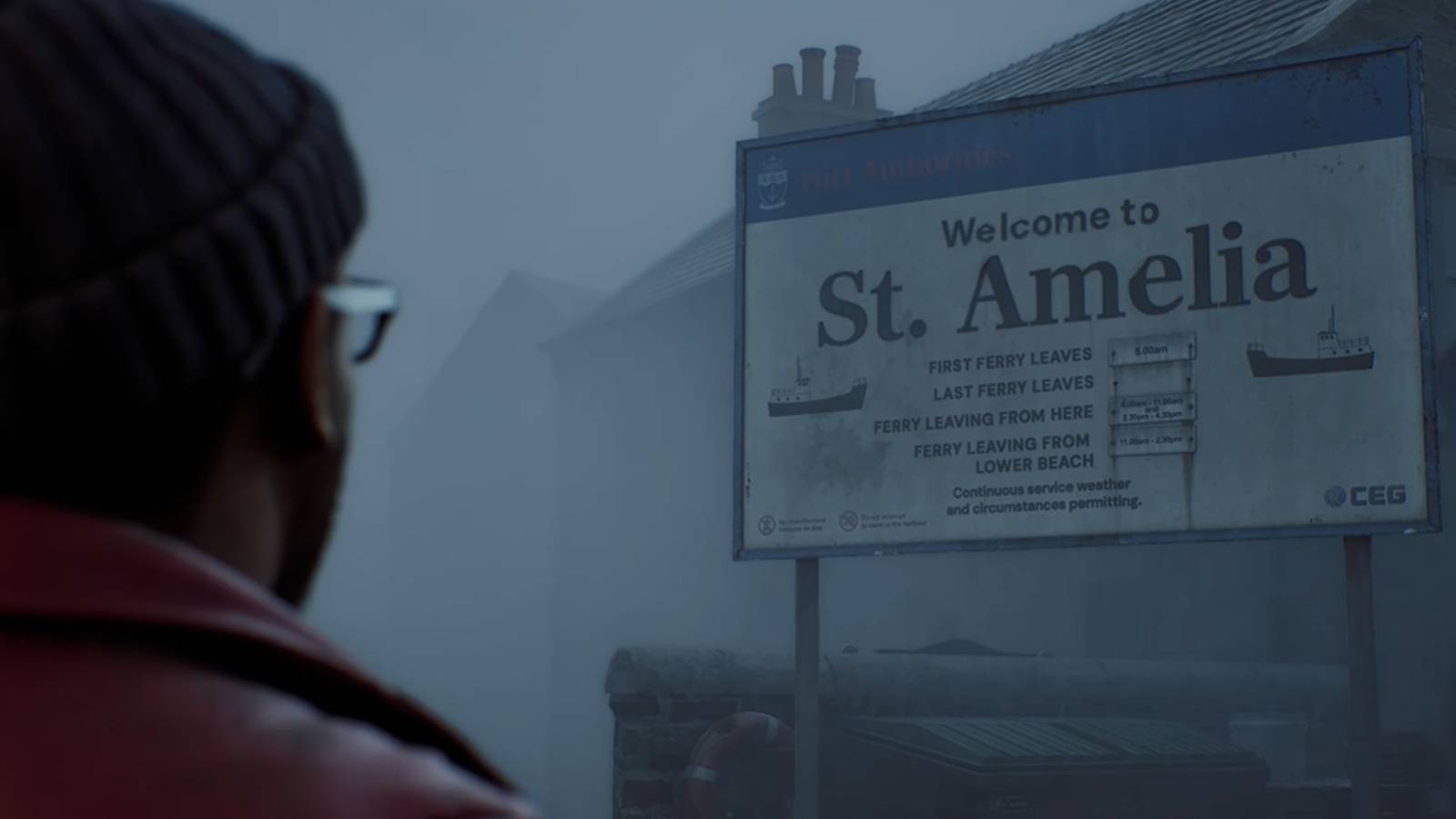
Townfall, which unfolds on the isolated island of St. Amelia, may not be set in the titular American town fans know, love, and fear, but the latest trailer, aired during Tuesday’s State of Play livestream, still feels unmistakably Silent Hill. Grotesque creatures lurk in the darkness, a protagonist seemingly unravels under psychological strain, a community hides terrible secrets, and there’s enough fog to obscure both the landscape and the truth itself. The trailer even included a 1990s riff on Harry Mason’s iconic radio in the form of Simon’s CRTV, a handheld analog television that appears capable of detecting horrors hidden just beyond human perception.
Transporting the series out of the town worked for Silent Hill f. Despite concerns surrounding its radically different setting, the game’s success — netting an 86% positive rating on Metacritic — is clear proof the series’ identity can survive outside the town’s normal borders. Set in the fictional Japanese town of Ebisugaoka, Silent Hill f still maintained the same atmosphere, psychological horror, music, and layered symbolism that have defined the franchise for decades. More importantly, it features subtle connections to the wider Silent Hill mythology through references to White Claudia and recurring cult imagery, adding even more layers to its exotic setting.
Some fans have even theorized that Silent Hill f, particularly its third act, secretly takes place in Silent Hill itself. It’s an entertaining theory, but it also speaks to a larger truth: the town has never been particularly stable or consistent visually, existing somewhere between a physical space and a psychological state. Throughout the series, Silent Hill has oftentimes reshaped itself around whoever enters its grasp, dramatically changing depending on the individual at the center of the town’s abnormalities.
In Silent Hill and Silent Hill 3, Alessa’s trauma and psychic abilities distort reality into a living nightmare. In Silent Hill 2, Origins, and Downpour, the town functions less as a physical destination and more as a form of purgatory, forcing characters to confront guilt, grief, and self-deception. James Sunderland encounters Pyramid Head, while Anita’s nightmares in The Short Message manifest as a cherry blossom monster, and Angela sees something entirely different. Heather’s Otherworld bears little resemblance to James’ version of the same garish space.
While similar elements emerge every time, like fog, distorted radio signals, shifting realities, personalized monsters, and transitions into the Otherworld, the consistency lies more so in the process rather than the obvious details. Again and again, Silent Hill involves psychologically vulnerable people confronting physical manifestations of their own trauma, guilt, grief, fear, and questions of identity. The town itself is merely the vessel through which those themes are horrifyingly expressed.
It’s not like any of this is new. Evidence suggests Silent Hill has been trying to escape the fog-choked borders of its Maine locale for decades. Long before Silent Hill f transported the horror to 1960s Japan, The Short Message dragged it to Germany, and Townfall shifted it to Scotland, the series repeatedly implied that Silent Hill’s influence extended far beyond the town. Silent Hill 4: The Room transformed South Ashfield into a nightmare landscape shaped by Walter Sullivan’s connection to the cult, while Homecoming expanded the mythology through Shepherd’s Glen, a neighboring community founded by families who left Silent Hill generations earlier.
These games and other minor clues made Silent Hill start to feel almost like a contagion more than a location, a psychological distress that could spread through characters carrying trauma and cult influences beyond its reach. Even the methods by which characters are drawn into the town feel almost eldritch. James follows a letter from his dead wife, Anita is haunted through digital messages, Heather searches for her own identity, Hinako struggles under the weight of social pressures, and Townfall appears to center around mysterious broadcasts transmitted through Simon’s CRTV. The details change, but the pattern remains the same: something reaches out from beyond the pale and pulls the protagonist into a fog of their own making.
Taken together, the stories that make up the bulk of the Silent Hill mythology reveal a franchise that has been quietly preparing for games like Townfall and Silent Hill f for years. The fog, the Otherworld, and the manifestations of personal trauma were never strictly bound to a single town. Silent Hill simply happened to be where we encountered those anomalies first.
Of course, the skepticism surrounding Townfall is understandable. Longtime Silent Hill fans have watched Konami make more than a few questionable decisions with the franchise over the years. More recently, the poorly received Silent Hill 2 film adaptation coupled with the disaster that is Silent Hill: Ascension leave a lot to be desired for the franchise, and no one’s forgetting the Silent Hill pachinko debacle.
Admittedly, Konami’s actions today feel eerily reminiscent of the franchise’s dark ages, back when the company was signing Silent Hill away to any and all studios willing to make a cheap adaptation. But before it gets dismissed for lacking the much-too-familiar map of Silent Hill, Townfall deserves the opportunity to stand on its own merits. The future of the franchise shouldn’t be measured by how faithfully the next game recreates a particular stretch of road in Maine. It should be measured by whether each following installment not only captures but also furthers the ideas that made the series resonate in the first place — and that doesn’t mean simply copying Silent Hill 2.
Perhaps the healthiest thing Silent Hill can do now is keep moving forward, much further and farther beyond that town of our restless dreams. All we can do is follow the fog and see where it leads next.


Silent Hill f devs want you to ‘find the beauty in terror’
Silent Hill f leans into Japanese horror elements, challenging players to find beauty in the grotesque