![1st Apr: The Twilight Saga: Breaking Dawn: Part 1 (2011), 1hr 57m [PG-13] – Streaming Again (5.45/10)](https://occ-0-1381-999.1.nflxso.net/dnm/api/v6/Qs00mKCpRvrkl3HZAN5KwEL1kpE/AAAABQUM-ypQDf1MqXeVZLWIfVmj_JmQ9Un96Sfu0B1zRLG0ah0SfkyXgXgvb4P7hz-0LZNfRcAp7A4BTe4J6UC1X7hx-2oDMoqXoKJH.jpg?r=654 "1st Apr: The Twilight Saga: Breaking Dawn: Part 1 (2011), 1hr 57m [PG-13] – Streaming Again (5.45/10)")







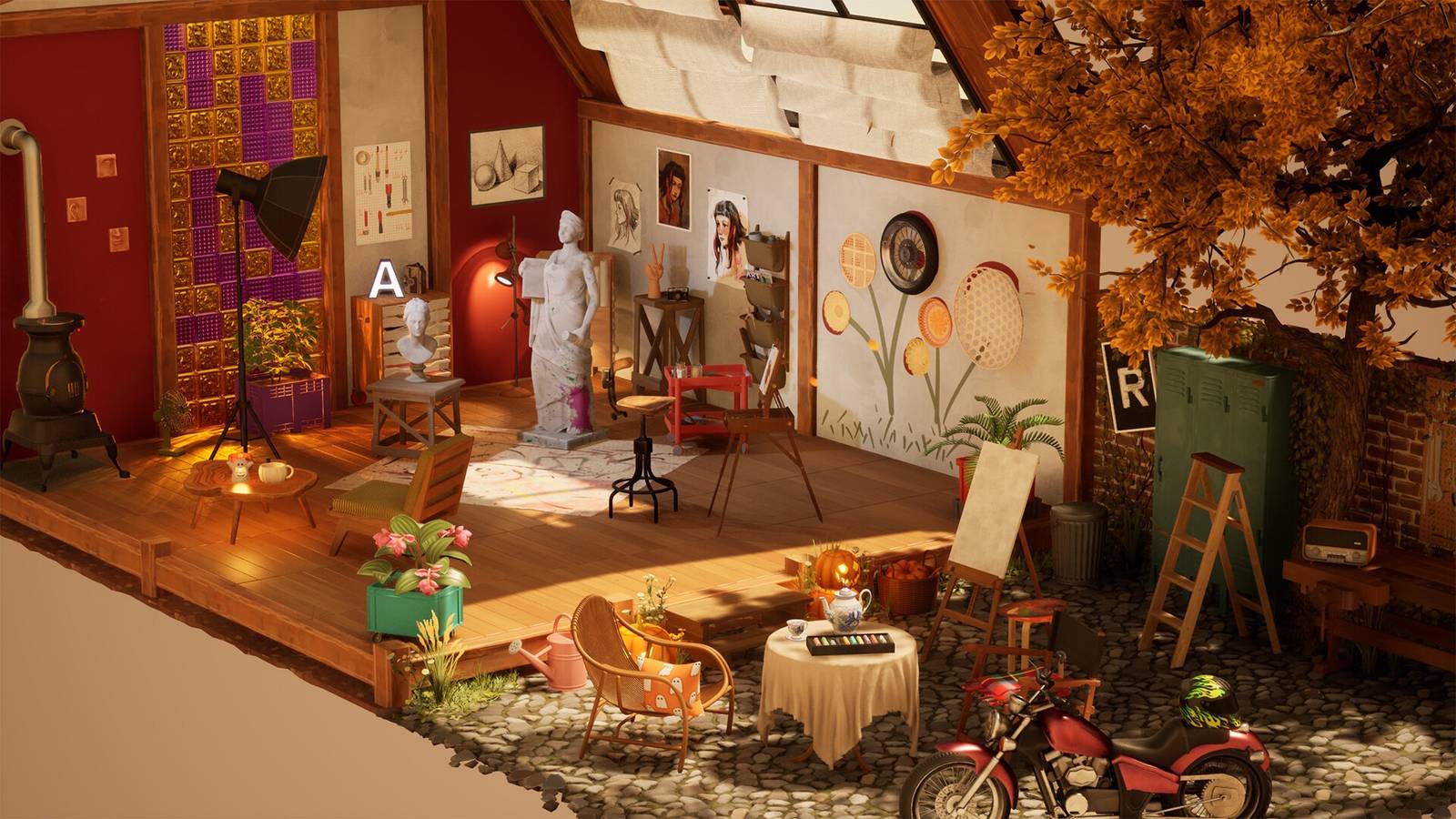
I fell into a routine soon after starting Hozy, the cozy decorating game from Cone On Studio. After cleaning up a location and emptying boxes that do their best to shame Mary Poppins’ bottomless carpetbag, I’d step away for a bit. Dropping several dozen pieces of furniture in a small space is overwhelming, and I needed time to think about what to do with it. I thought about Hozy when I was making dinner. And bathing the dog. And before I went to sleep. Basically, any moment I wasn’t occupied thinking about something else, I thought about Hozy. I don’t even think about The Sims that much when I’m in the middle of a build. Hozy has a way of getting under your skin, though.
That process immediately starts when you enter a new location. Everywhere begins as a mess. The woodblock is filthy. The parquet is busted. And the windows? Lord have mercy. Cleanup is mandatory before the furniture even appears, and Hozy strikes a nice balance between the onerous monotony of House Flipper 2‘s cleaning process (where you must pick up every individual piece of trash) and PowerWash Simulator‘s single-minded focus on jets of water. You scoop up garbage in a swirl of debris and fly it through the air until it reaches the trash can, where it crashes with a satisfying cardboard clunk. A mop swishes lithely around the room with a simple drag of the mouse, leaving trails of clean floor behind with every squelch. The second location is a personal favorite, though. Here, you rip out old flooring using a crowbar, with an animation that pauses just long enough to suggest tension and effort, before dropping new planks down in a thunky parquet shower.
It’s a shame, then, that there’s so little room for injecting personality in this phase of decorating. Painting or papering the walls is the only avenue for making the cleanup portion yours, an oddly restrictive approach for a game that’s otherwise all about creativity. That said, the selection of paint colors or paper styles — limited to a few in every location — does give you a variety of ways to change the mood of a room via creating accent walls, calming neutral spaces, and the like.
What if I wanted different colors of floor planks, though? Hozy doesn’t care. Or maybe more to the point, the room’s inhabitant doesn’t care. Where Unpacking and the games it inspired, like Whisper of the House, lavish attention on the cutlery, tissue boxes, cookware, book stacks, and other granular details that comprise a life, Hozy gives you a curated selection of furniture that’s loaded with personality — theirs, not yours. Each selection has enough of a theme or a handful of distinct items to convey an idea of what the person is like, but it’s always flexible enough to do whatever you want.
The owner of the first room, for example, has a few seemingly random items — a tribal mask, a neon sign, a rack of antlers with a lantern hanging from them. She also seems to enjoy traveling. Did she collect these curios during her travels, so they need to be on prominent display? Or, since she’s also an artist, are these just the things that inspire her, meaning they should go near her work station? That’s for you to decide.
The lack of attention to life’s daily necessities will annoy a certain kind of person — the type who sees someone unpack three chairs and a sofa and wonders where they plan on sleeping, or someone who notices a tea set, but no source of running water or means to heat it. That type of person is me. But who am I to judge someone’s life choices? I’m just here to make those choices look good, even if they don’t always make sense. And on a practical level, focusing on the “big picture” items, as it were, means you have more ways to redesign a space if you want to start from scratch later. Add an accent wall and move some chairs around, and you’ve got a whole new room. But there’s only so many ways to arrange your dinner plates.


A more irritating habit of Hozy‘s is the attempt to be more like Unpacking. Where that game tells the story of a life through subtle changes in their possessions and homes, Hozy forces its story onto specific items. It’s mawkishly sentimental and just plain unnecessary. In the second location, a text blurb for a table covered in a dramatic-looking cloth asks whether this piece could be for a date. I sincerely hope not. This room is the artist’s workplace, and that would probably make for a very boring, awkward date unless the other party specifically wanted to visit here. The furniture and what you do with it tells enough of a story on its own. These additions just cheapen it.
Thankfully, these clunky story elements are soon forgotten in the much more enjoyable act of interacting with all the stuff. Hozy pays the same level of attention to every piece of furniture as it does to the sounds and feel of cleanup. A beanbag is textured so finely that you can practically feel the material on your fingertips, and the beans shift inside when you move it. Ceramic makes a satisfying chink when you shift it from one spot to another, all the more satisfying for the knowledge that, unlike breakables during a real-life move, these are indestructible. Interacting with music players changes the soundtrack, like, for example, adding the crinkle of a vinyl record if you power on the turntable.
Decorating is the goal, of course, but it’s a joy to just mess with all the bits and pieces in the process. Hozy is supremely chill and loaded with personality — and far more variety than you’d expect from working in tiny spaces with predetermined item sets. My brain has no room for anything else now. No thoughts. Only furniture.
Hozy is out now on Windows PC via Steam. The game was reviewed on PC using a prerelease download code provided by timyBuild. You can find additional information about Polygon’s ethics policy here.