



You could see the northern lights tonight as the aurora dips south across many parts of Canada.
There are viewing tips to help you spot the aurora wherever you are in the country.
According to a northern lights forecast by NOAA, the aurora could be visible at night on Tuesday, July 21, into the early hours of Wednesday, July 22.
That’s because geomagnetic storms, which cause surges in the aurora and make it plunge south, are likely then.
A “more intense” aurora is forecast in northern and central parts of Canada, including Prince George, Whitehorse, Grande Prairie, Edmonton, Banff, Calgary, Yellowknife, Saskatoon, Regina, Churchill, Fort Severn, and the surrounding areas.
The northern lights are expected to be less intense in Victoria, Nanaimo, Vancouver, Kelowna, Cranbrook, Lethbridge, Winnipeg, Kenora, Thunder Bay, Sault Ste. Marie, Timmins, Moosonee, Saguenay, and nearby places.
NOAA said that the aurora doesn’t need to be directly overhead for you to see it. The northern lights can be observed from as far as 1,000 kilometres away when the aurora is bright enough.
So, that means you could see it even in places that are further from the aurora oval, like southern parts of Ontario and Quebec.
Northern lights forecast map for July 21, 2026.NOAA
If you want to see the northern lights tonight, the Canadian Space Agency’s aurora viewing tips can help you.
Usually, the northern lights appear a few hours after sunset, then become more intense around midnight.
You should find a place with little or no light pollution because bright city lights can make it difficult to see a less intense aurora.
When you’re in a dark location, you should look all around because the northern lights can appear anywhere in the sky, not just directly above you or toward the north.
You don’t need any special equipment like a telescope or binoculars to see the northern lights in Canada.
According to the Canadian Space Agency, the colours you see in the sky depend on the gases in Earth’s atmosphere, the altitude of the aurora, the density of the atmosphere and the level of energy the aurora has.
Green is the most common colour of the northern lights, but occasionally, the lower edge of the aurora will have a pink or dark red hue.
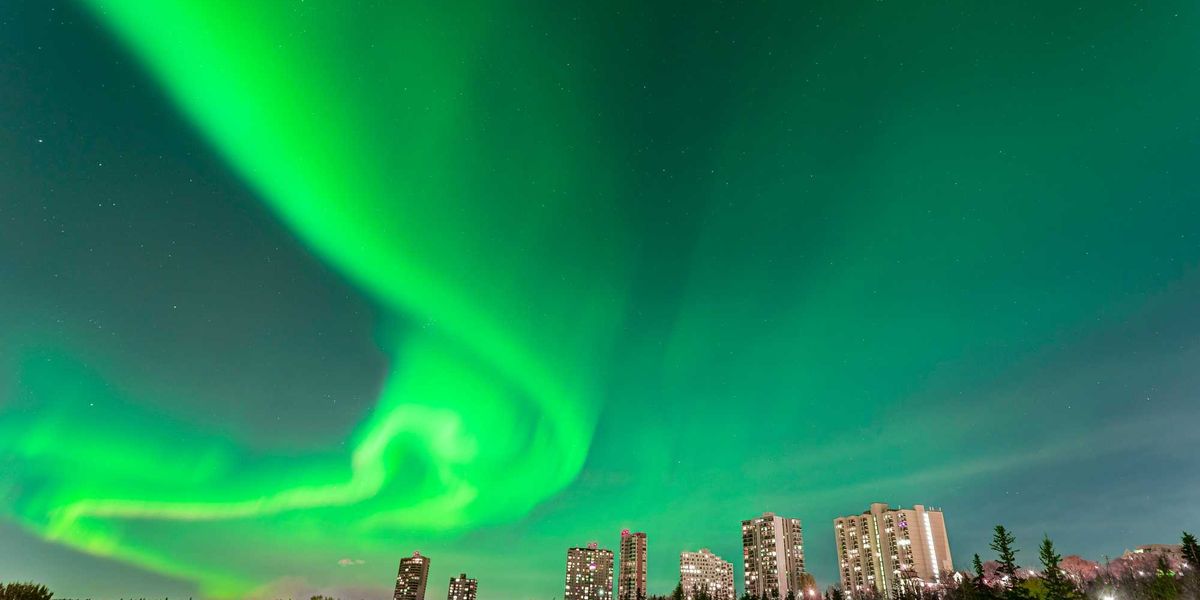
This article’s cover image was used for illustrative purposes only.