









A longstanding newsroom joke says that most trend pieces are born from journalists trying something new, enjoying it, and assuming they’ve discovered something fresh, important, and popular: Surely this thing I like is popular, and new to everyone else, too? (The “Getting a lot of Boss Baby vibes from this” meme is a more general application of the same idea.) It’s such a cliché that it makes a lot of us wary about accepting our own lived experiences as useful data.
So I’m aware I’m speaking anecdotally when I say that it seems like anticipation for Phil Lord and Christopher Miller’s adaptation of Andy Weir’s science fiction novel Project Hail Mary is unusually high and unusually anxious. I’ve lost track of how many people over the past few months, on finding out I’m a film critic, have told me they’re really looking forward to Project Hail Mary, but they’re nervous about whether it can stick the landing. I haven’t had this many people pouring movie-related anxiety on me since the week before Star Wars: The Phantom Menace came out.
If you’re in that boat, if you’re stressing over whether Project Hail Mary is actually good, please stop worrying. It’s everything fans of the book could want — and it’s a whole lot of fun for everyone else, too.
The success of Ridley Scott’s 2015 Andy Weir adaptation, The Martian, may be driving all this hope and anxiety. It was a $630 million box-office smash (#10 on the list of the year’s biggest earners) and a critical hit nominated for seven Academy Awards, including Best Picture and Best Director. It still scores high on lists of all-time best science fiction movies. The movie streamlines Weir’s long passages of well-researched, heavily foregrounded actual science and zooms in on the adventure at the book’s center for a charming, breathless space thriller that for once didn’t exasperate actual scientists. Expecting Project Hail Mary to thread the same needle feels like hoping to hit the Powerball numbers twice in the same year.
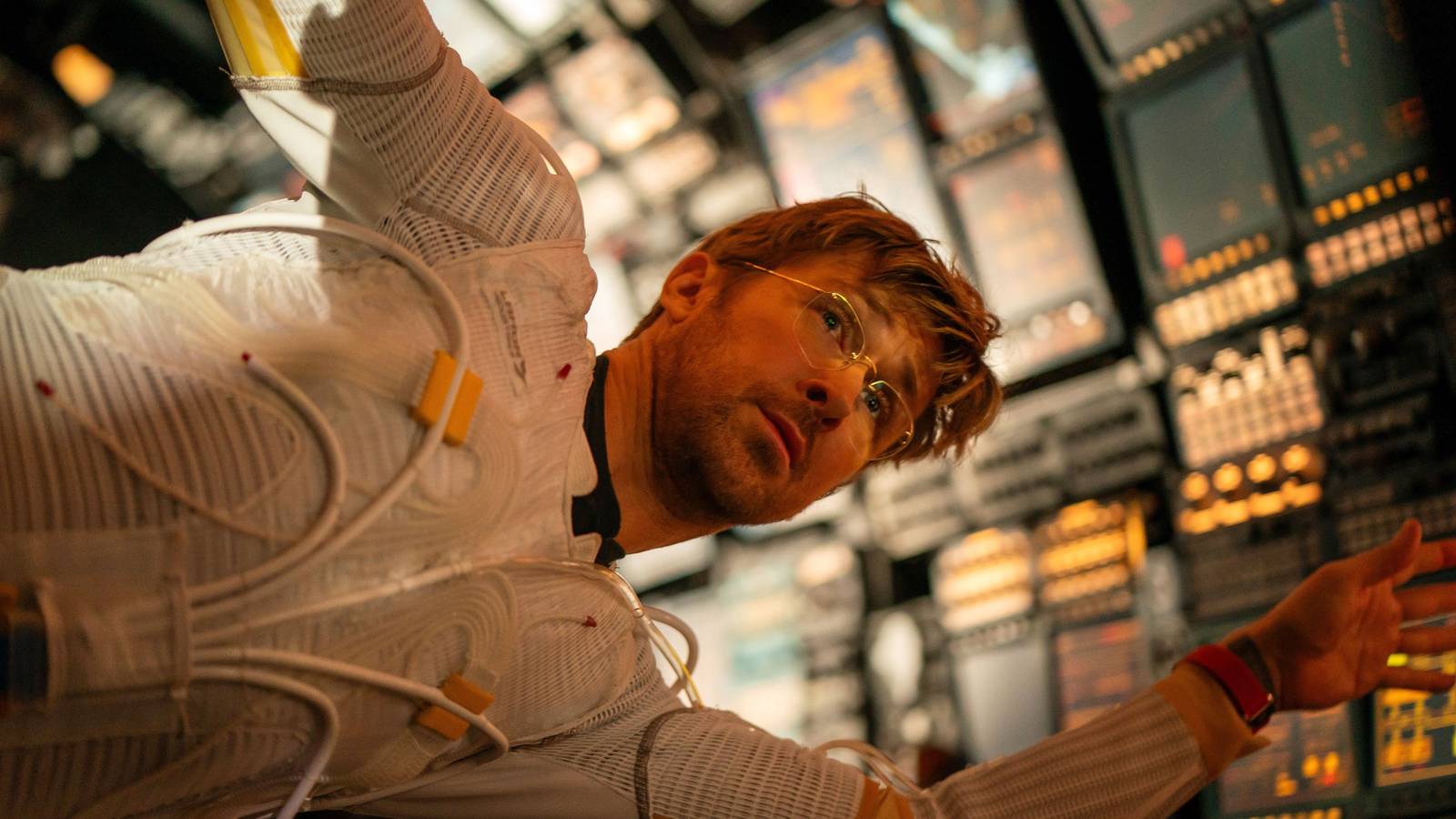
But Lord and Miller — the writer-directors of The Lego Movie and Cloudy With a Chance of Meatballs, and producers of the Spider-Man: Into the Spider-Verse movies — are skilled at staging comedy and action while finding the right balance between them. The Martian’s screenwriter, Drew Goddard, returned to shepherd Weir’s book to the screen, and Weir himself seems to have been closely involved with the production. Ryan Gosling, playing Project Hail Mary’s lead, wonkish scientist and reluctant astronaut Ryland Grace, gives Project Hail Mary a completely different vibe from The Martian, but a similar level of accessible charm and gutsy but vulnerable determination. This was a solid team for this particular project, and when it came to bringing the heart of Weir’s book to the screen, they nailed the assignment.
Project Hail Mary opens with Ryland alone on a spacecraft, suffering from amnesia after a long period in a medically induced coma. Gradually, through a series of flashbacks, his mission comes back to him. Earth’s sun became infected with microscopic life forms eventually dubbed “astrophage,” organisms consuming so much of the sun’s radiation that it was dimming, with cataclysmic results on Earth. Observation of nearby stars concluded that Tau Ceti’s sun was the only one within human reach that wasn’t infected. So Ryland, one of the leading scientists researching astrophage, was sent on a desperate mission to the Tau Ceti system to investigate what made its sun different.
Weir’s book adds several swerves to that premise as the story unfolds, and the movie’s trailers give away two of the biggest reveals up front. (That choice frustrated some fans, but Weir tells Polygon it was deemed necessary to successfully sell the movie.) Project Hail Mary isn’t primarily a twist movie, though. Like The Martian, it’s a kind of intelligence-centric procedural thriller, where a scientist tries to apply everything he knows about astrophysics, biology, thermodynamics, and many other fields to an intensely urgent series of escalating problems. But this time, he isn’t just trying to save his own life, he’s trying to save Earth — and, as it turns out, other worlds as well.
Like the movie version of The Martian before it, Lord and Miller’s Project Hail Mary reduces the book’s extensive scientific explanations to a few snippets of exposition and an overall sense that its protagonist is extremely smart. That leaves more room for the film’s lively emotional component, centering on Ryland’s unlikely blend of humor, self-effacement, sensitivity, surprising insight, and frank cowardice. As someone who apparently struggled to make or maintain connections on Earth, he makes a particularly unlikely space hero — but when he meets an alien astronaut he names Rocky (voiced by James Ortiz), who’s also trying to save his cooling planet, Ryland finds some of what he was missing on Earth.


In a weird sort of way, Project Hail Mary is a space bromance, a meeting-of-the-minds story about a man who wasn’t particularly skilled at connecting with people like him, and apparently just needed to meet and bond with someone profoundly unlike him. The Martian gets a lot of its warmth from the sense of camaraderie, competence, and collective ingenuity brought to bear in saving astronaut Mark Watney (Matt Damon) after an accident strands him on Mars. Project Hail Mary expands the stakes and simplifies the central bond, but still finds a lot of the same visceral satisfaction in a shared problem and the emotional connections that build around it.
Lord and Miller tap into the same tensions, as well. At times, this movie is surprisingly leisurely, seemingly paced to match Ryland’s idiosyncratically laid-back approach to science. The directors find time, for instance, for a comedic shopping montage where Ryland gets goofy while loading up on DIY supplies for a kludged-together lab experiment, or for a similarly gag-driven sequence where he explores different voice options for the translator he’s built to help him communicate with Rocky. But as wry, dry, and character-driven as those sequences often get, they alternate with more familiar space-adventure set pieces where crisis hits, danger looms, and solutions have to be found quickly.


Lord and Miller haven’t directed a movie since 2014’s 22 Jump Street — they’ve focused far more on writing and producing projects, from The Lego Batman Movie to The Last Man on Earth. With Project Hail Mary, they return in style, and as their own producers, alongside Gosling and Weir. That may explain how they won the freedom to make such an appealingly non-standard science fiction movie, one that doesn’t dumb down Weir’s book or juice it up into a more standard action-driven blockbuster. Instead, they show a clear confidence in the material, and an assurance that audiences won’t get impatient over their film’s 156-minute runtime as long as they find Ryland’s personality winning, enjoy his push-and-pull banter with Eva, get caught up in the problem-solving focus, and find Rocky cute and appealing.
Admittedly, it’s hard not to appreciate Rocky, who’s equally capable of partnering with one of Earth’s best scientists on complicated astrophysics calculations and playing out BB-8 or Baby Yoda-style naïve-alien-kid sight gags. (The scene where he experiments with Ryland’s retractable tape measure is a thousand GIFs waiting to happen.) He’s the most difficult thing the team behind Project Hail Mary had to get right: a nearly featureless puppet character who’s relatable, soulful, and funny. Rocky has to be a mysterious force, a brave survivor, a salve to Ryland’s loneliness, a pioneer among his people, and a font of cute jokes and attitude. Building an entire movie’s emotional core around a dancing rock speaking in lightly broken English was a ridiculous risk.
Maybe that’s why the Project Hail Mary team pulls this story off so well. Anyone capable of seeing the winsome, heartstring-pulling capabilities of an alien rock is already coming from a place of radical imagination, empathy, and daring. The filmmakers’ ability to step beyond that and see the appeal of an E.T.: The Extra-Terrestrial riff where Elliott is E.T.’s lab partner and co-worker as well as his friend… well, let’s just say it took some odd minds and some odd tastes to get this book to the screen. But the adaptation is all the better for it.
For once, fans’ “Did they do the book justice?” anxieties are misplaced: The movie version of Project Hail Mary is funny, strange, heartening, and completely satisfying.
Project Hail Mary opens in theaters on March 20.

