





![14th Mar: Back to Black (2024), 2hr 3m [R] (6.15/10)](https://occ-0-1787-132.1.nflxso.net/dnm/api/v6/Qs00mKCpRvrkl3HZAN5KwEL1kpE/AAAABYbdpZousCQpypy5DsjOZqQf13dOA6mXFx_V6NzoBXjjw8QQ2HYyU2ffJZgg4wdpCKx4Hc6CLji4qnWjXZfTMDxiTI8VHdE-9mL6ySC7unFkzbA9b4v3Gzj4EOUUMbyTpcfO_HALklbKLOrYnRpT3EpKxdbgrXHpzo27ECzvSvuznQ.jpg?r=500 "14th Mar: Back to Black (2024), 2hr 3m [R] (6.15/10)")





Before George Lucas showed us the twin suns of Tatooine or exposed us to the frigid wilderness of Hoth, his first feature-length film envisioned a tech-driven dystopia more sinister than anything brought about by Star Wars’ evil Empire.
THX 1138 opened in March 1971, and 55 years after its release, the science-fiction thriller mostly exists in the shadow of Lucas’ best-known creation. The filmmaker even went on to hide various references to his first movie throughout the Skywalker saga. But while the earliest evidence of his sci-fi mastery can be found in THX 1138, the film itself has more in common with famous dystopian books by Aldous Huxley or George Orwell than it does with stories of Ewoks and Gungans. That makes it a rare outlier in its director’s career that’s still worth revisiting all these years later.
Set on Earth in the 25th century, THX 1138 foretells a future where sex is forbidden and emotions are suppressed by mandated drugs. Work is all-consuming, constantly monitored, and enforced by robotic police officers.
Robert Duvall plays the titular character, THX 1138, a worker who assembles highly-combustible radioactive androids. Maggie McOmie plays LUH 3417, his female roommate who defies the law by refusing to take her mandated prescription, and then swaps out THX 1138’s drugs as well. Once they both emerge from their government-enforced brain fog, the first thing they do is have sex, an act that is monitored by their superiors via hidden cameras in their living quarters. As punishment, LUH 3417 is executed and THX 1138 is imprisoned. In a final act of defiance against his overlords, THX 1138 decides not only to escape from prison, but from the fortress-like city altogether.


For anyone who’s read Huxley’s 1932 novel Brave New World or Orwell’s 1949 novel 1984 — or watched adaptations of those works — the influence they had on Lucas is immediately apparent. To name just a few similarities, the drug-induced worker’s utopia full of compliant citizens in Brave New World is present in THX-1138, and 1984’s anti-sex government also carries over, as does the constant monitoring of its citizens. The portrait of Jesus the people pray to in THX-1138 also has some serious Big Brother vibes.
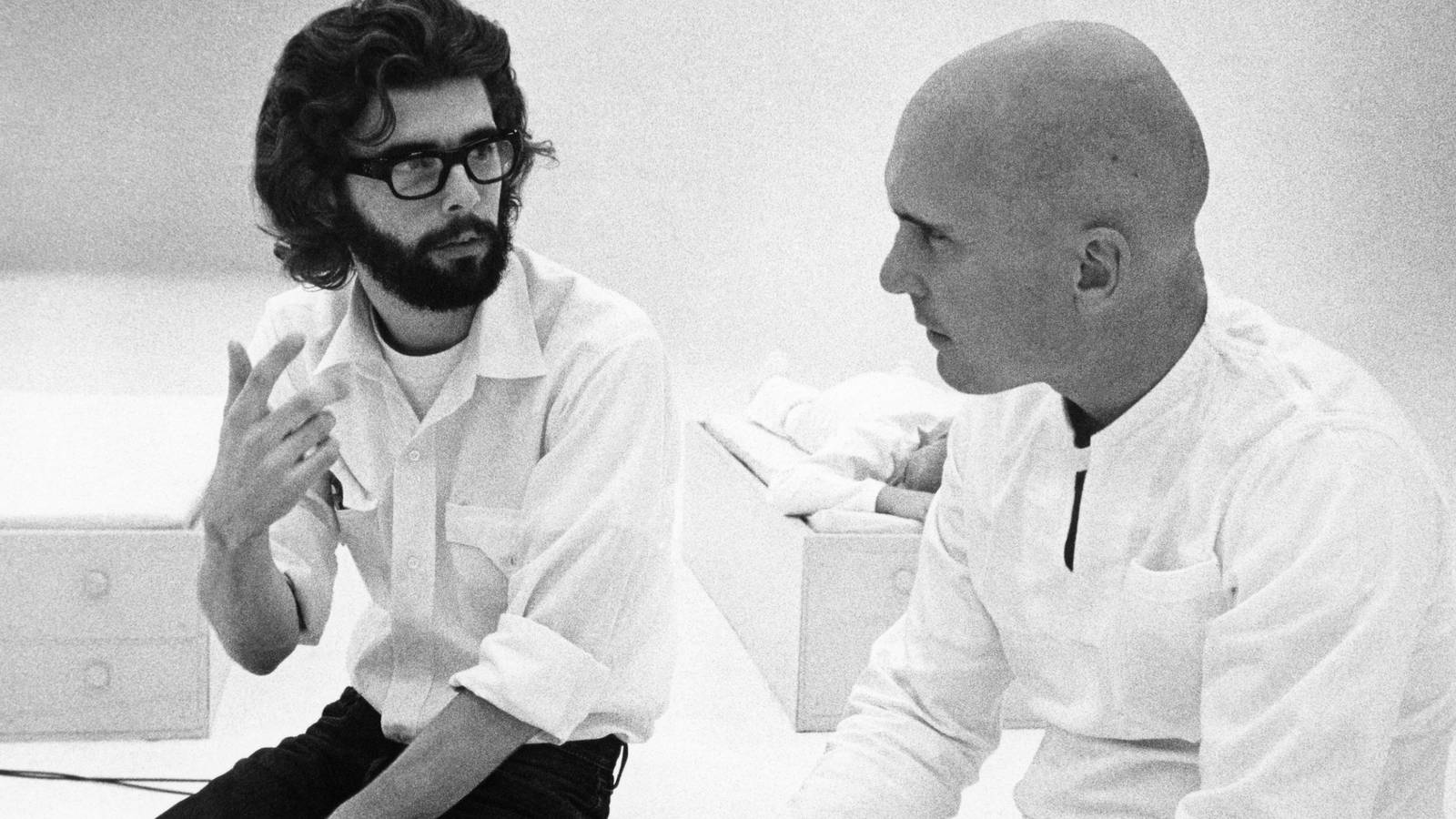
That said, Lucas did manage to fill the story with plenty of his own ideas, and the world-building he does in THX 1138 is as good and as fully-realized as anything in Star Wars. The blank, hospital-like setting is present everywhere throughout the movie, making for an indifferent future where order is prioritized over human life. This vast white nothingness is brought to an extreme when THX 1138 is imprisoned in a wall-less, blank white void with no entrance or exit.
Even the android factory, which you might think would give off Star Wars vibes, feels unique instead. While Star Wars environments, like the droid factory in Attack of the Clones, tend to be warm and lived-in, the factory in THX 1138 is cold, pristine and downright soulless. This effect is only emphasized by the fact that the rows and rows of workers who assemble these androids are regularly killed in massive accidental explosions.


To fully realize this world, Lucas had everyone in the cast shave their heads, and the androgyny that results underlines the sexual aspects of the movie. The robotic police officers are also memorable as their smooth, silver, expressionless, T-1000-like faces make for genuinely intimidating villains.
Admittedly, while THX 1138 is full of good ideas and interesting visuals, this purposefully dull and monotone story does gets a little sleepy at times, but it’s a fascinating watch in part because of just how little it feels like anything in Star Wars, despite both being sci-fi stories. Paired with his second film, the coming-of-age comedy-drama American Graffiti, the two offer a peek into some alternate reality where Lucas pursued a more varied career like his collaborator and contemporary, Steven Spielberg, instead of spending so much time with Star Wars.
That never happened. Instead, Lucas spent his career obsessing over the finer details of The Force and the special effects of his films even decades after their release (even THX 1138 received a Star Wars-like CGI enhancement in 2004). But at least his first film still exists as a rare outlier that shows what might have been before its creator got lost in a galaxy far, far away.

