






I met Tony three times, twice in Colorado. Our first conversation was in Boulder in 2013, after his inaugural Good vs Evil Tour with Eric Ripert. Eric warmly praised Colorado’s food scene, but Bourdain unapologetically tore it apart in front of a room full of the state’s best chefs, cooks and his rabid fans. I respected him for that. His loathing of Denver’s culinary scene led me to write my first book on the subject, dedicated to him. The last time we talked was at Ripert’s Cayman Cookout, the year before he died. His face was etched and weary.
Like so many others, I became enamoured with Tony as the giddy and curious host of A Cook’s Tour, and that is how I choose to remember him. I adopted the ethos ‘live like Tony,’ only with guardrails. A decade ago, on the heels of my master’s thesis, I jetted off for a month-long, Bourdain-inspired solo sabbatical retracing his steps from Copenhagen to Brussels, Paris, Bordeaux, San Sebastián and Madrid, eating where he ate, walking through the same streets and trying to see the world the way he seemed to see it. Then, I did the same in Asia, toasting Tony’s birthday with an icy cold Tsingtao beer at the happening Houhai gastronomic quarter in Beijing. I still miss my wayfaring muse.
The new film, Tony, returns to that pivotal, budding bon vivant, and it feels like the right moment to do the same: to go back to his early days and explore what turned him on, what excited him about food and travel, and where he would go if he could do it all again.
Tony loved Japan and Vietnam most, and Rome, San Sebastián, and New York were close behind. Ask him his favorite food and the answer changed every day: Les Halles fries one day, a mortadella sandwich the next, Jiro’s sushi, a bowl of blistering Vietnamese soup, a simple burger, or his first oyster. He loved hot dogs without irony. He was, in the end, a street food fanatic who cared more about the story and the person behind a dish than the stars above the door. His classical French training never left him, and a perfectly roasted bone marrow remained his forever favorite.
These locations and dishes are the foundation for the essential Bourdain mythos.
France
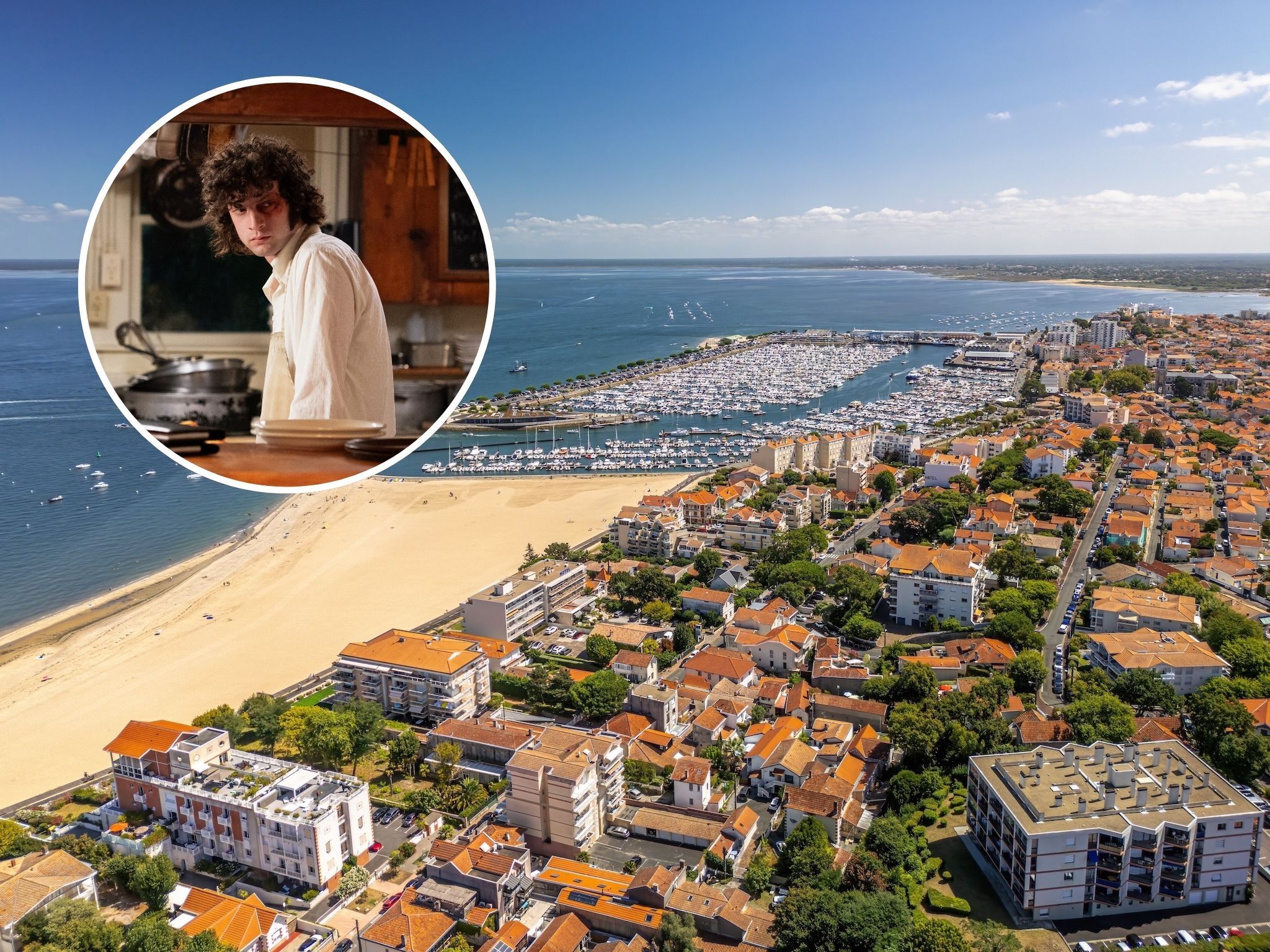
This is where the story begins. Bourdain spent childhood summers with his father’s family on Arcachon Bay. At Le Bistrot du Centre he tasted the soupe de poisson, the murky, saffron-scented fish soup that sparked his life’s work. ‘This more than anything is the flavor of my childhood,’ he reminisced. Traditionally served with crostini slicked with rouille and buried under grated cheese, he ate it alongside Huîtres d’Arcachon paired with grilled pork sausage crépinettes. Bordeaux’s Café Français satisfied another carnal craving: steak frites doused in herb butter.
Portugal
In Minho, Northern Portugal, and in the Portuguese fishing community of Provincetown, Massachusetts, Bourdain hunted for one dish: caldo verde. Built from puréed potatoes, onions, garlic, leafy kale, and smoky chouriço sausage, it is peasant food perfection. It represented exactly what Tony loved most about global food culture: unpretentious ingredients transformed into a dish that embodies the warmth and soul of an entire nation. Tony was a soup guy.


Spain
‘You go from bar to bar. You drink a little Txakoli, you eat a little pintxo. It is the greatest way to live,’ he said of San Sebastián. At Ganbara in the Old Town, his nonnegotiable favorite, he loved the hongos con huevo, wild seared boletus mushrooms with a raw egg yolk and pan-seared foie gras. Nearby in Axpe, ‘Asador Etxebarri, chef Bittor Arguinzoniz’s temple to fire and custom applewood coals, is one of the greatest restaurants on Earth,’ he stated. He swore by the angulas, the charred baby eels, and chuletón, the legendary Basque ribeye.

Italy
‘If I’m in Rome for only 48 hours, I would rather spend it sitting in one place, watching the world go by, than trying to see everything,’ he reflected, and Osteria dal 1931 in Monteverde was that place. A family-run trattoria he treated like a sanctuary, home to classics like carciofi alla romana, a braised Roman artichoke, and rigatoni alla pajata. At Roma Sparita in Trastevere, he put Cacio e Pepe on the global radar. ‘It’s a paradigm of Roman cuisine: few ingredients, maximum impact. It’s just cheese, pepper, pasta. That is magic,’ opined Tony. He’d pair it with a carafe of wine, insisting an expensive bottle would overpower the glorious dish.

Discover our local expert’s guide to Rome’s best restaurants
Japan
Tony confided, ‘If I had to eat only in one city for the rest of my life, Tokyo would be it. Most chefs would agree with me.’ At the ten-seat basement counter of Sukiyabashi Jiro, master Jiro Ono’s timed Omakase left him awed, especially the uni and the anago, which he said melted like cotton candy. At Toriki in Shinagawa, he called the yakitori and crisp chicken skin skewers grilled over binchotan charcoal, and the tsukune, chicken meatballs dipped in raw egg yolk, the best thing ever.

Vietnam
‘All of the things I need for happiness: a low plastic stool, a cheap beer, something delicious in a bowl,’ Bourdain said, and Bún Chả Hương Liên in Hanoi is where he proved it, sharing a six-dollar meal of grilled pork and cold beer with President Obama on exactly those stools. In Ho Chi Minh City, he was mesmerized by the Lunch Lady, who rotated a different soup daily, among them bún mắm, a rustically pungent, fermented fish soup loaded with shrimp, pork belly and squid.

United States
Bourdain revered San Francisco’s Swan Oyster Depot, a historic, no-reservation, 18-seat seafood counter, famously introducing the world to their secret off-menu Crab Back delicacy, a buttery medley of crabmeat and roe served in the shell.
For all his devotion to the street, Tony’s favorite restaurant in the world was four-star Le Bernardin in New York, run by his closest friend Eric Ripert. He adored the paper-thin, raw pounded yellowfin tuna draped over a baguette crostini with foie gras flakes, chives and extra-virgin olive oil. ‘Give me a bowl of spicy noodles on a street corner over a three-Michelin-star meal any day of the week,’ he’d say, and then he’d go to Le Bernardin anyway.

Read ’s review of Tony and discover Bourdain’s favourite spots in London.
Stay in the loop: sign up to our free Travel newsletter for all the latest travel news and best stuff happening across the world.