



Toronto-based filmmaker Sophy Romvari has had lots of conversations about the sounds of summer with people who have seen her directorial debut, Blue Heron. In it, she depicts a family in crisis: at the cusp of the twentieth century, eight year-old Sascha’s family moves to Vancouver Island and her oldest brother, Jeremy (Edik Beddoes), begins exhibiting behavioural issues. It’s easy to reminisce about your own summers past when Romvari has captured the season, one that is so closely tied to the idleness of childhood, with such fidelity.
“There’s been more than one person who said: ‘And [there’s] the sound of the Game Boy.’ And I say, ‘There is no Game Boy in this movie.’ People start to extrapolate and assume they’re hearing sounds that don’t actually exist because it would fit within this.” Such an anecdote is emblematic of the project of Romvari’s work in excavating the self and interrogating memory.
Told in two halves — one as Sascha (Eylul Guven) and her family settle into their new life on the Island, the other as the much older Sascha (Amy Zimmer) reckons with what happened to her brother and her family — Blue Heron is an exquisite examination of memory and loss. At the end of April, Blue Heron’s limited release began in select theatres around the city, starting with a sold-out screening at Cineplex Varsity followed by a Q&A with Romvari moderated by esteemed Toronto director David Cronenberg.
The film has since received seven Canadian Screen Awards nominations, including for Best Motion Picture, Achievement in Direction, Original Screenplay and the John Dunning Best First Feature Film Award — and it’s had a very warm reception, with many early viewers calling it the best movie of 2026 so far and The Hollywood Reporter naming Blue Heron 2026’s “most acclaimed film.”
Two best movies of the year so far are Canadian independent works about love and the power of cinema. Must be something we can learn from this pic.twitter.com/KeQWfoemul
— B.C. Wallin (@BCWallin) April 28, 2026
In depicting Sascha’s childhood, there are few moments of silence as Romvari paints a portrait of a hectic but full home with impeccable sound design.
“It’s really underestimated how much sound is a part of nostalgia and a part of memory,” she says. “So much of what you see on the screen is amplified by what you hear. I really like to play with things you hear off camera, things that build the atmosphere that create a sense of time and place.”
From the scrape of a cereal box against the breakfast table, the bounce of a basketball off the house, each sound is a choice Romvari made with her team.
With Blue Heron, Romvari’s preoccupation lies with how audiences will scrutinize her filmmaking at a craft level. Romvari has built a career excavating her own self and her memories. The themes explored in Blue Heron — grief, trauma, family, memory — aren’t new in her work, all playing a role to varying degrees in It’s Him (2017), a short about a girl who thinks she sees her missing brother in the background of a film, and most notably in Still Processing (2020), Romvari’s master’s thesis and breakout documentary short. In the latter, Romvari’s parents grant her access to a trove of photographs and home videos they’d kept from her and her brother in the wake of the death of her two older brothers. Still Processing was borne out of lengthy negotiations between Romvari and her parents about the value of such a film’s existence in the first place, with Romvari arguing that the experience would be cathartic, something like therapy. She was right. When it came time for Blue Heron, Romvari’s parents trusted in their daughter’s vision.
“As much as this film is very personal and it’s very much based on my family’s experience, it is a fiction movie to me,” Romvari says. “When I watch the movie, it feels very reminiscent — and even for my parents. We’ve talked about it at length and it feels like something that we can all see and understand and relate to, but it’s not our family, you know? It’s an artistic expression that is very much in line with the experience, but it’s different.”
In preparation for the principal photography, Romvari and Blue Heron’s cinematographer, Maya Bankovic, revisited Romvari’s father’s home videos — the same ones shown in brief snippets in Still Processing. Bankovic’s camera roams through Sascha’s house as though it is the seventh person living there, observing its subjects at a distance through a window or a door’s threshold. The similarities between both sets of footage is uncanny and intentional, Romvari told me.
“He would make these really mundane moments feel very important,” she says of her father’s home videos. “He didn’t have a camera in our face. He was trying to actually capture naturalism.”
In her master’s thesis about Still Processing, Romvari writes about how certain documentaries that investigate the director’s personal trauma can often skew towards manipulative, mining obviously difficult topics to evoke emotional reactions from the audience. Throughout her work, Romvari successfully navigates this pitfall by depicting stories from a place of authenticity, even when they are works of fiction. I asked Romvari about the conscious decisions required to keep such work from feeling exploitative.
“It’s almost impossible to make a film without some level of exploitation of someone else’s experience because no one experiences the world in a vacuum. The word is very difficult to define when you’re talking about making films about your experiences because you can ask for permission, but then you’re never going to understand how someone else will feel once those stories are out there,” Romvari says. “That’s also why I have stuck, to be honest, with personal work because I feel like I have the authorship, at least within myself and my family, to tell these stories. I would have a harder time telling someone else’s story. I want to challenge myself to do that, but I am always concerned with how I am depicting something. What about me gives me the authorship to tell this story?”

Romvari was particularly tactful with how she depicted Jeremy both on the page and on the screen, who stands in for her older brother Jonathan. “I was really trying to make sure that I wasn’t making one character into a villain or a caricature, because I’m depicting someone who’s no longer alive, so he doesn’t have the opportunity to give permission. I tried to create a character who you get a sense of who they are, but he remains quite unknowable.”
Casting for Jeremy was challenging. “Everyone was bringing too much, because I think the role, even as written, could easily be perceived as like the ‘troubled teen’ and I needed a more internalized performance,” she recalls.

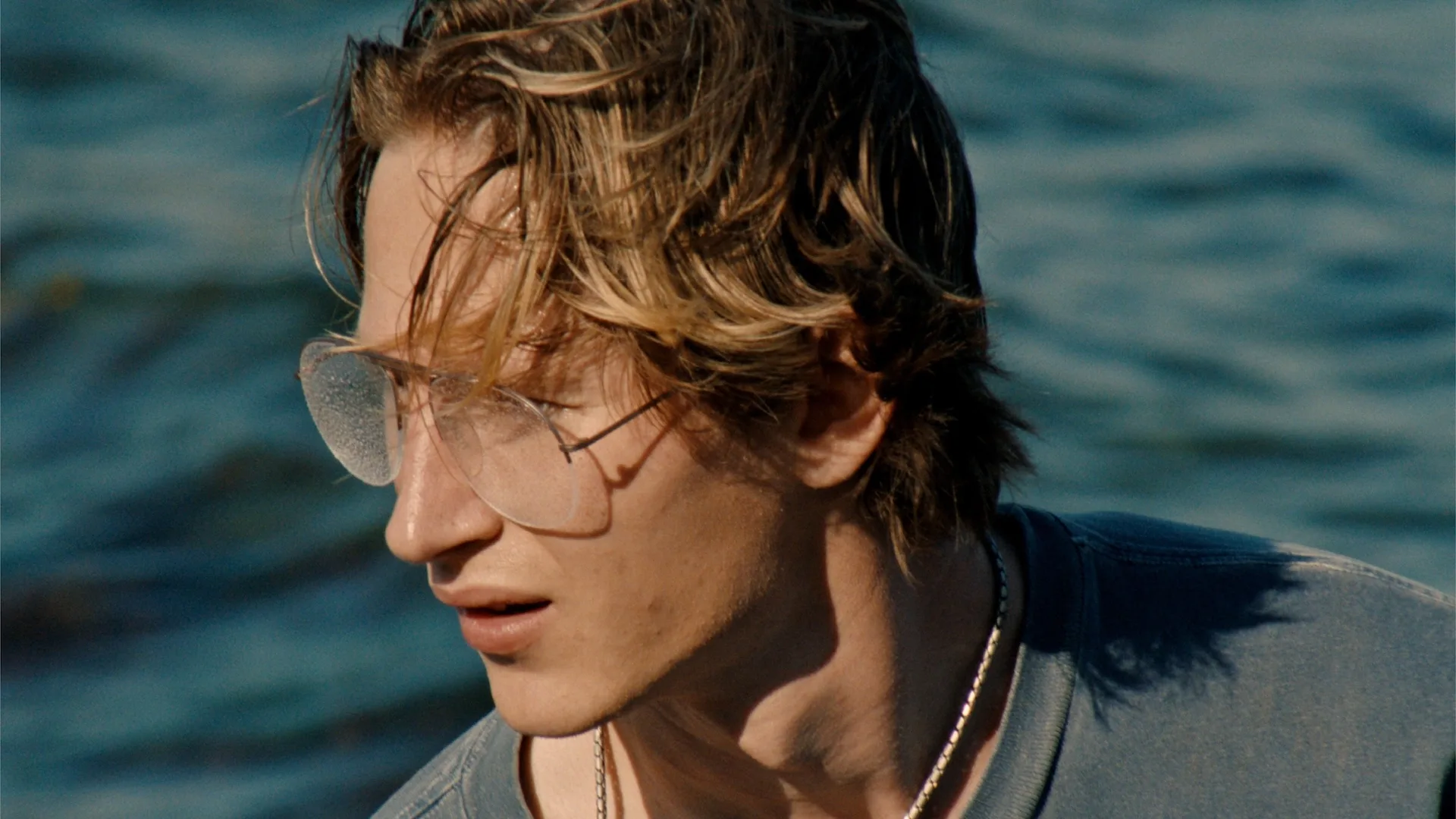
Romvari strove to emulate that same naturalism of her father’s home videos; street casting Edik Beddoes, who had never acted on screen before, was one such decision in accomplishing this. Before filming, Beddoes and Romvari met in parks around Vancouver, getting to know one another, with Romvari filming occasionally to help Beddoes be comfortable in front of the camera. Beddoes maintains a striking intensity throughout the film without veering into oppressive; it’s almost shocking for a newcomer to have such a screen presence without even having that many lines. Earlier this year, Beddoes was nominated for a Canadian Screen Award for best supporting performance in a drama film.
Though Beddoes has the supremely difficult task of portraying Jeremy, each cast member is pitch perfect in their roles and, as a whole, displayed an astonishing chemistry that evoked the atmosphere of a real family.
Romvari had acted in some of her own films in the past, but she knew that casting an actor as her stand-in would be instrumental in Blue Heron. “Having someone play the part that is essentially a surrogate character for myself gave me even more creative distance and also allowed me to just focus on the direction.”
There’s a moment in Still Processing where Romvari — no stand-in, it’s a documentary, after all — looks at pictures from her childhood that she’s never seen before. She’s moved, and then she admits something that struck me as so supremely truthful to the experience of growing up with certain trauma: she does not remember the photo being taken.
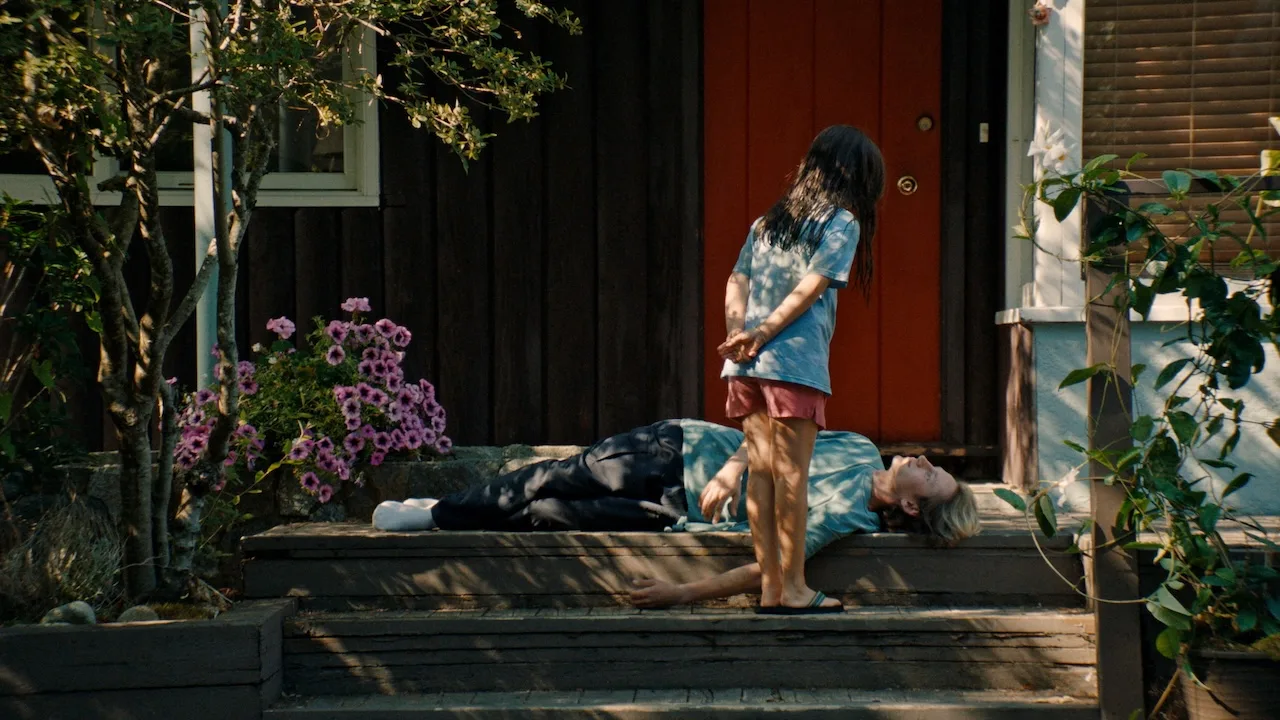
Near the end of our conversation, I asked Romvari about her relationship with memory, especially when trying to model a childhood she may not fully recall — even if her film is a work of fiction entirely separate from her life. For Romvari, many of her memories are closely linked to photographs in that they evince the emotion present even though the exact events are hazy, like in Blue Heron when Jeremy lays motionless on the family’s stoop. Romvari knows her brother had a tendency to the same thing; she has no recollection of it happening, but she knows that it did because of a photograph her father took.
“Sometimes, photographs replace memories and you know that you experienced them because there’s a document of it. That’s a big part of what motivates me to be a filmmaker is this act of creating something in order to validate the experience having existed,” Romvari says. “That’s what Still Processing was, and what so many of my films have been: this desire to create something that you can actually witness and then it acknowledges the reality of something and then you have to confront it.”