![The 8 Best Ice Cream Desserts in Toronto [2025]](https://torontoblogs.ca/wp-content/uploads/2022/02/chocolate-ice-cream-dessert-1.jpg "The 8 Best Ice Cream Desserts in Toronto [2025]")
![23rd Jan: Secret Mall Apartment (2024), 1hr 32m [TV-MA] (6/10)](https://occ-0-1081-999.1.nflxso.net/dnm/api/v6/Qs00mKCpRvrkl3HZAN5KwEL1kpE/AAAABbpJJkaf4vegG9zwsew-DH4d0CIa24XSdy2yBWzq8-89QoILmrRI1fDKhbwTFzv-Qljv8KmC5gOwHLolj9Fn-3Gg0UkyT6BBVoniETeH0j6_ZaRfHdO7ORuP5bBZBZ2Ok20NWNyarb4eK5oKJSf-ueUN2kio_aLw5E9T8_W2jpieQg.jpg?r=aba "23rd Jan: Secret Mall Apartment (2024), 1hr 32m [TV-MA] (6/10)")




![The 11 Best Portuguese Restaurants in Toronto [2025]](https://torontoblogs.ca/wp-content/uploads/2022/03/bacalhau-com-todos-cod-with-bulgur-steamed-green-beans-sprinkled-with-hot-chili-peppers-spring-onions-rustic-plate-wooden-table-portuguese-cuisine-1.jpg "The 11 Best Portuguese Restaurants in Toronto [2025]")


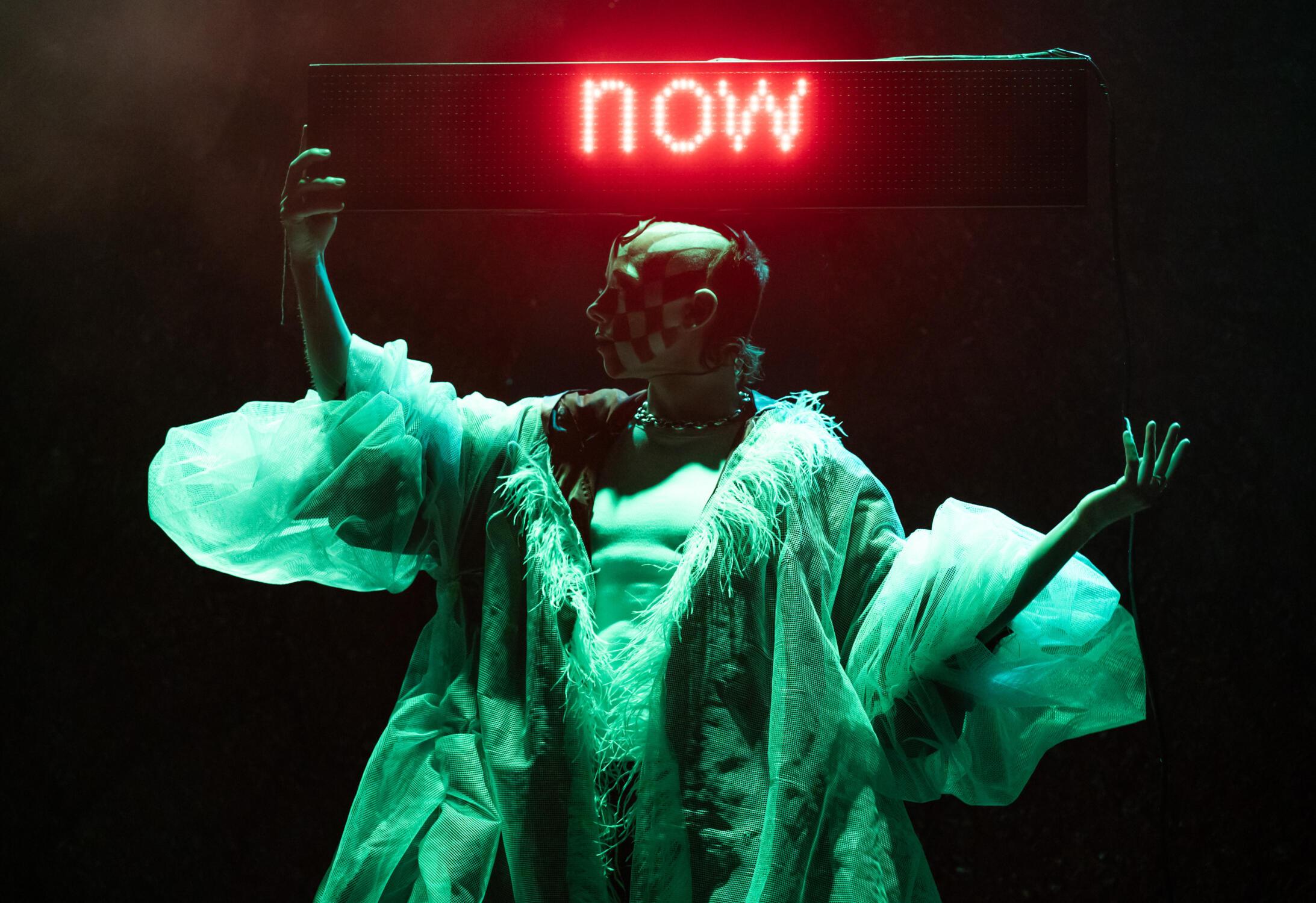
Wet Mess is a captivating performer with a playfully defined aesthetic. Their checkerboard face and giant phallic objects (somewhat reminiscent of the sprawling shapes of Yayoi Kusama) were delightful as were their tight lip synchs, strong dancing, and charismatic personality. Jordan Sherman and Lambdog1066’s costumes and Ruta Irbīte’s set are simple but striking and contain effective surprises. But being a captivating performer with good design taste doesn’t necessarily a captivating show make. In this case, what Testo has in charm it somewhat lacks in substance.
If I saw this performance in a bar I’d surely be screaming my head off and showering Wet Mess with ones. A theater piece, however, requires a longer arc, a bigger central question. What is the arc of Testo? Wet Mess comes out, they do some fabulous dancing, they lip sync fabulously to interviews of other people on testosterone, they introduce their fabulous props and fabulous costume pieces and then they get naked, but does the piece actually go anywhere? At one point they start lip syncing to transphobic right-wing people and yeah, I guess there’s some irony to a trans person performing their words in that way but what does it actually say? Transphobia exists and is bad? Don’t the people who are most likely coming to this show already know that?

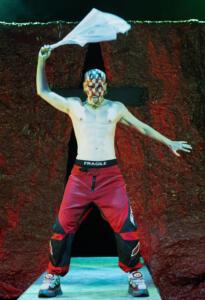
Picture by Lesley Martin
August 20, 2024.
Here & Now Showcase 2024:
TESTO – Wet Mess, Zoo, Southside, Edinburgh.
© Lesley Martin 2024
Maybe for an audience member who has never met a trans person before this all feels very radical and informative, but for me it felt a little 101. Sure they get naked but is that on its own meant to be shocking? In the show’s description they describe themself as “horny for your confusion” but what is actually confusing or even thought provoking about any of this? They are an objectively hot, thin, white person. Is their body actually that transgressive? The show description says Testo “messifies transitions, testosterone and the edges of drag” but how is it actually doing any of that? To me just being trans and saying here I am is not enough. I don’t want to be grateful for any little bit of representation we get. I want to demand more from art, even from trans artists.
This isn’t the fault of Wet Mess, but I have to wonder, why are they seemingly the only trans person with a show programmed in Under The Radar? More specifically, why have no trans women been given this platform? Not only does no trans woman have her own show, but I don’t know if there are any trans women even performing in any of the pieces. It’s disappointing to me that so often if there is any trans representation at all it is reserved for thin, white, trans-masc people. It’s not that these stories are not important, but when they are privileged above everyone else’s experiences there is a serious problem.
I don’t mean to play into the oppression olympics, but thin, white, trans-mascs are simply not the most marginalized people in the trans community. Even anecdotally I know and know of dozens of trans-masc and non-binary artists working in the theater industry. I myself am one of these artists! Meanwhile, I know a number of trans-women who had to leave the industry when they came out because they stopped getting cast. Again, I want to hear stories about trans-masc and non-binary performers, but I want them to be a part of a much more robust landscape of trans stories and that can’t happen if the same crowd keeps getting all the opportunities.
All in all Testo was fine. I’m glad at least one trans narrative was programmed even if I wish there were more. I’m glad to spend an hour with a talented performer even if I wish they said more. And at the end of the day this show is an important reminder: keep demanding more.
This post was written by the author in their personal capacity.The opinions expressed in this article are the author’s own and do not reflect the view of The Theatre Times, their staff or collaborators.
This post was written by Morgan Skolnik.
The views expressed here belong to the author and do not necessarily reflect our views and opinions.