

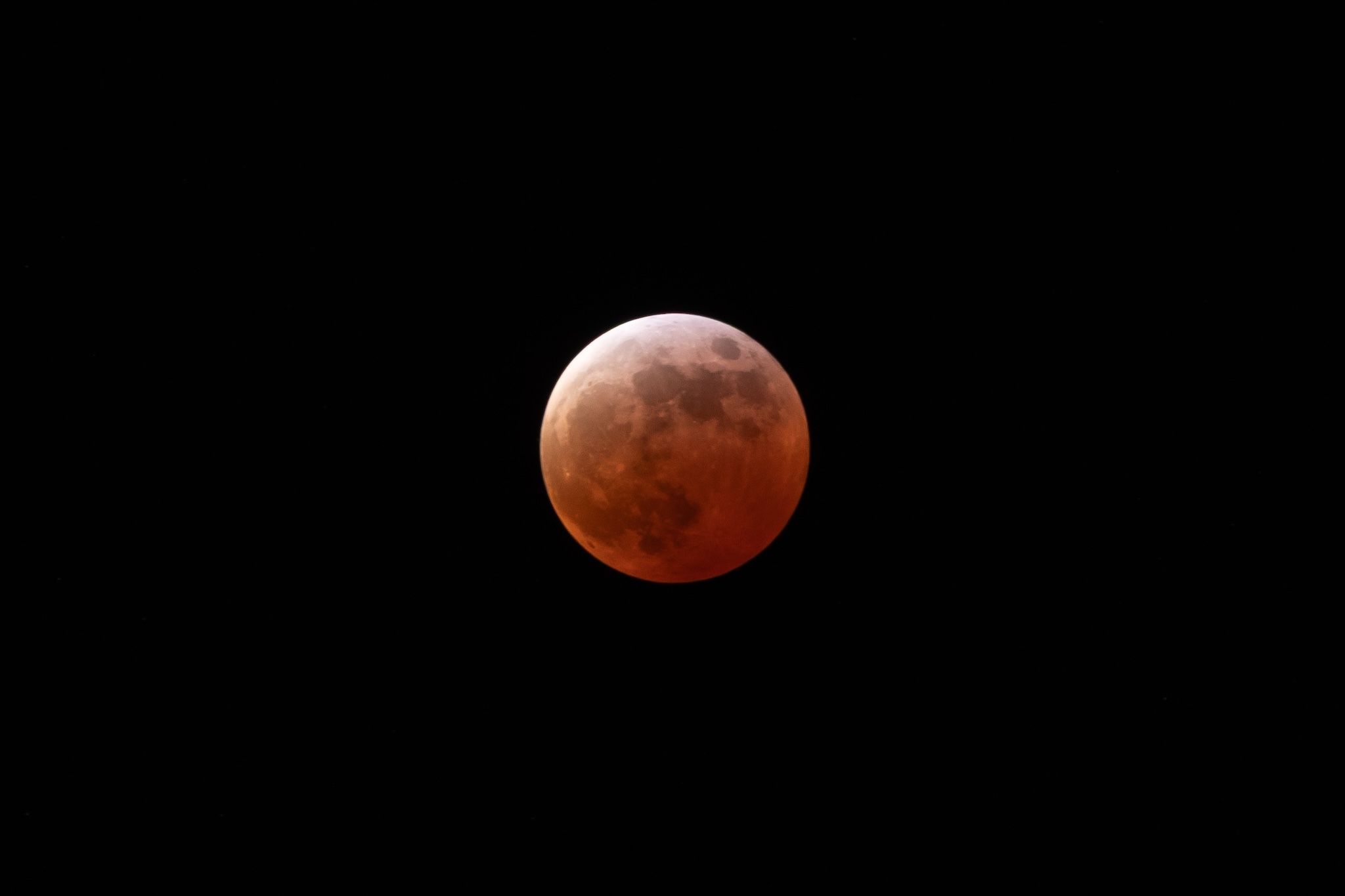
The first total lunar eclipse of the year is coming up this March, and it looks like Vancouver is getting a front-row seat to the show.
According to In-The-Sky.org, lunar eclipses occur when the Earth passes between the moon and sun, obscuring the sun’s light and casting a shadow onto the moon’s surface. EarthSky adds that this can give the moon a dark red appearance, a phenomenon that’s commonly known as a blood moon.
“Overnight on March 2-3, 2026, a total lunar eclipse of the full Worm Moon will sweep across northwest South America, North America, the Pacific Ocean, Australia, Asia, Japan, southeast Asia, China, India, and most of Russia,” reads EarthSky.
NASA notes that the upcoming eclipse will be visible across North America, but especially for those on the West Coast.
When is the next total lunar eclipse?
According to Time and Date, the first total lunar eclipse of the year will fall on Tuesday, March 3, 2026, starting at 12:44 a.m.
The eclipse will reach its peak at 3:33 a.m., reaching its totality for 58 minutes. After a total of five hours and 39 minutes, the eclipse will conclude at 6:23 a.m.
How to view a total lunar eclipse
As with most celestial events, it never hurts to head to a low-light area with minimal light pollution to maximize your viewing experience. However, it’s not necessary to get a good glimpse of the blood moon.
Unlike solar eclipses, you won’t need any special glasses or filters to safely view the upcoming lunar eclipse. Your naked eye does just fine!
The next lunar eclipse viewable from Vancouver will be a partial one in late August, so now is the ideal time to gaze at the moon if you’re hoping to catch this spectacular natural phenomenon in its totality.
Mark your calendars, Vancouver! This might just be the only viewable total lunar eclipse of the year.
Stay tuned for more info to come, including relevant weather info the night of the eclipse.
Total lunar eclipse in Vancouver
When: Tuesday, March 3, 2026
Time: 12:44 a.m. to 6:23 a.m., peak time of 3:33 a.m.
Recent Posts:
Over 20 of the biggest concerts coming to Vancouver in 2026 (so far)
Canada’s fourth-highest waterfall is in B.C. and it freezes over into an ice cone every winter