









Vancouver Foodie Tours is hoping to dine out on an influx of visitors for the FIFA World Cup, when soccer fans begin converging on the city next month.
“We’ve actually custom curated the script and the tastings in each three of our tours to be themed with what’s going on in the city for that time and to really highlight the history of football in Vancouver,” said Veronica Irvine, operations manager for the company, which takes food lovers on dining journeys through the city.
Irvine said the company previously did themed tours for fans in town for Taylor Swift’s Eras Tour in December 2024.
“Event-driven experiences have been on the rise and Vancouver really comes alive when these events come into the city, and it just makes a lot of sense to just be a part of it,” Irvine said.
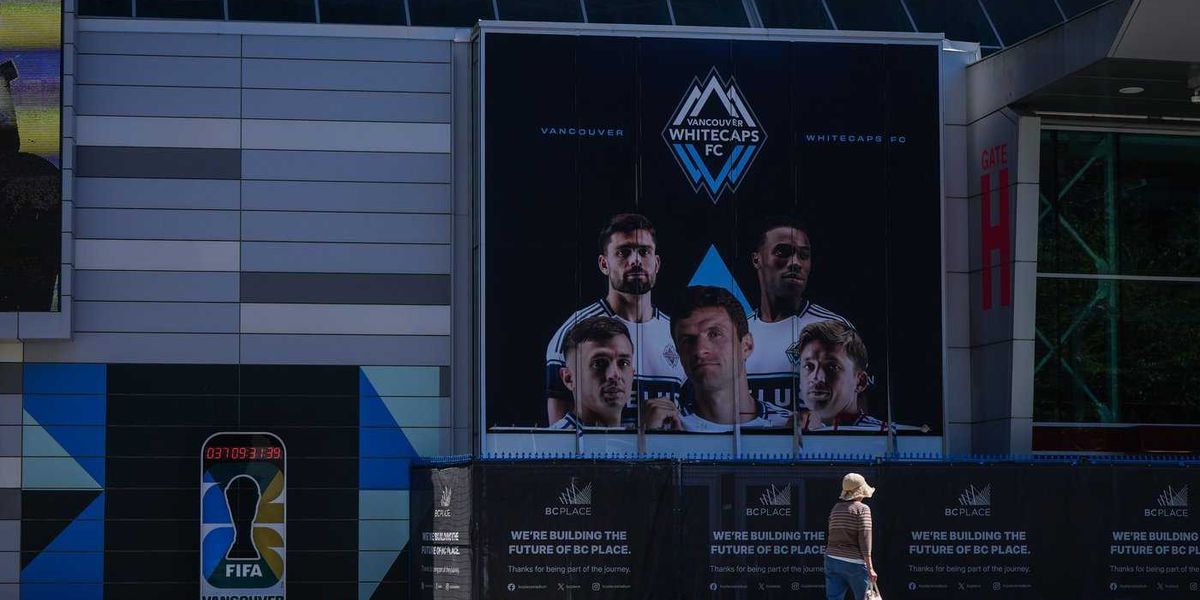
As FIFA banners and signage begin popping up, Destination Vancouver CEO Royce Chwin said he can “feel the momentum building” in the city.
“We’ve seen our businesses start to get on board with their plans and announce their events in and around the city, whether or not it’s viewing parties, any of those kinds of things,” he said.
But while businesses like Vancouver Foodie Tours and tourism authorities are hoping for a boost when the tournament hits Vancouver and Toronto, some experts warn that it’s easier to identify winners and losers on the soccer pitch than when it comes to the economics of the World Cup.
It’s just a month before the kickoff, but firm figures around the final price tag of the event, its economic benefits and legacy remain unclear. Calculating the immediate boost is complicated by the fact the tournament is displacing other events and occurring in what would be already be peak tourism season in both cities.
Wayne Smith, the director for the Institute for Hospitality and Tourism Research at Toronto Metropolitan University, said the longer-term impact of hosting such an event could last decades — but those benefits may never be quantifiable either.
“I’ve been looking at economic impact analysis of events for over 20 years, and I can’t think of a way you could do it legitimately and not be guessing,” he said.
“For the World Cup, you have to look at it more (as) a marketing exercise as opposed to tourism impact.”
Smith said it’s a chance for cities to show off on a world stage, and potentially attract tourists for years to come.
Toronto and Vancouver are among 16 cities across Canada, the United States and Mexico that will host a combined 104 games during the expanded 48-team tournament, running June 11 through July 19.
Toronto has set a $380-million budget for the tournament, which includes funding from the federal and provincial governments. FIFA has previously estimated up to $940 million in economic output for the Greater Toronto Area.
The latest cost estimate for B.C., meanwhile, was provided by the province last June, where it said the estimate had jumped to between $532 million and $624 million, an increase of up to 10 per cent on 2024 estimates. No new figure was provided at an update on preparations last week.
The B.C. government justified the costs last year by saying the event would bring about 350,000 fans to the province and generate more than a billion dollars of tourism in the five years after the games.
Jarrett Vaughan, an adjunct professor at the University of British Columbia’s Sauder School of Business, said it’s a fair estimate for B.C., but “whether those numbers are accurate or not — it’s nearly impossible for anybody to know.”
“It’s certainly very difficult for the government to know these numbers, which is shocking because they seemingly are putting the money in (so) how does the government not know how much is actually going to be spent?
“This is where, as taxpayers, we as citizens, need to question the government on the investment that they’re putting into events like this, and how they could not understand how much money it is going to cost and what are the benefits of it.”
The federal government clarified its contribution last month as part of its spring financial update, saying it is providing $145 million toward security costs in Vancouver and Toronto.
B.C. will receive $100 million of those funds, but the provincial public safety minister said last month that the final price tag won’t be known for weeks because security arrangements are still being worked out.
“So, as you can imagine, the costs related to safety and security will continue to evolve, as we finalize preparations to welcome the world to the FIFA 2026 games,” Nina Krieger said.
It is not as if the B.C. government is unaware of potential pricing pitfalls. Under former premier John Horgan, it initially said in March 2018 it was not prepared to have Vancouver serve as a host city because of cost concerns.
Horgan said later that his government wasn’t willing “to write a blank cheque.”
But it later changed its mind, citing a potential boost to the tourism sector hit hard by the COVID-19 pandemic.
Montreal, however, dropped its candidacy in July 2021 after the Quebec government withdrew financial support, citing costs and restrictive FIFA demands.
Quebec’s Tourism Ministry said in an emailed statement that its analysis of the business plan found that the costs of hosting the games in Montreal would “vastly exceed estimates.” It also noted that FIFA requirements would mean many sports infrastructure assets would be unavailable for other use for an extended time.
“With all this in mind, the government continues to hold the view that it was the right decision not to submit a bid for Montreal to be a FIFA host city,” the statement said.
‘THE CITY WOULD HAVE BEEN SOLD OUT ANYWAY’
Smith, from Toronto Metropolitan University, is skeptical about direct tourism benefits for Vancouver and Toronto.
He said June and July are already busy tourism times in both cities — in Toronto, he noted, the World Cup takes place at the same time as Pride and the Blue Jays hosting the New York Yankees.
“The city would have been sold out anyway,” he said, adding that the question becomes whether the World Cup might actually “displace some of the people who would have came for those other things.”
He said, for that reason, the direct tourism gain from the tournament will likely be “incremental,” and instead it becomes a “longer-term marketing play from a pure tourism perspective.”
“Essentially, but what they’re looking at this is that it’s a chance to show off to the world what these cities are, and especially in juxtaposition to the U.S.,” he said.
And the economic impact may never be known.
“Unless you’re going to stop every single tourist that comes into the city and say, ‘Did you see this on the World Cup? Is this why you came here?’ No one’s ever going to do that (and) I think that’s really the only way you probably could.”
In contrast, Taylor Swift’s Eras Tour descended on Toronto and Vancouver in November and December, times that Smith called “perfect seasonally,” since they are not high traffic times for tourism.
“The mega events, where you’re bringing them in off-season — like shoulder to off-season — that’s the perfect thing for a city like Toronto or a city like Vancouver.”
Both Destination Vancouver and Destination Toronto acknowledge that some other events are being pushed to either side of the tournament. But representatives were not overly concerned about displacement of other visitors.
Kelly Jackson, vice-president of destination development at Destination Toronto, said modelling suggests more than half of ticket-holders for the city’s six games will be from out of town.
Jackson also cited research by Destination Ontario and Contacts Research Group suggesting tourists coming to watch a match are expected to stay around five nights in the city.
Chwin of Destination Vancouver said the World Cup may displace some other visitors and “what it has done for sure is shifted business events and conferences.”
But he said it will be worth it, and communities outside Vancouver could benefit from business that shifts out of the city during the tournament.
“At minimum, it will be good. I think at best (it) will increase and the compression will push business out into other communities, which is also a really great story for communities participating in World Cup and seeing some of that economic activity in their areas.”
The economic legacy of a major event can last decades — Smith pointed to the 2010 Olympics in Vancouver.
But one area where the Olympics won’t be matched is the infrastructure legacy of facilities being used by residents for years after.
“Look at the public transportation that probably wouldn’t have been built without the Olympics,” Smith said.
That included a new SkyTrain line into the city, improvements to the Sea-to-Sky Highway between Vancouver and Whistler, the expansion of the Vancouver Convention Centre and construction of various facilities including the Richmond Olympic Oval.
Such benefits won’t flow from the World Cup, Smith said.
But local businesses like Vancouver Foodie Tours are focused on the short term, eager to tap into the excitement while the games are in town.
Irvine, the operations manager, said their World Cup theme tours, just like the Swift-themed tours in 2024, draw on “authentic fan knowledge” from its team members. That, she said, is what drove the success of their Eras Tour event.
“We want to be able to be a part of an exciting experience that the guests are travelling for,” Irvine said.
“I think it’s just a fun win-win situation all around where the guests get to be immersed in the (soccer) world and we get to a part of that.”
This report by The Canadian Press was first published May 11, 2026.
By Brieanna Charlebois | Copyright 2026, The Canadian Press. All rights reserved.
